
Water Pump Magnet Manufacturer
Ferrite and injection-bonded NdFeB magnets and rotor assemblies for water pump motors. With over 30 years of magnet manufacturing experience, GX Magnet reviews material selection, pole pattern and rotor interfaces against your drawings, operating temperature and fluid-contact conditions.

Match the Magnet to Your Pump Design
GX Magnet supplies individual sintered ferrite arc magnets and multipole rings, as well as rotor assemblies using injection-molded ferrite or injection-bonded NdFeB magnets for water pumps. Material and assembly configuration are selected to match your pump design, working gap, liquid exposure and duty cycle.

Pre-Assembled Injection-Molded Ferrite Rotor with Impeller
- Ready-to-use injection ferrite rotor assemblies with overmolded 6-blade straight impeller. PA12 bonded strontium ferrite magnet ring, integrated graphite/ceramic sliding bushing and plastic end caps for water isolation. Radial multi-pole magnetization. Typical 4 poles (2 pole pairs), customizable pole count. Direct drop-in for small magnetic drive pumps.
- Applications: Dishwasher circulation pumps, aquarium and compact submersible pumps, clean-water pumps, and small hydronic heating pumps.

Bare-Shaft Injection-Molded Ferrite Rotor
-
Unfinished injection ferrite rotors with SUS304 stainless steel shaft. Multiple shaft configurations: threaded shaft, stepped shaft, plain shaft, flange limit shaft. POM flange with locating holes, built-in POM/brass bushing. Radial multipole magnetized. Typical 6 poles (3 pole pairs), 8 poles optional. Customers mount impellers on their own.
- Applications: BLDC inner-rotor pump motors, household water pumps, and automotive electronic coolant pumps.

Spline-Shaft Injection-Molded Ferrite Rotor
-
Injection ferrite rotor with integrated POM external spline (6~8 teeth). Spline directly overmolded into magnet bore, no extra pin or fastener. Radial multipole magnetization, typical 4 poles. Quick lock assembly with impeller internal spline, suitable for high-volume automated production.
- Applications: Coffee-machine water modules, small RO-system pumps, and humidifier pumps, subject to liquid-contact material review.

Large-Diameter Disc Injection-Molded Ferrite Rotor
-
Flat disc-shaped injection ferrite rotor with hollowed POM/PP support frame for flow passage & weight reduction. SUS304 stepped shaft with circlip groove. Radial multipole magnetization, typical 8 poles (4 pole pairs). Flat profile expands magnetic coupling area to deliver higher torque.
- Applications: Gas-water-heater, floor-heating and solar-thermal circulation pumps; washing-machine drain pumps where the hydraulic envelope is confirmed.

Vortex-Impeller Injection-Molded Ferrite Rotor Assembly
-
Injection ferrite rotor matched with vortex centrifugal impeller. Spiral curved blade design for high head & low flow. Radial multipole magnetization, typical 6 poles (3 pole pairs). Exploded drawing displays full assembly relationship between rotor, impeller and containment shell.
- Applications: RO booster pumps, compact cleaning-equipment circulation pumps, and laboratory circulation pumps. Hydraulic performance is project-specific.

Threaded-Shaft Injection-Bonded NdFeB Rotor Kit
- High-performance injection bonded NdFeB rotor. PA12 compound with melt-spun NdFeB powder, dense & smooth surface. SUS304 long shaft with external thread + circlip groove. Supplied with brass locking screws for impeller fixation. Radial multipole magnetization, typical 8 poles. Higher torque density than ferrite, The allowable temperature range depends on the NdFeB grade, binder system, encapsulation and pump environment.
- Applications: Selected variable-frequency dishwasher pumps, automotive thermal-management pumps, industrial chiller pumps, and gas-boiler circulation pumps, subject to temperature and fluid validation.
Why OEM Pump Buyers Choose GX Magnet
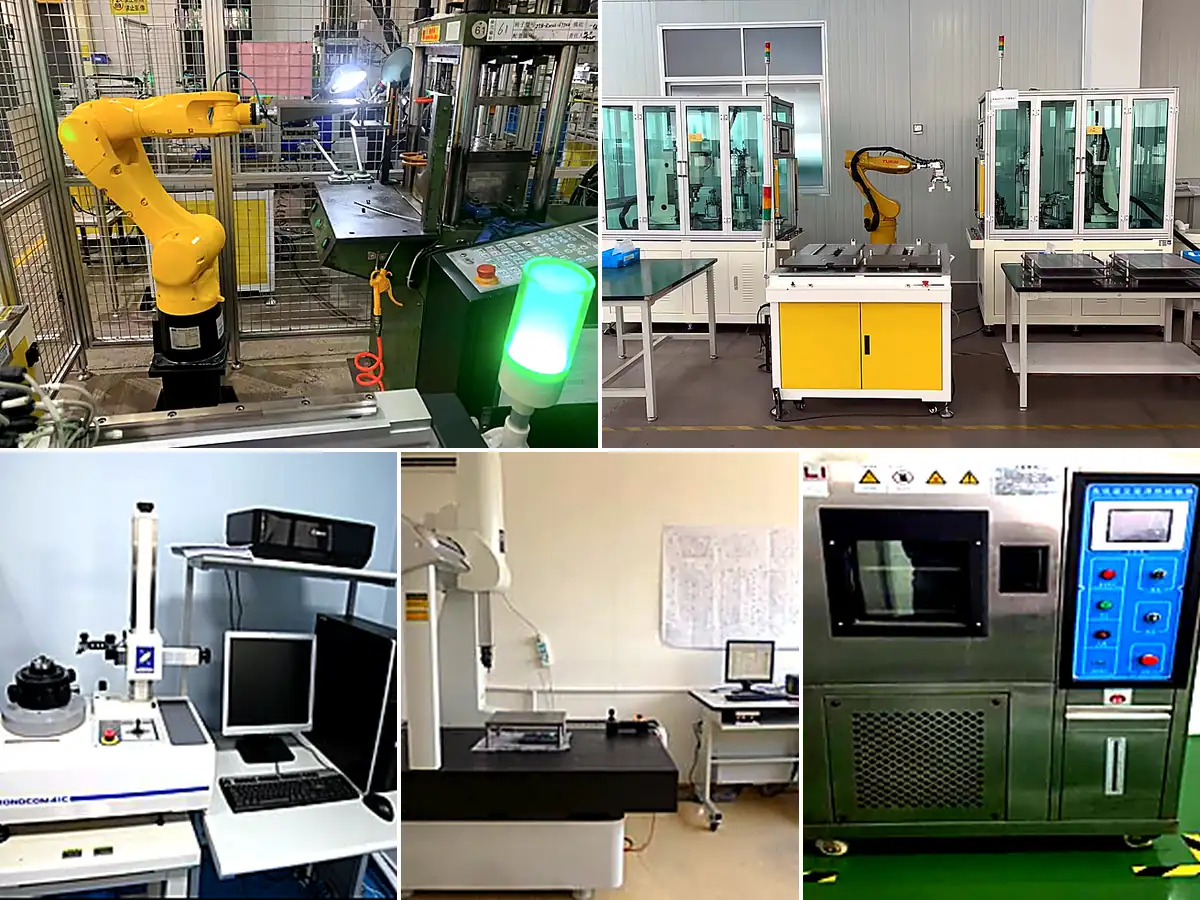
Automated ferrite and injection-bonded NdFeB production, backed by dimensional, magnetic and rotor balance inspection.
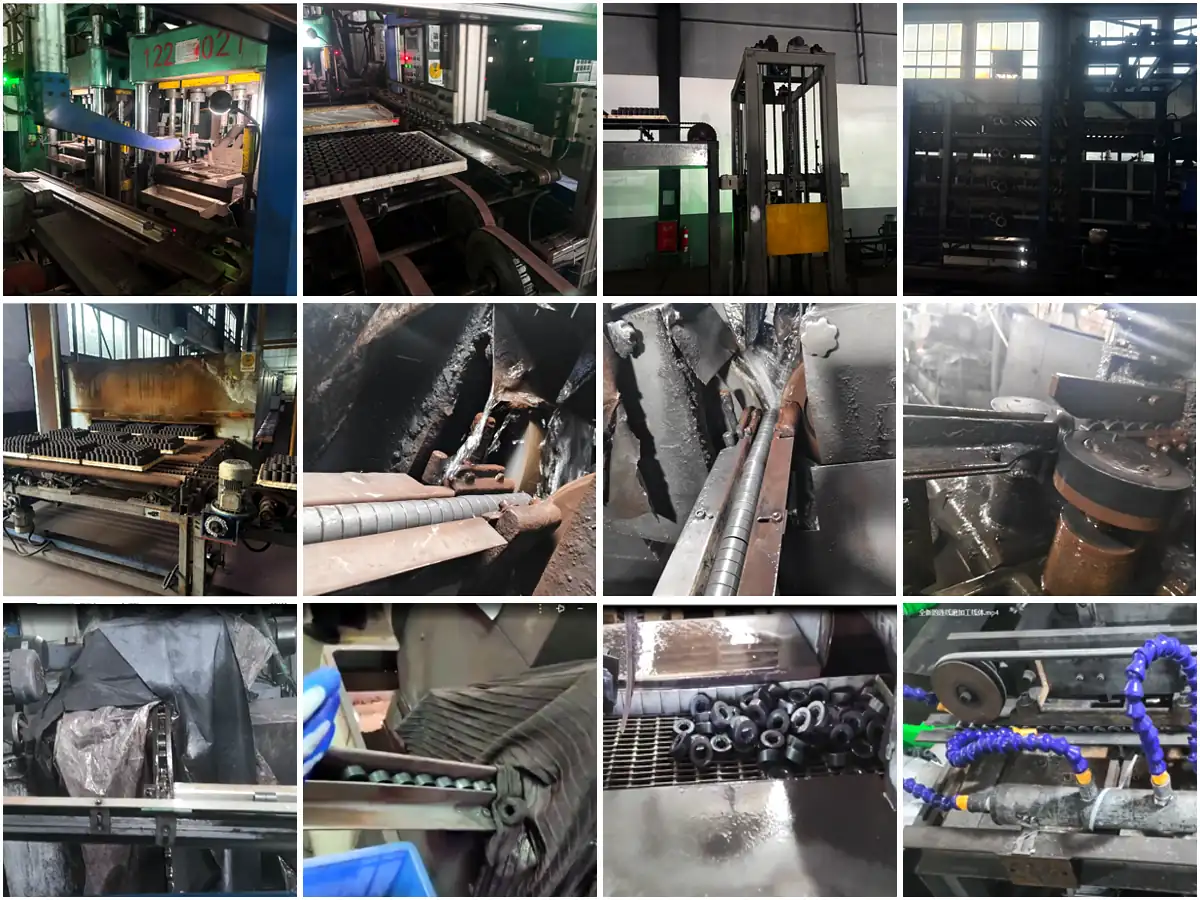
From Magnetic Material to Pump Rotor
With over 30 years of magnet manufacturing experience,
- Ferrite production: Powder preparation, pressing, sintering and ID/OD grinding control material consistency and rotor fit.
- Injection-bonded NdFeB Magnet: Automated molding integrates drawing-defined shaft or hub features with the magnetic component.
- Rotor inspection: Dynamic balance, dimensional and magnetic checks assess residual unbalance, assembly fit and pole-pattern consistency.

Define Pole Pattern, Fit and Wet-Service Protection
1 Pole Pattern & Rotor Geometry
For the 2–16-pole ring designs in this range, define the working surface, pole sequence and angular reference to the shaft or impeller. Ring bore, OD and length control assembly fit; arc radius and angle control segment placement. Final limits follow the approved drawing.
2 Material Selection for Liquid Exposure
Sintered ferrite resists corrosion, but exposed use still depends on liquid chemistry, cleanliness and mechanical wear. NdFeB needs a protection system qualified for the liquid and service duration. For molded magnets, include the binder, insert and overmold in the compatibility review.
3 Magnet-to-Rotor Integration
GX can review shaft-integrated molded rotors, magnet segments assembled into rotor cups, and matched coupling magnet sets. Define the supplied components, joining method, runout and retention requirements before sampling so the assembly fits your production process.
Water Pump Magnet Specifications
Compare materials, magnet geometry and rotor interfaces for your pump design. Final dimensions,
| Materials | Sintered ferrite Magnets · injection-molded ferrite Magnets · bonded NdFeB Magnets· sintered NdFeB Magnets |
|---|---|
| Magnet & Assembly Forms | Multipole rings · arc segments · shaft-integrated rotors · coupling magnet sets |
| Ring Size Range | OD Ø8–80 mm · ID Ø3–55 mm · axial length 5–60 mm; feasible combinations depend on geometry |
| Arc Size Range | Inner diameter Ø20–150 mm · radial thickness 3–15 mm; arc angle and length to drawing |
| Pole Configuration | Rings: 2–16 poles in this application range. Segment sets: 4–8-pole layouts or a drawing-defined pattern |
| Dimensional Tolerance | Tolerances defined by material, process and feature; bore fit, roundness, concentricity and assembled rotor runout specified separately. |
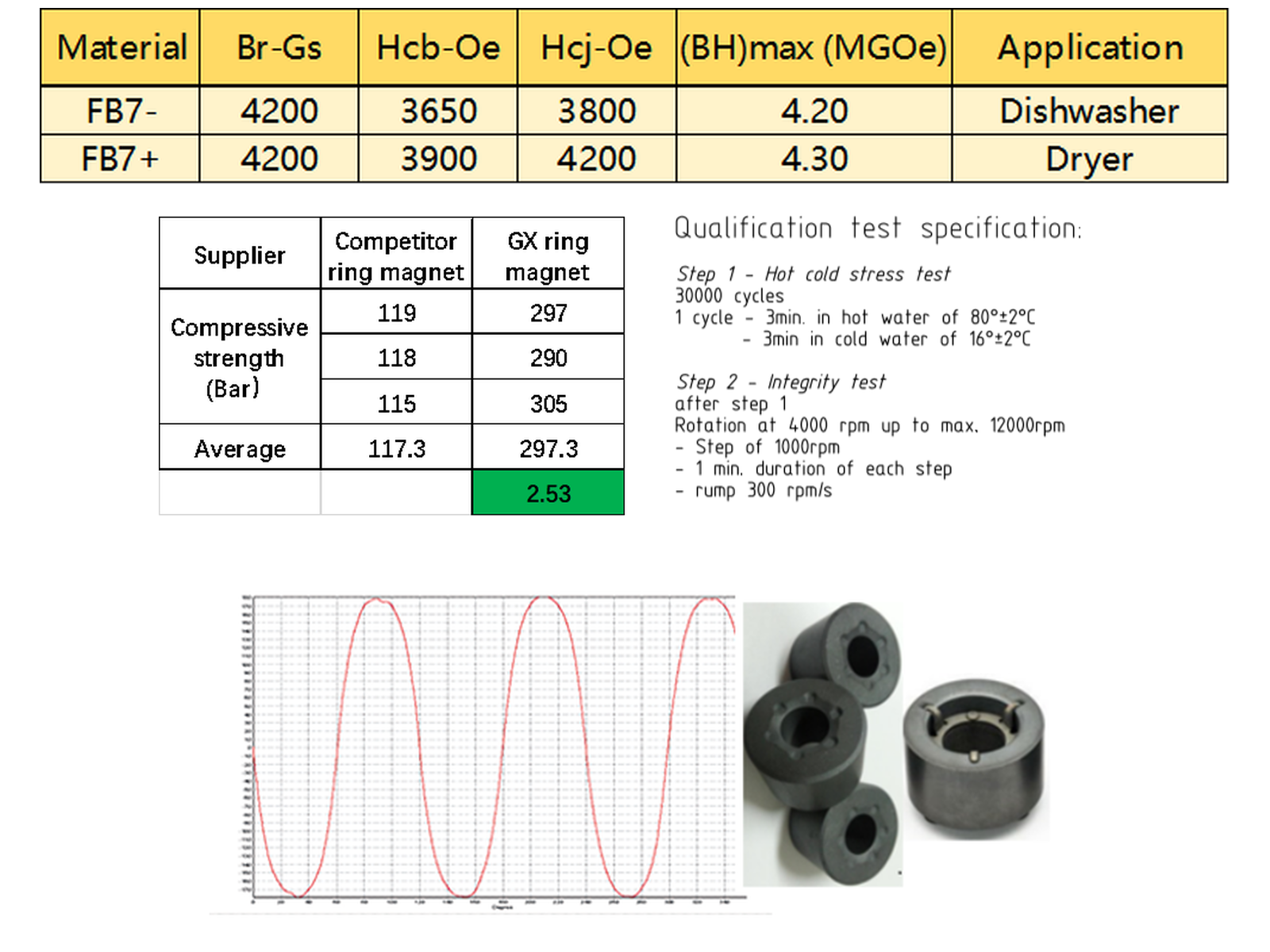
| Ferrite Grade Selection | Sintered ferrite: GX Magnet FB grades selected for Br, Hcj and required magnetic output. Injection-molded ferrite: compound and binder selected for geometry, temperature and fluid exposure. |
| NdFeB Grade Selection | Sintered NdFeB: grade, coercivity and corrosion protection. Injection-bonded NdFeB: magnetic compound, polymer binder and molding requirements. |
| Magnetic Acceptance | Polarity, pole location, flux or surface-field waveform at a defined measurement gap and temperature |
| Fluid Exposure Protection | Fluid composition, operating temperature, immersion duration and cleaning agents; coating or encapsulation requirements defined for exposed components. |
| Rotor Interfaces & Balance | Shaft or sleeve fit, impeller connection, retention method and assembled runout; residual unbalance limits specified where required. |
| Drawing & RFQ Requirements | Component or assembly drawing, operating conditions, magnetic requirements, sample quantity and annual demand. |
What Changes Magnetic Performance in a Pump?
Material grade alone does not define pump torque, efficiency or noise. Evaluate the magnet in the installed circuit, with the intended stator, controller and hydraulic load.
Working Gap & Containment Shell
Rotor clearance, overmold thickness and containment-shell geometry affect the field available to the motor or coupling. Compare samples at the same installed gap.
Temperature & Liquid Compatibility
Magnet temperature can differ from bulk liquid temperature. Check magnetic losses together with binder, adhesive, coating and sleeve compatibility over the stated duty cycle.
Pole Alignment & Mechanical Fit
Pole-to-pole variation, eccentricity and incorrect angular location can affect torque ripple and startup. Define a mechanical datum and the magnetic measurement method together.
From Magnet & Rotor Drawings to Sample Approval
Send your magnet or rotor drawing with the shaft or impeller interface, operating speed, fluid composition and temperature range. GX reviews material selection, magnetization and critical dimensions with your engineering team, then agrees on sample inspection criteria for fit and magnetic output before sample production.

Inspection & Batch Release
Agree the inspection plan before sampling: critical dimensions, polarity, flux or waveform, and rotor fit where assemblies are supplied. Retention and balance checks follow the assembly drawing and the agreed program requirements.

Real-World Applications for Water Pump Magnets
1 Aquarium & Circulation Pump Operation
For aquarium and circulation pumps, review wet-side construction, shaft support and magnet retention alongside the pole pattern. Confirm startup, restart and noise at the specified voltage and flow condition. Inner- and outer-rotor layouts each require their own clearance and retention assessment.
2 Thermal Cycling & Coupling Load
GX Magnet six-pole dishwasher-ring program completed 30,000 hot–cold cycles under the defined test condition: 3 minutes in 80°C water followed by 3 minutes in 16°C water, repeated over approximately four months. This result is presented as a dishwasher-specific validation reference; other pump designs require a test plan based on their own fluid, temperature range and duty cycle.

Request Water Pump Magnet Samples & a Quote
Send the magnet or rotor drawing with pole count, working gap, liquid conditions and annual demand. GX Magnet will review the material route, assembly scope and sample requirements for your pump project.
Frequently Asked Questions About Water Pump Magnets
Material selection, wet-service protection, pole patterns and drawing requirements for OEM pump projects.
What types of magnets are used in water pump rotors?
Should I choose ferrite or neodymium magnets for my water pump?
Can water pump magnets remain submerged without a protective coating?
How do magnets transmit torque in a magnetic-drive pump?
What determines the operating temperature limit of a water pump magnet?
How is the magnet pole count selected for a water pump motor?
Can GX Magnet supply rotor assemblies as well as individual pump magnets?
What information does GX need to quote water pump magnets?
Explore Related Magnet Products

Ferrite Multipole Rings
Ferrite rings with specified pole patterns, bore dimensions and magnetic output for motor rotors.

Injection-Molded Ferrite Magnets
Molded ferrite magnets with integrated shaft or hub features for compact rotor assemblies.

Bonded NdFeB Magnets
Bonded NdFeB rings and molded components with specified pole patterns and assembly interfaces.

Neodymium Ring Magnets
Sintered NdFeB rings with grade, bore tolerance and corrosion protection selected for the application

Ferrite Arc Magnets
Ferrite segments with specified inner radius, arc angle and thickness for motor magnetic circuits.

Permanent Magnet Rotors
Rotor assemblies with magnets, shafts and hubs matched to specified fit, runout and retention requirements.