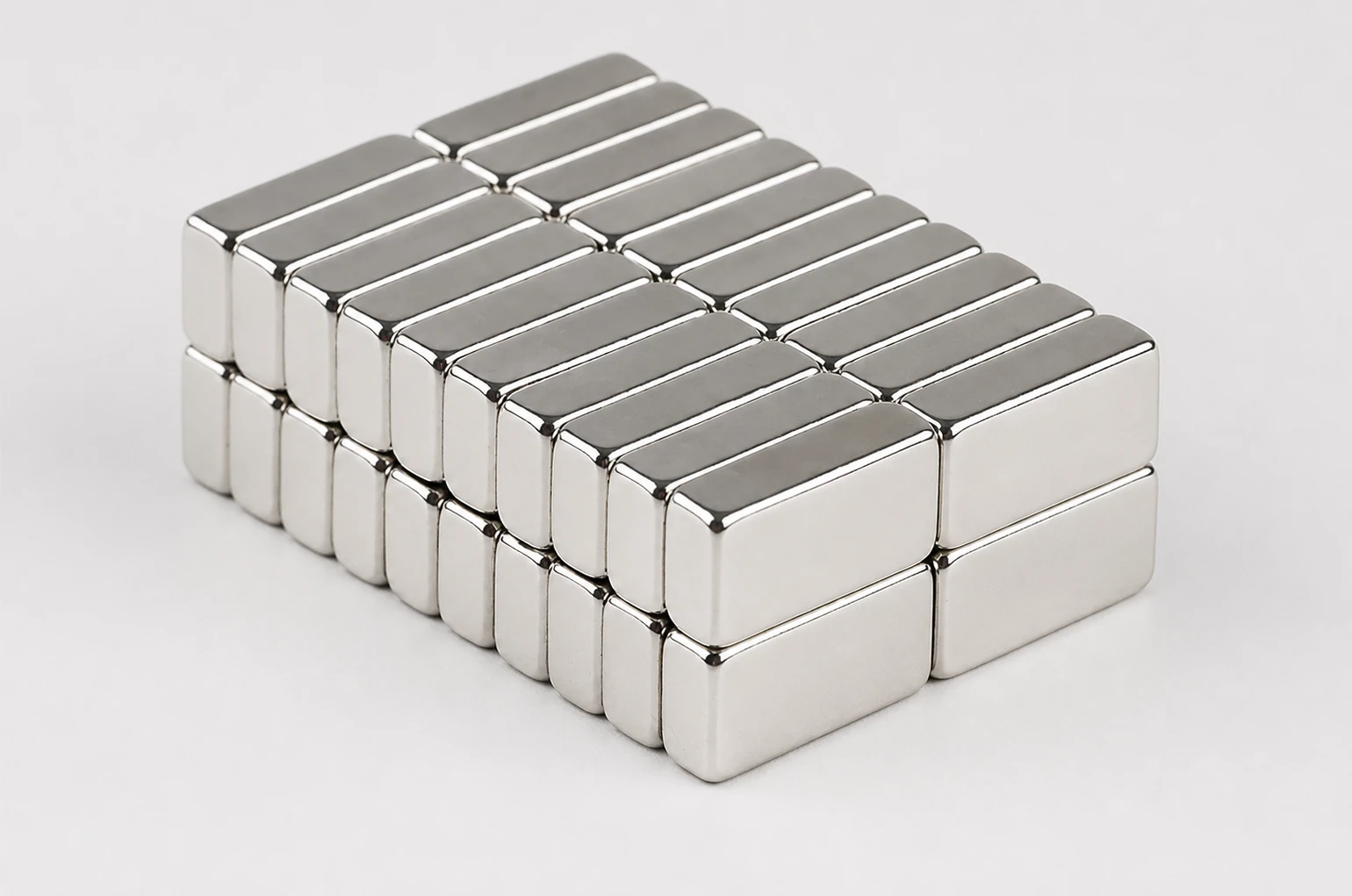
Sintered NdFeB Block Magnets
Rectangular and square sintered NdFeB magnets manufactured in custom sizes, grades, coatings, tolerances, and magnetization directions.
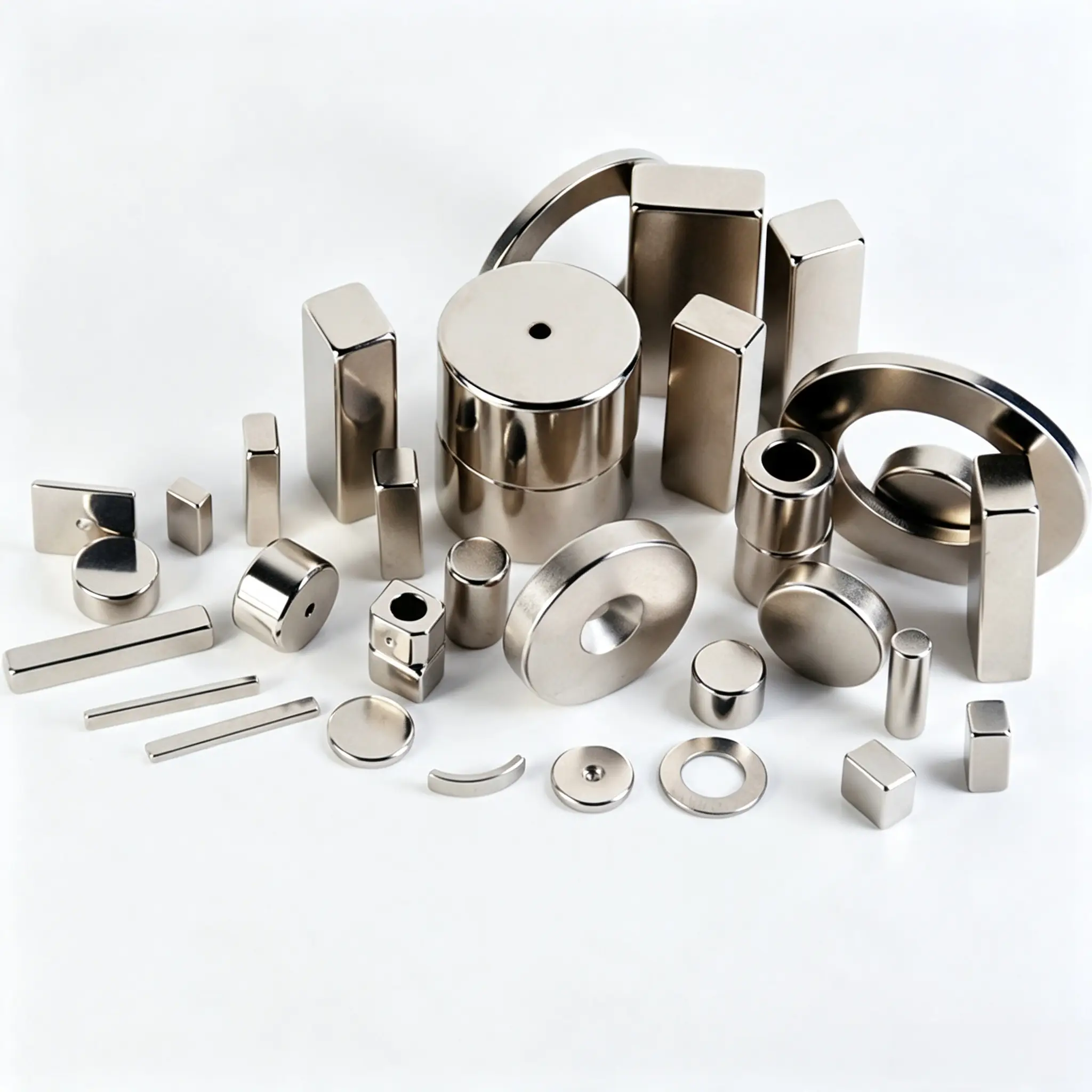
GX Magnet manufactures custom sintered neodymium-iron-boron (NdFeB) magnets for automotive, home appliance and industrial motor applications. We supply block, disc, ring, arc-segment and custom-shaped magnets to customer drawings, with the grade, coating, magnetization and inspection criteria defined for each project.
GX manufactures permanent magnets and magnetic components to customer drawings for appliance, automotive, pump and industrial motor applications.







Send the available information below for a faster, more accurate quotation. A drawing is the best starting point. If some details are still open, GX will help identify what needs to be confirmed.
Send a 2D or 3D drawing showing the magnet shape, dimensions, tolerances, datums, chamfers, and assembly interface.
Specify the NdFeB grade or required magnetic properties. For magnetic flux or surface flux density requirements, include the target value, measurement position and test conditions.
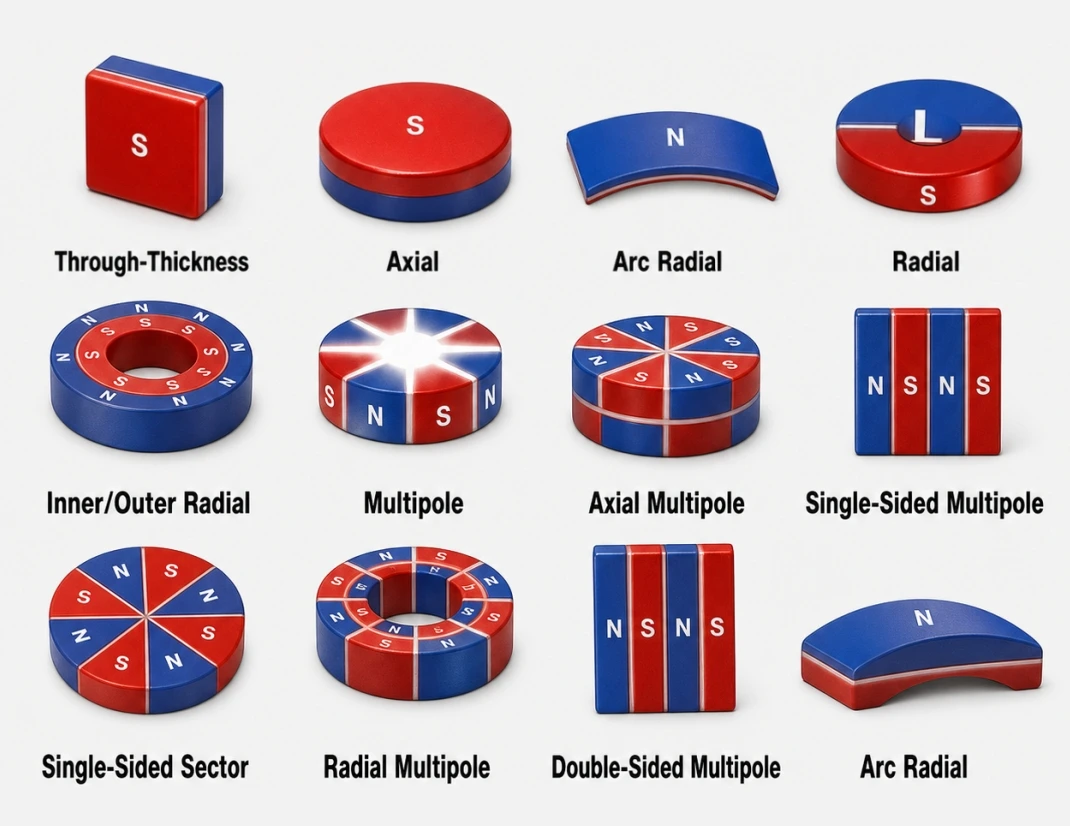
Provide the magnetization direction, pole count or pole pattern, operating temperature, coating, environmental conditions, and assembly method.
End application, operating environment, sample-validation plan, estimated annual volume and delivery requirements.
Product and supply scope
Sintered neodymium magnets, or sintered NdFeB magnets, are rare-earth permanent magnets based on the Nd-Fe-B material system. They offer high remanence and maximum energy product, but finished-part performance still depends on the grade, geometry, magnetization, operating temperature and magnetic circuit.
GX Magnet supplies block, disc, ring, arc-segment and custom-shaped sintered NdFeB magnets. Quotations and sampling plans are based on the customer drawing, required magnetic properties, coating, magnetization, tolerances and operating conditions.
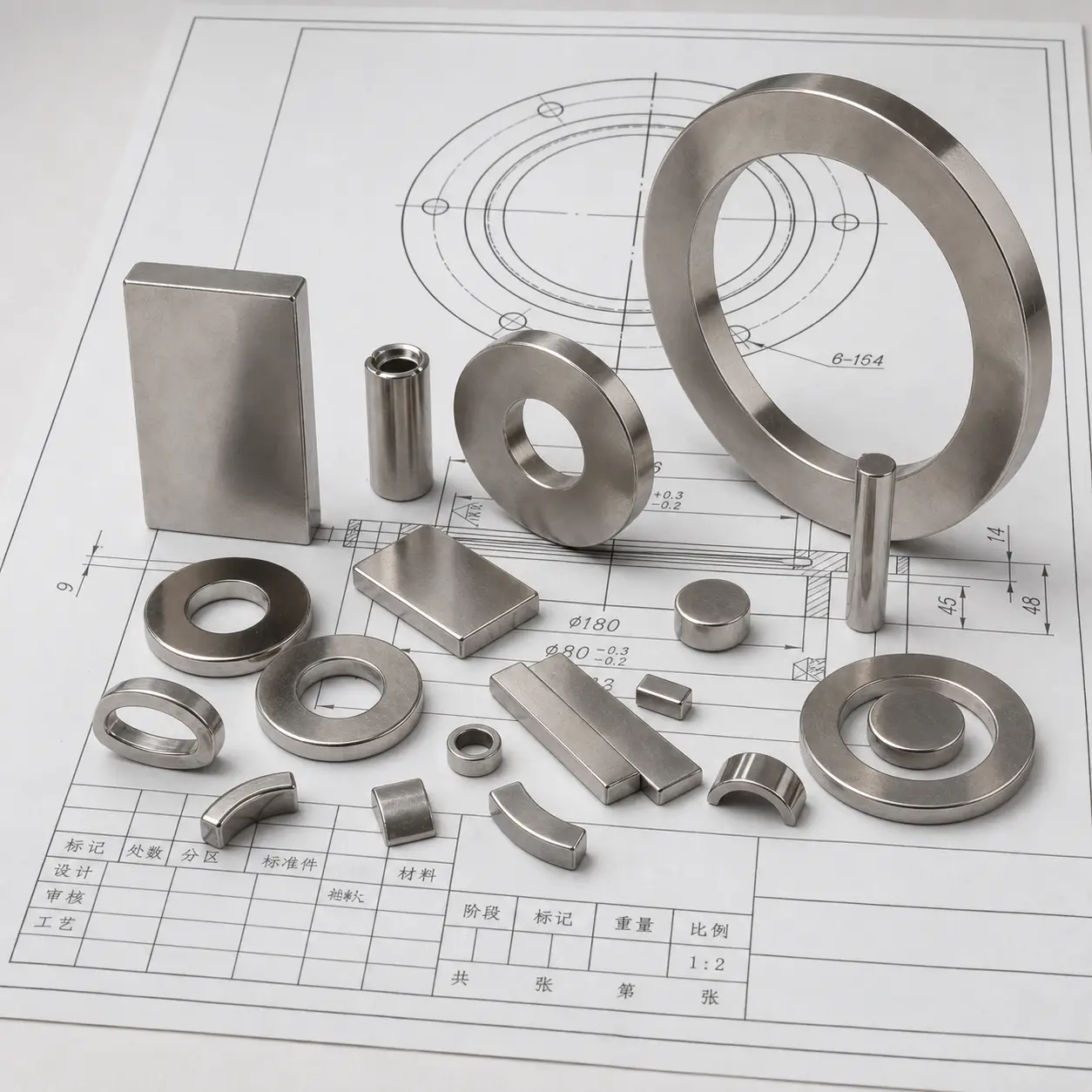
Sintered NdFeB Product Range
GX supplies block, disc, ring, arc-segment, bar, and custom-shaped sintered NdFeB magnets manufactured to customer drawings.
Rectangular and square sintered NdFeB magnets manufactured in custom sizes, grades, coatings, tolerances, and magnetization directions.
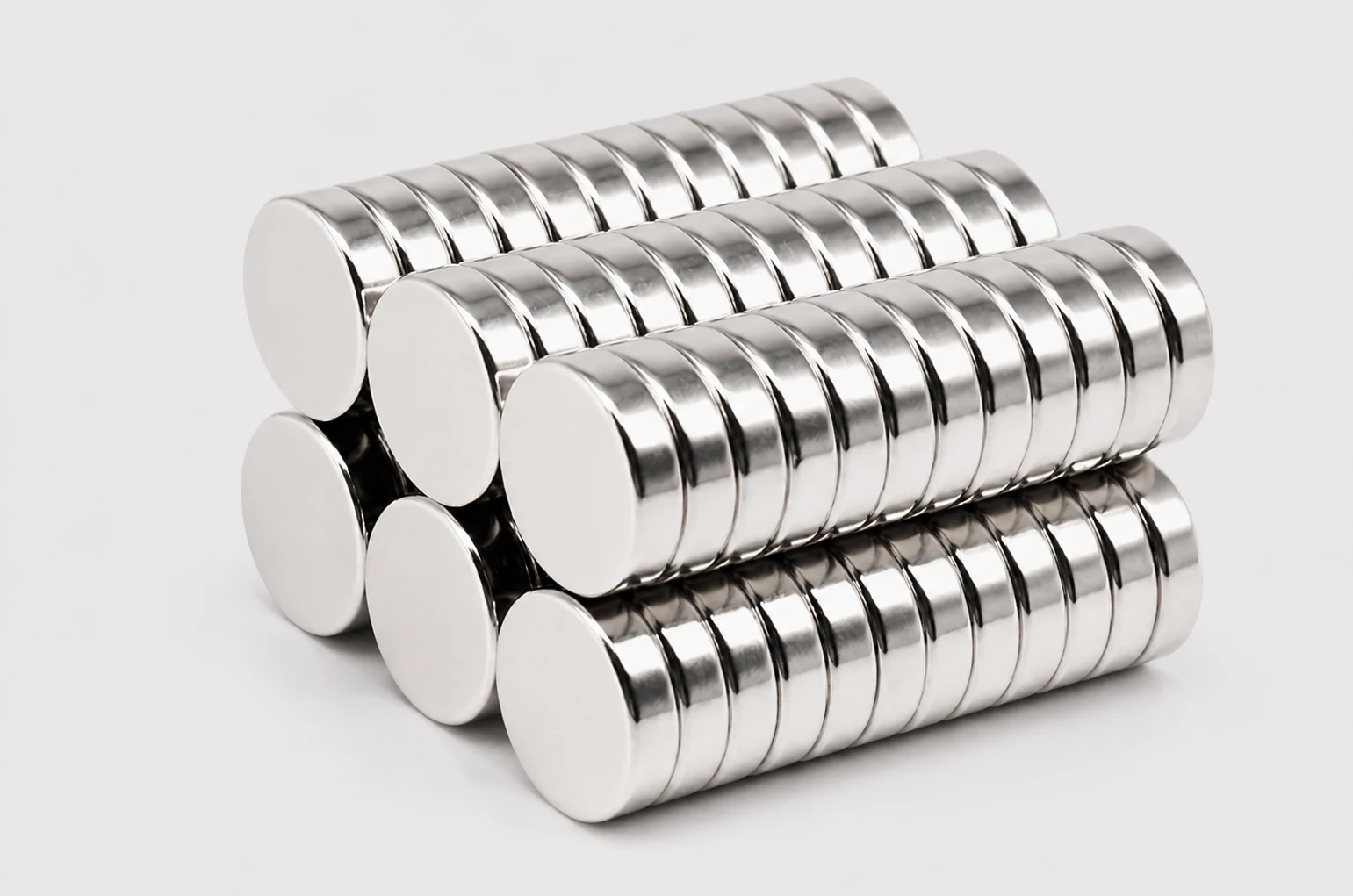
Round, flat sintered NdFeB magnets manufactured to the specified diameter, thickness, grade, coating, tolerance, and magnetization direction.
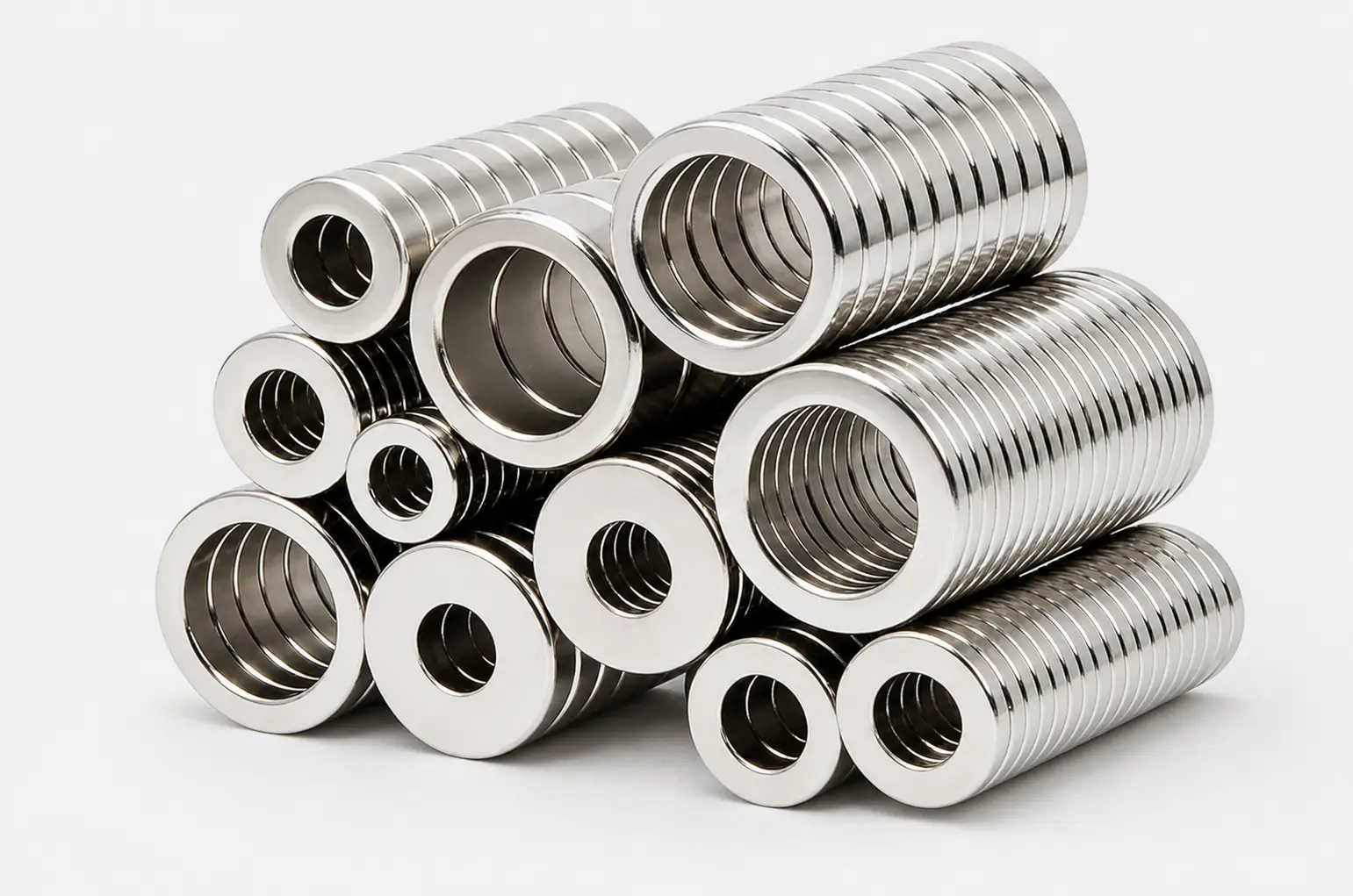
Ring-shaped sintered NdFeB magnets with a central bore, available in custom outer diameters, inner diameters, thicknesses, coatings, and magnetization configurations.
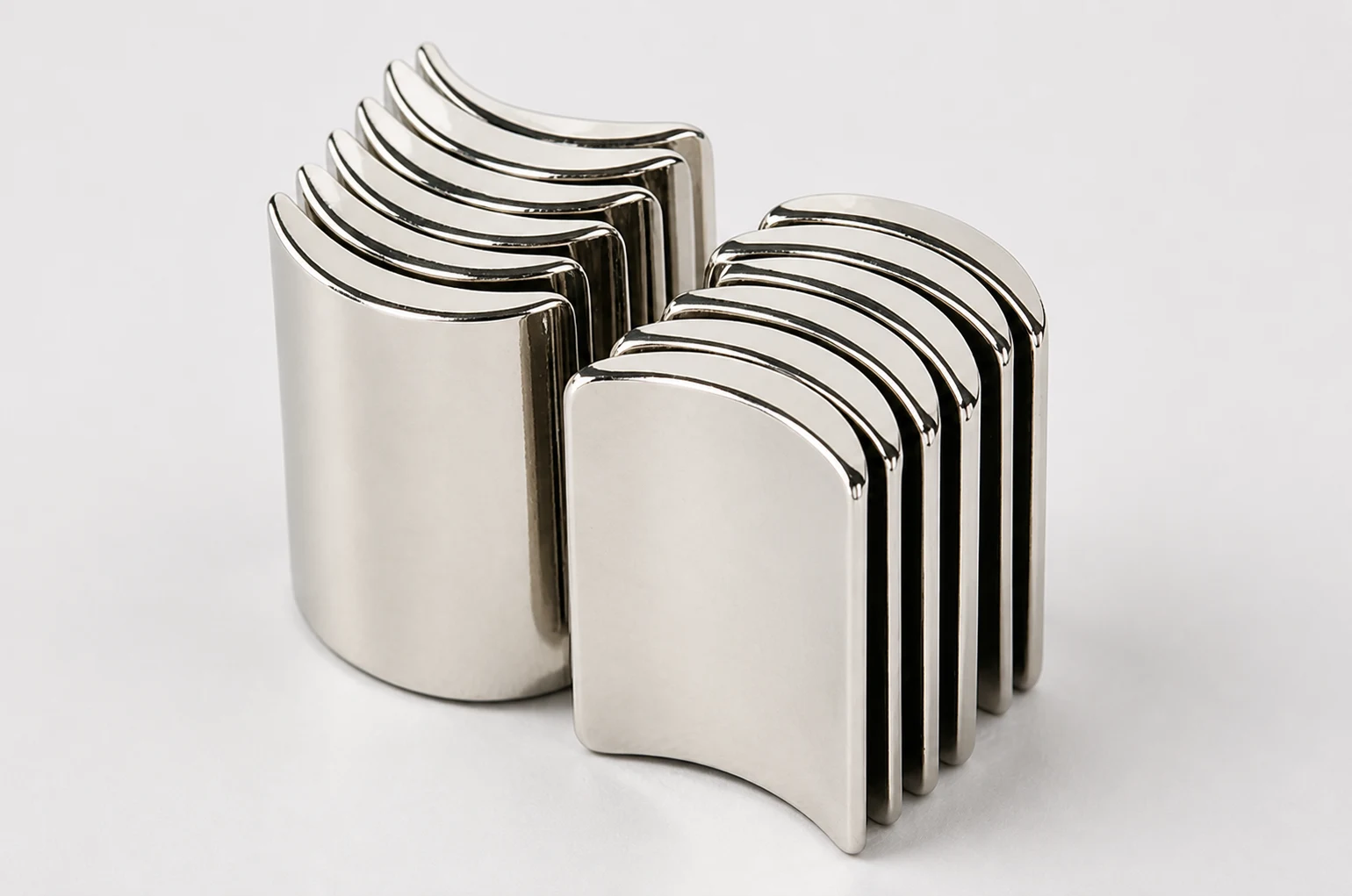
Curved sintered NdFeB magnet segments for motors and rotor assemblies, manufactured to specified radii, angles, dimensions, tolerances, and magnetization requirements.
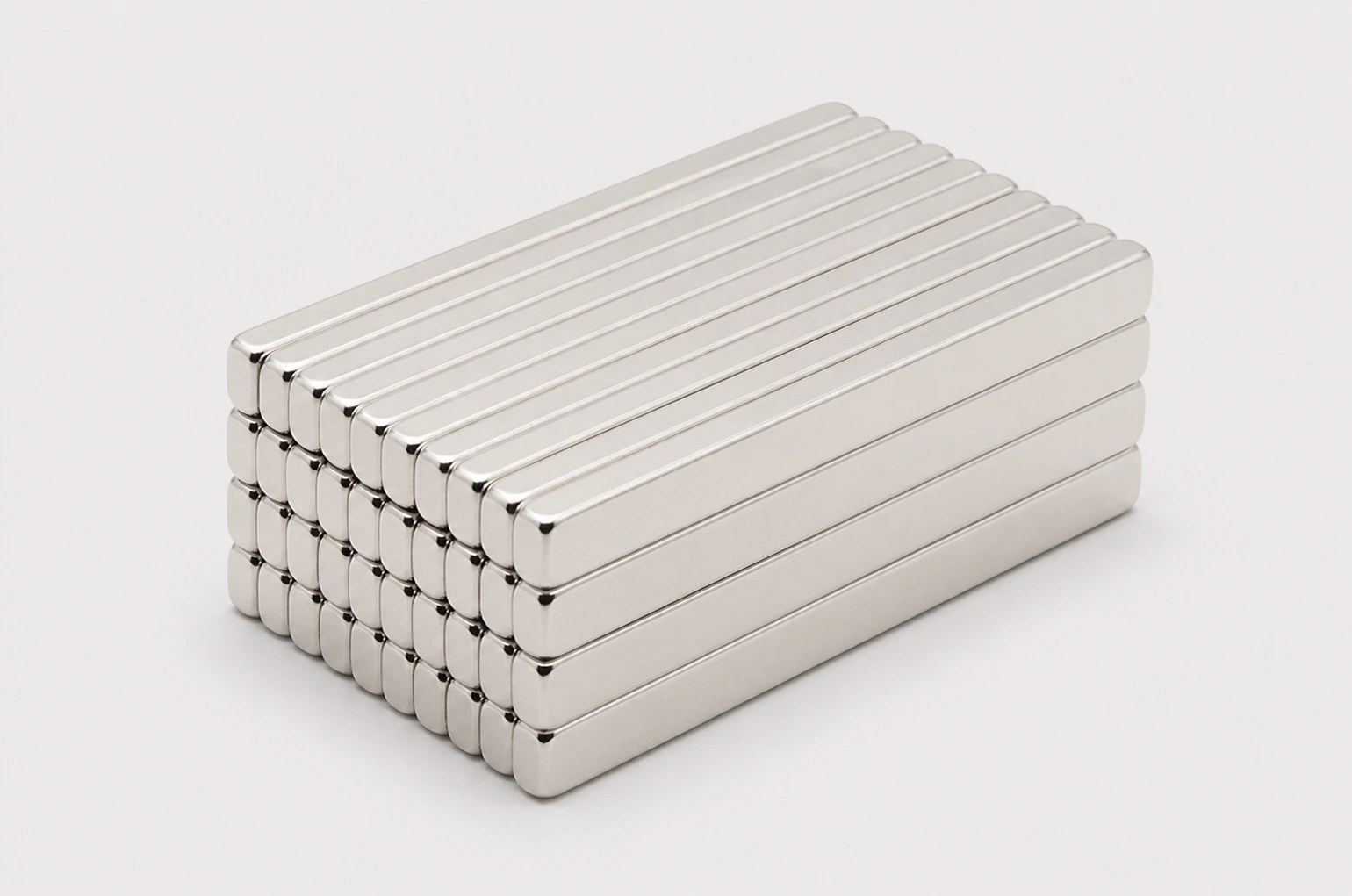
Elongated rectangular sintered NdFeB magnets manufactured in custom lengths, cross-sections, grades, coatings, and magnetization directions.
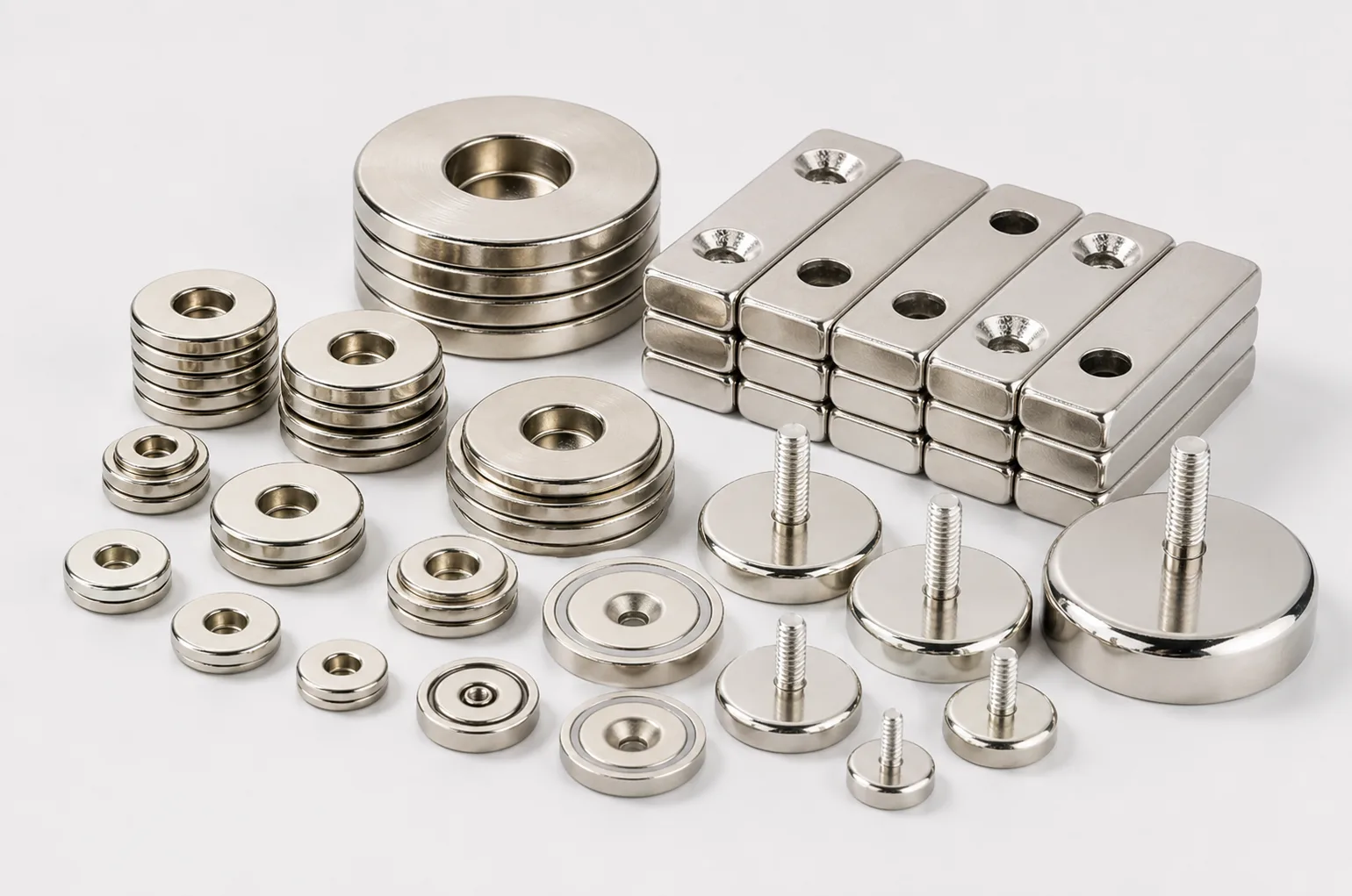
Non-standard sintered NdFeB magnets manufactured to customer 2D or 3D drawings, including custom geometries, tolerances, coatings, and magnetization configurations.
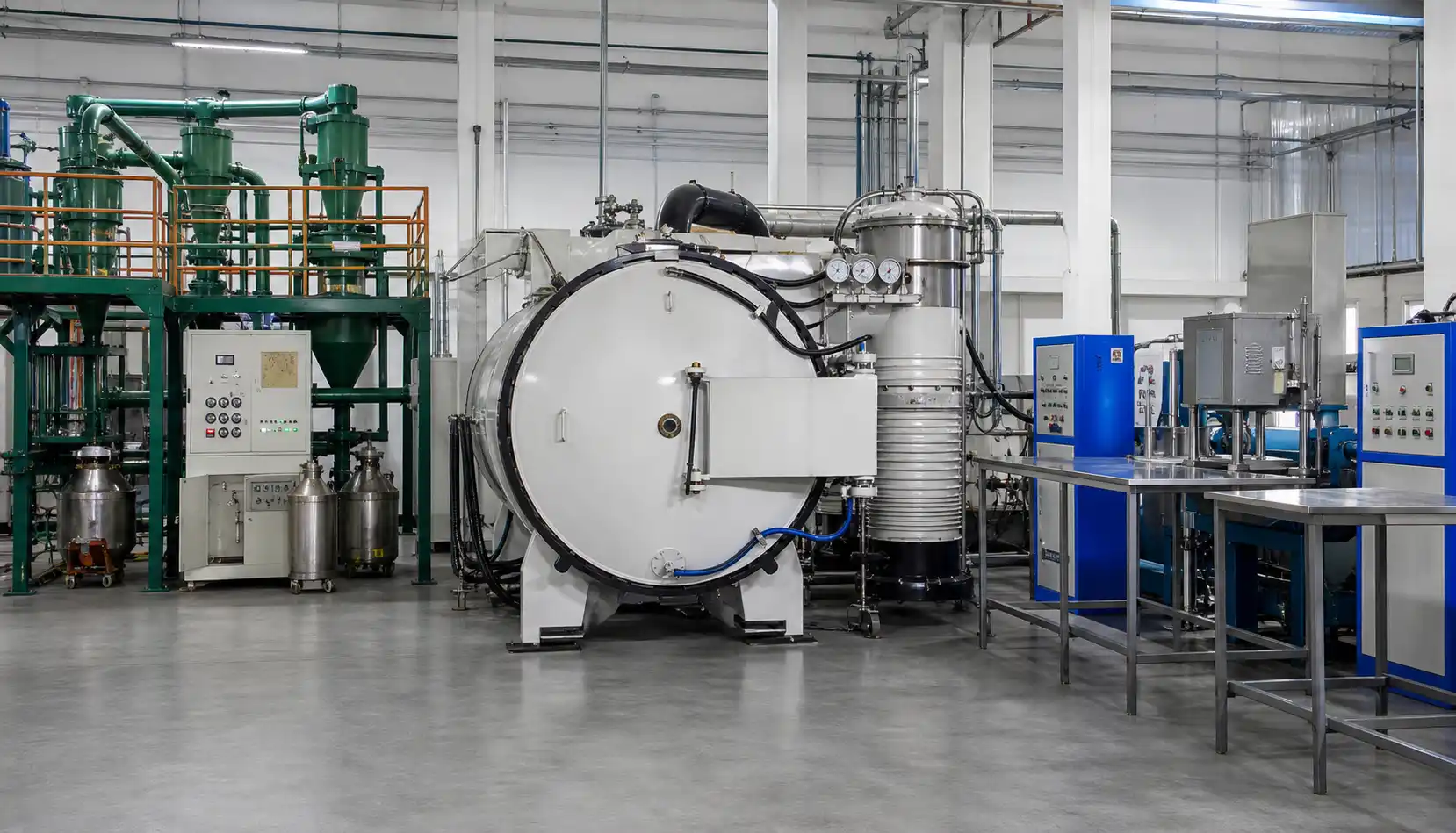
GX coordinates material formulation, grain boundary diffusion, pilot trials, surface protection and batch validation through qualified sintered NdFeB manufacturing resources. Each production route is selected around the required Br, Hcj, operating point, temperature exposure and commercial target.
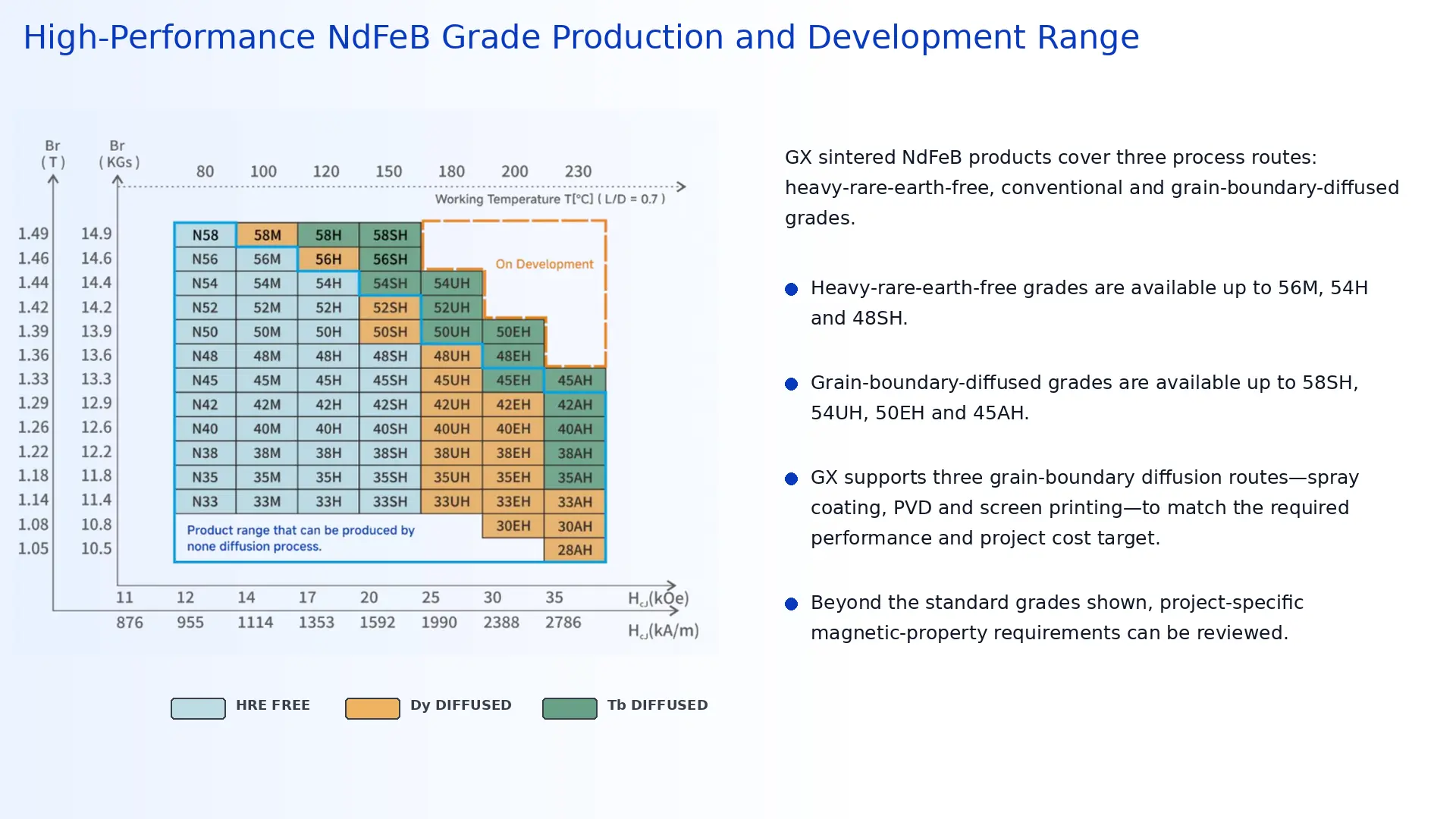
GX can evaluate conventional, heavy-rare-earth-free and grain-boundary-diffused NdFeB routes across N, M, H, SH, UH, EH and AH grade families. The selected route depends on the required magnetic properties, operating conditions, geometry and validation criteria.
Compare different cost, coercivity and temperature-performance strategies instead of being limited to one standard formulation.
For suitable applications, high-abundance rare-earth and reduced-heavy-rare-earth formulations can be evaluated to reduce dependence on Dy and Tb. Alloy composition, phase structure and sintering response are validated before the material route is approved.
A more balanced solution for projects sensitive to raw-material cost and supply risk.
Grain boundary diffusion routes using Dy- or Tb-containing media can be evaluated to increase intrinsic coercivity, Hcj, through more targeted heavy-rare-earth use. Available application methods include PVD, screen printing and spraying, subject to magnet geometry and production-site capability.
Higher coercivity can be pursued without automatically changing the entire magnet to a higher-cost bulk alloy.
Qualified R&D pilot resources support new-formula trials, small-batch material preparation and limited-volume sintering validation before recurring production. Available pilot references include 20–50 kg material batches and 1–50-piece trial runs, subject to project and facility confirmation.
Material and process risks can be evaluated before committing to full tooling and volume production.
Batch consistency is managed through controls covering raw-material composition, oxygen level, powder particle distribution, pressing density, magnetic orientation, sintering conditions and finished magnetic properties. Production results are compared with the approved material specification and sample baseline.
Reduced variation between development samples and recurring production batches.
Ni-Cu-Ni, zinc, epoxy and other project-specific surface systems can be reviewed according to humidity, temperature, handling, bonding and assembly conditions. Coating thickness, adhesion and corrosion testing are defined with the applicable test method and acceptance criteria.
Surface protection is selected for the actual operating environment rather than treated as a catalog color option.
Selected production grades spanning M to AH coercivity classes. Values are standard material-property ranges; maximum working temperatures are based on L/D ≥ 0.7.
Material and orientation
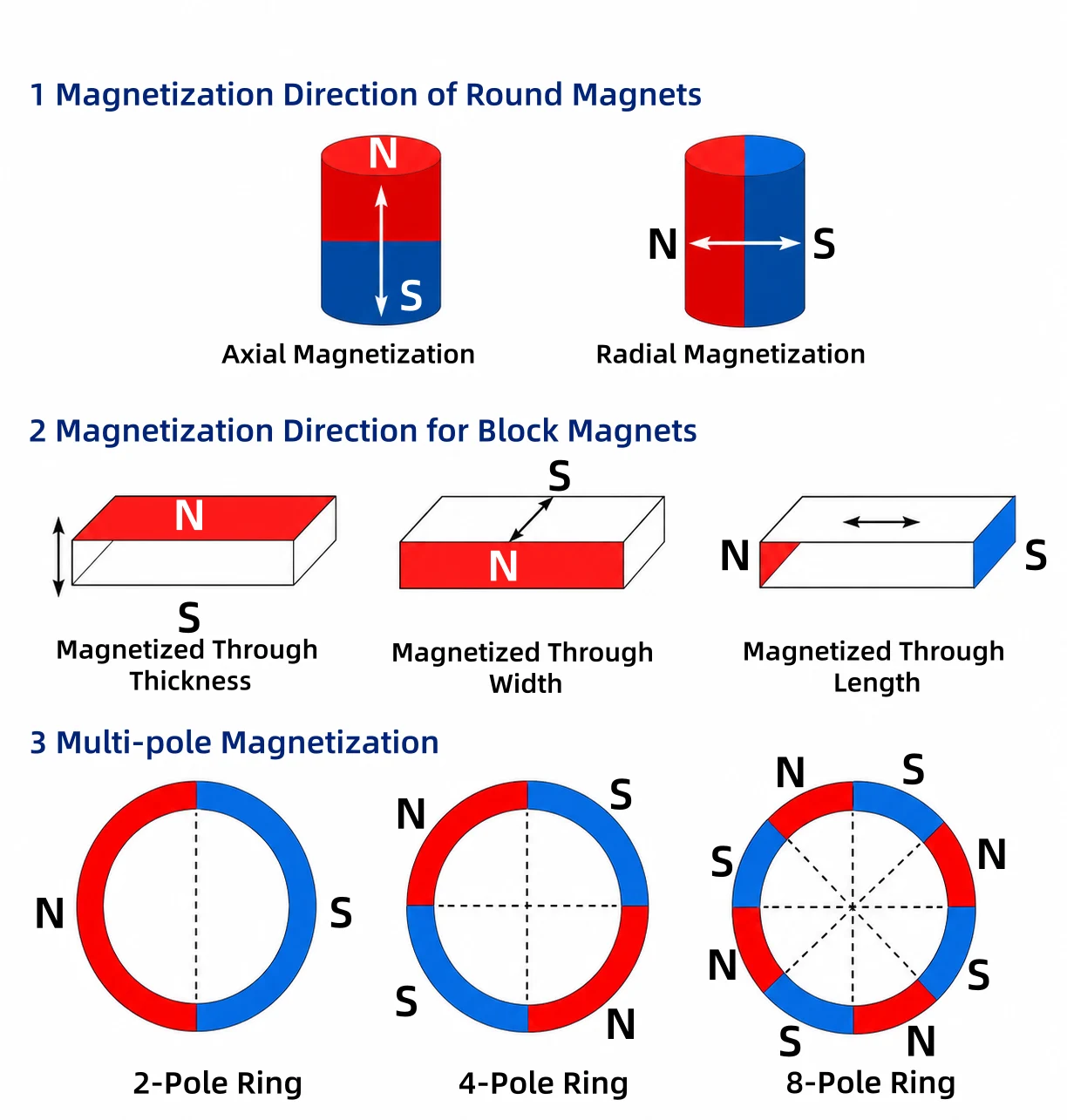
Define the grade and magnetic-property requirements together with the magnet geometry, magnetization and installed assembly conditions.
Send the available drawing, required grade or magnetic properties, dimensions, tolerances, coating, magnetization and application details. GX reviews these inputs before preparing the quotation and sample specification.
Engineering data
Final specifications are defined by the approved NdFeB grade, product drawing, magnetization requirements, test conditions and sample-validation results. Material properties and finished-part magnetic acceptance criteria are documented separately where applicable.
| Parameter | Available or reviewed scope | Buyer input | Approval basis |
|---|---|---|---|
| Material system | Sintered neodymium-iron-boron (NdFeB) magnets | Application, operating conditions and material requirements | Approved material specification |
| Material grade | Project-specific NdFeB grade or magnetic-property range | Required Br, Hcb, Hcj and (BH)max values, where applicable, plus the operating-temperature requirement | Approved material specification and sample results |
| Finished-part magnetic criteria | Magnetic flux, surface flux density or other agreed characteristics, measured under defined conditions | Required values, magnetic circuit, measurement position and test method | Approved inspection specification and records |
| Magnetization | Direction and pole configuration defined for the part geometry | Magnetization direction, pole configuration and acceptance criteria | Approved magnetization specification |
| Forms | Block, disc, ring, arc-segment, bar and custom-shaped NdFeB magnets | 2D or 3D drawing and assembly interface | Drawing review |
| Dimensions and tolerances | Defined according to part geometry, critical dimensions and assembly requirements | Critical dimensions, datums and fit requirement | Approved drawing and sample inspection |
| Coating and surface | Coating and appearance criteria selected for the application and environmental conditions | Required coating, exposure conditions and appearance criteria | Approved drawing and inspection specification |
| Operating conditions | Reviewed for temperature, corrosion exposure, mechanical load, magnetic load line and assembly method | Environmental profile and validation plan | Project-specific test agreement |
Send the available drawing together with the required magnetic properties, coating, magnetization, operating conditions and application details. A material grade alone does not determine finished-part magnetic output, assembly fit or motor performance.
Project Development Flow
The approved drawing, material specification and sample-validation results establish the controlled specification for production planning.
Review the magnet geometry, assembly interface, operating environment and available project requirements.
Confirm the NdFeB grade, required material properties, finished-part magnetic criteria, magnetization direction and pole configuration.
Define critical dimensions, tolerances, coating, test conditions and acceptance criteria for the sample stage.
Prepare samples according to the reviewed drawing and the agreed technical specification.
Evaluate samples against the agreed dimensional, magnetic, surface and assembly requirements using the defined test methods.
Move to batch production after the drawing, sample result and supply requirements are approved for the project.
Verification
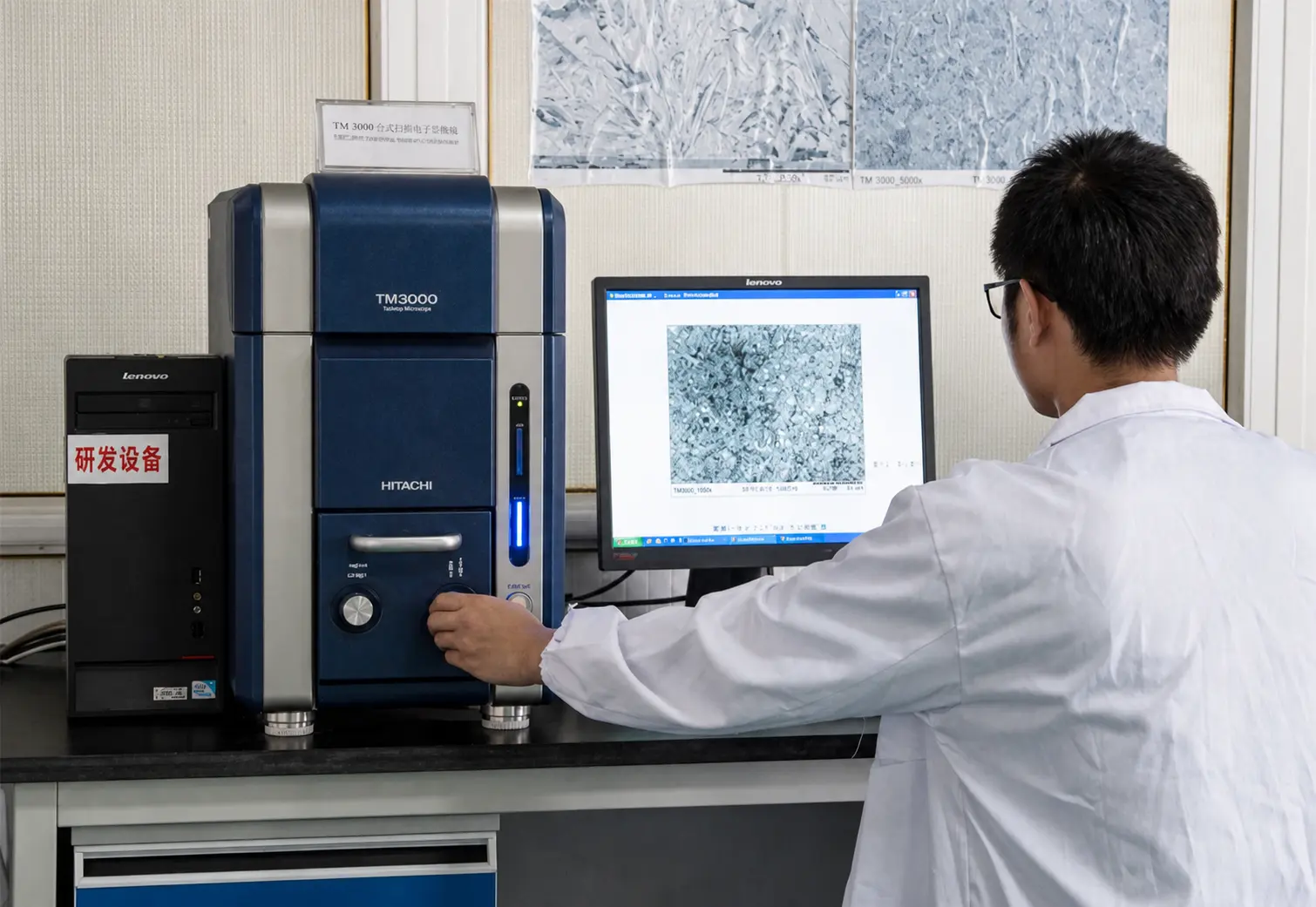
The control plan follows the approved drawing and the agreed dimensional, magnetic, surface, packaging and documentation requirements.
| Inspection item | Control approach | Why the buyer needs it |
|---|---|---|
| Drawing and dimensions | Critical dimensions, datums and tolerances are checked against the approved drawing using the specified measurement methods. | Confirms fit with the mating component, mounting interface and available assembly space. |
| Magnetic properties | Material properties and finished-part magnetic characteristics are checked against their respective specifications and defined test conditions. | Confirms that the supplied part meets the agreed magnetic acceptance criteria. |
| Magnetization | Magnetization direction and pole configuration are verified against the approved magnetization specification. | Reduces the risk of installation errors and magnetic-circuit mismatch. |
| Appearance and coating | Edges, coating and appearance are evaluated according to the documented acceptance criteria. | Verifies conformity before assembly and shipment. |
| Packaging and shipment release | Packaging, labeling and shipment documentation are checked against the approved delivery requirements before dispatch. | Confirms product identification, quantity and shipment preparation. |
Application fit
Selection depends on the magnetic circuit, component interface, operating environment and project-specific performance requirements.
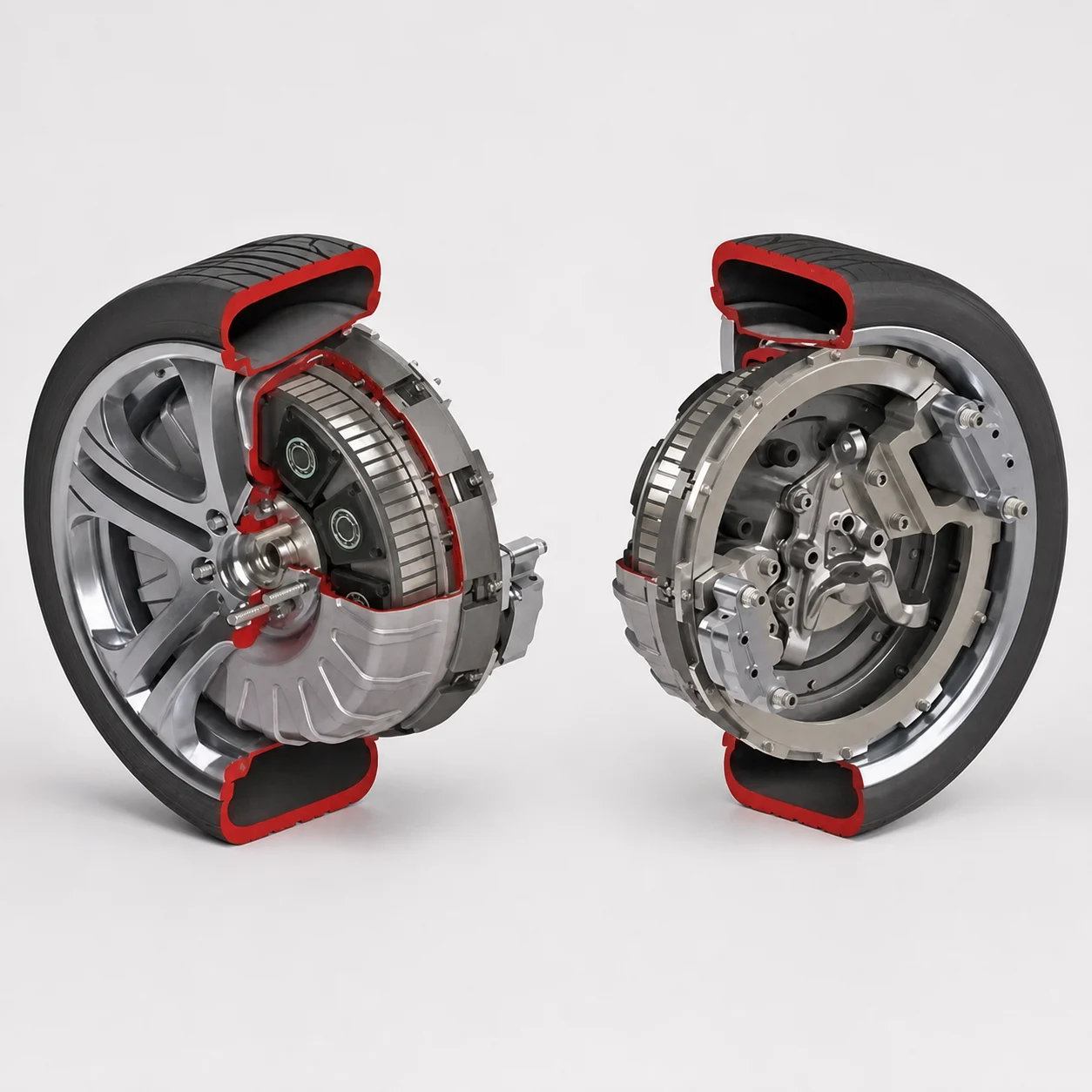
For motor and actuator assemblies where magnet geometry, magnetization, operating conditions and installation interfaces are defined by the project drawing.
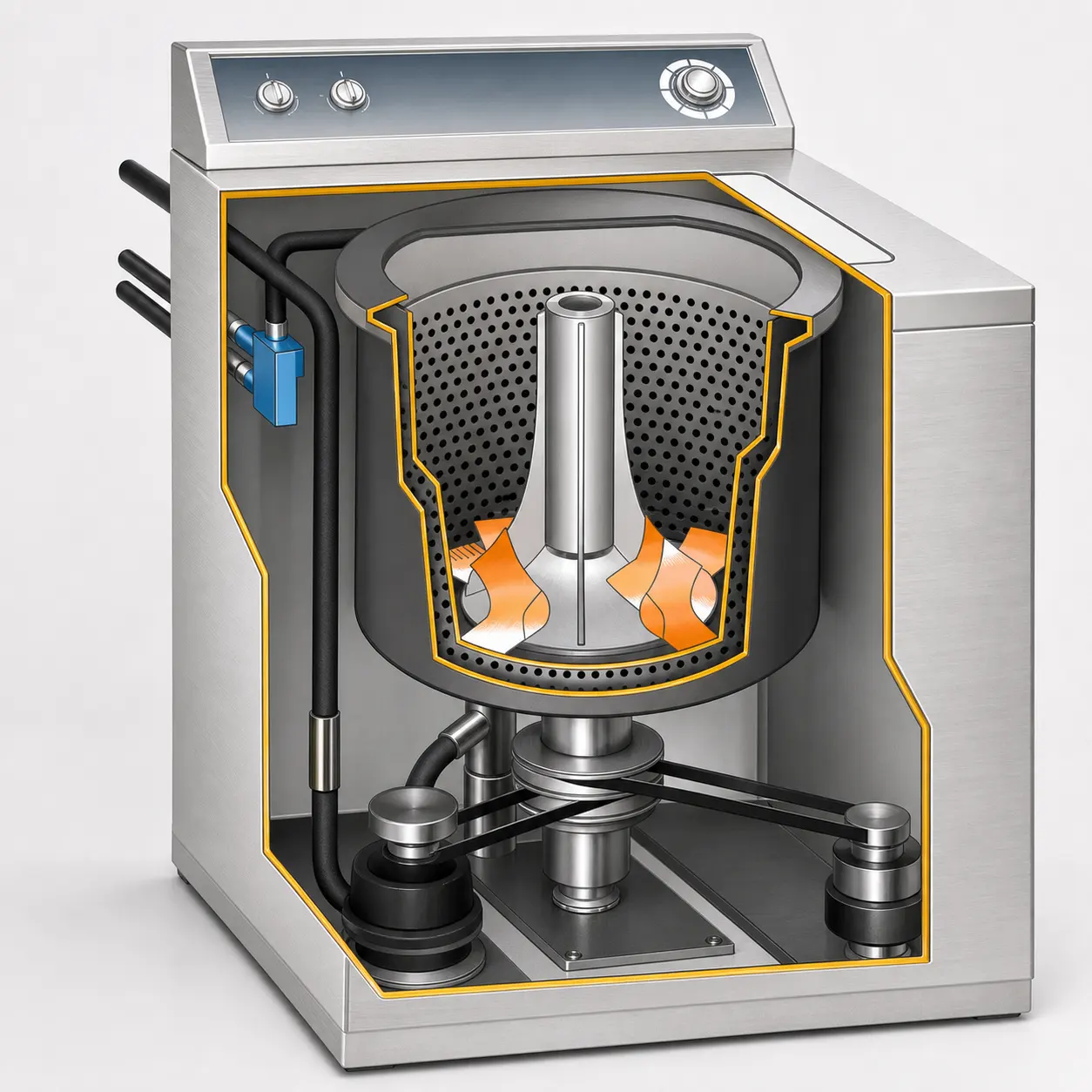
For compact motor and actuator assemblies in appliances, subject to the required magnetic performance, installation space and operating conditions.
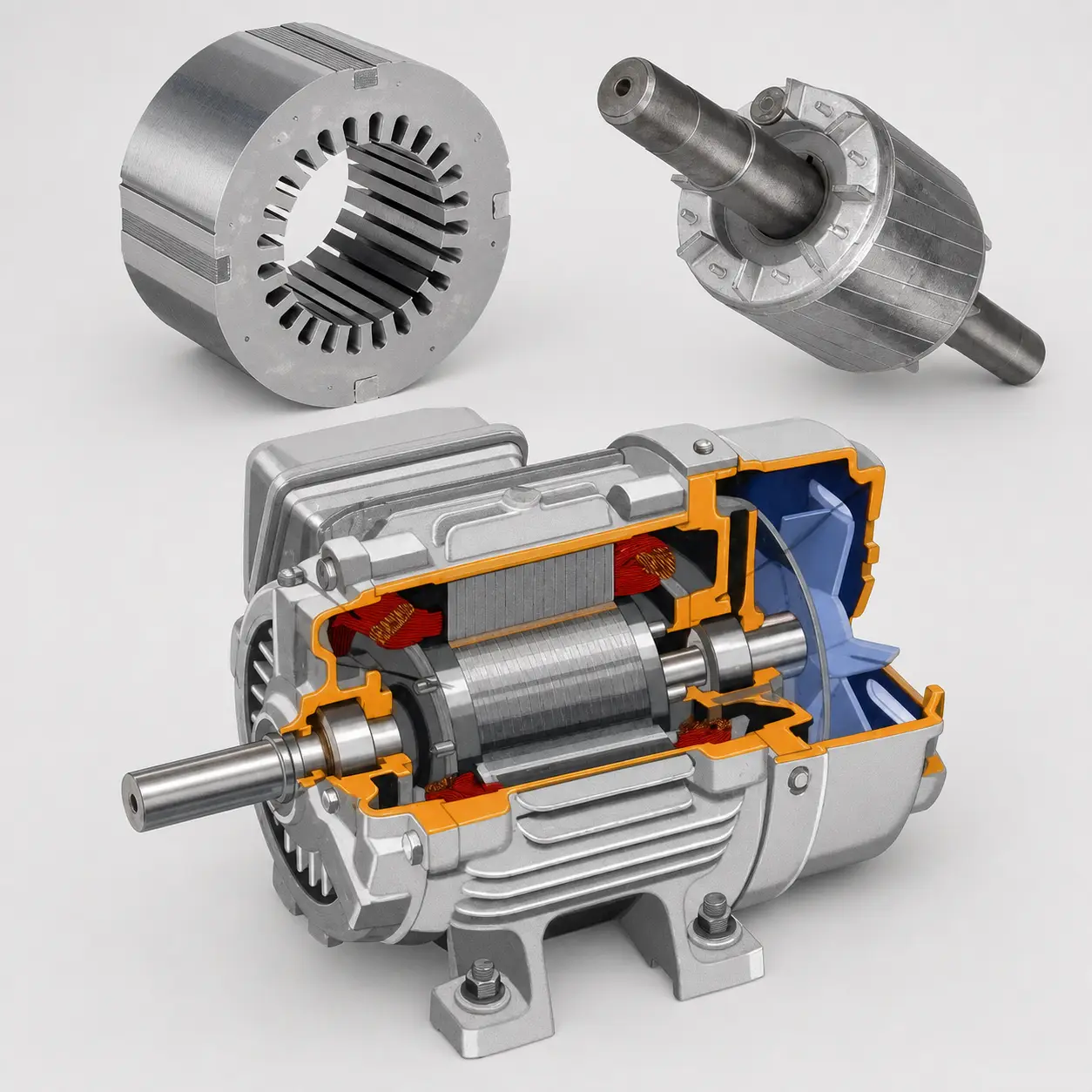
For industrial motor and magnetic-component projects requiring a defined NdFeB magnet geometry and controlled production specification.
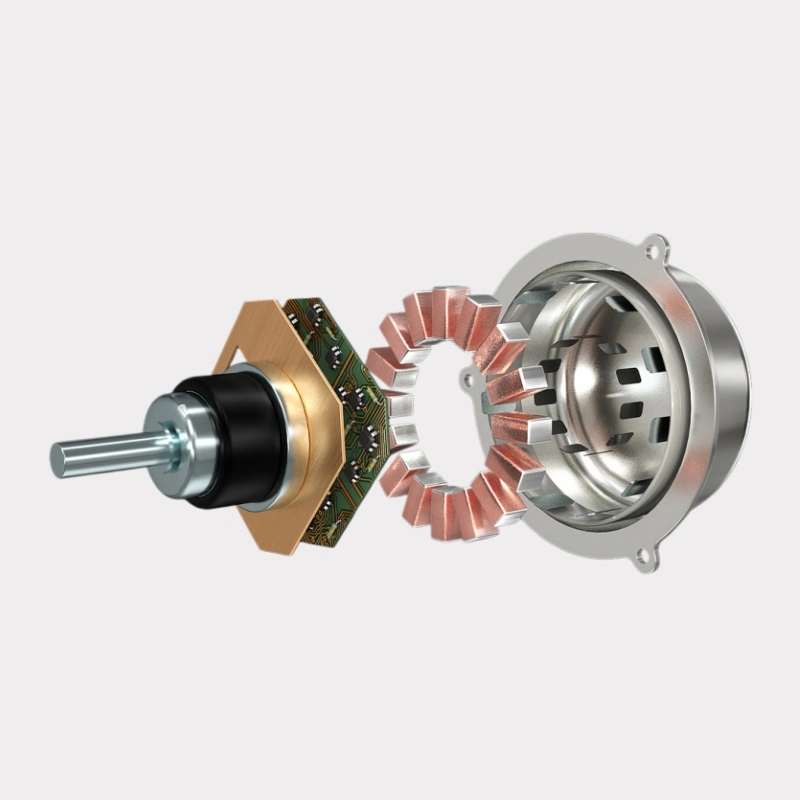
For compact magnetic-component applications where available space, geometry and assembly requirements must be considered together.
Engineering Review
For application review, a sintered NdFeB magnet should be evaluated within its magnetic circuit and assembly rather than by material grade alone. Before preparing samples, GX reviews the drawing, required magnetic properties, critical dimensions, magnetization and operating conditions.
Documentation Review
Quality-system certificates, material-compliance declarations, drawings, inspection records and delivery documents are reviewed for the quoted part. The document scope must match the specified material, coating, part number and production batch where applicable.
Applicable quality-system documentation can be shared according to the quoted manufacturing scope and customer project requirements.
RoHS, REACH and other material-compliance requirements should be stated at the RFQ stage and reviewed for the specified NdFeB material, coating and supplied part.
Drawings, sample-approval criteria, inspection requirements and delivery documentation are reviewed as part of the project specification.
Industry engagement
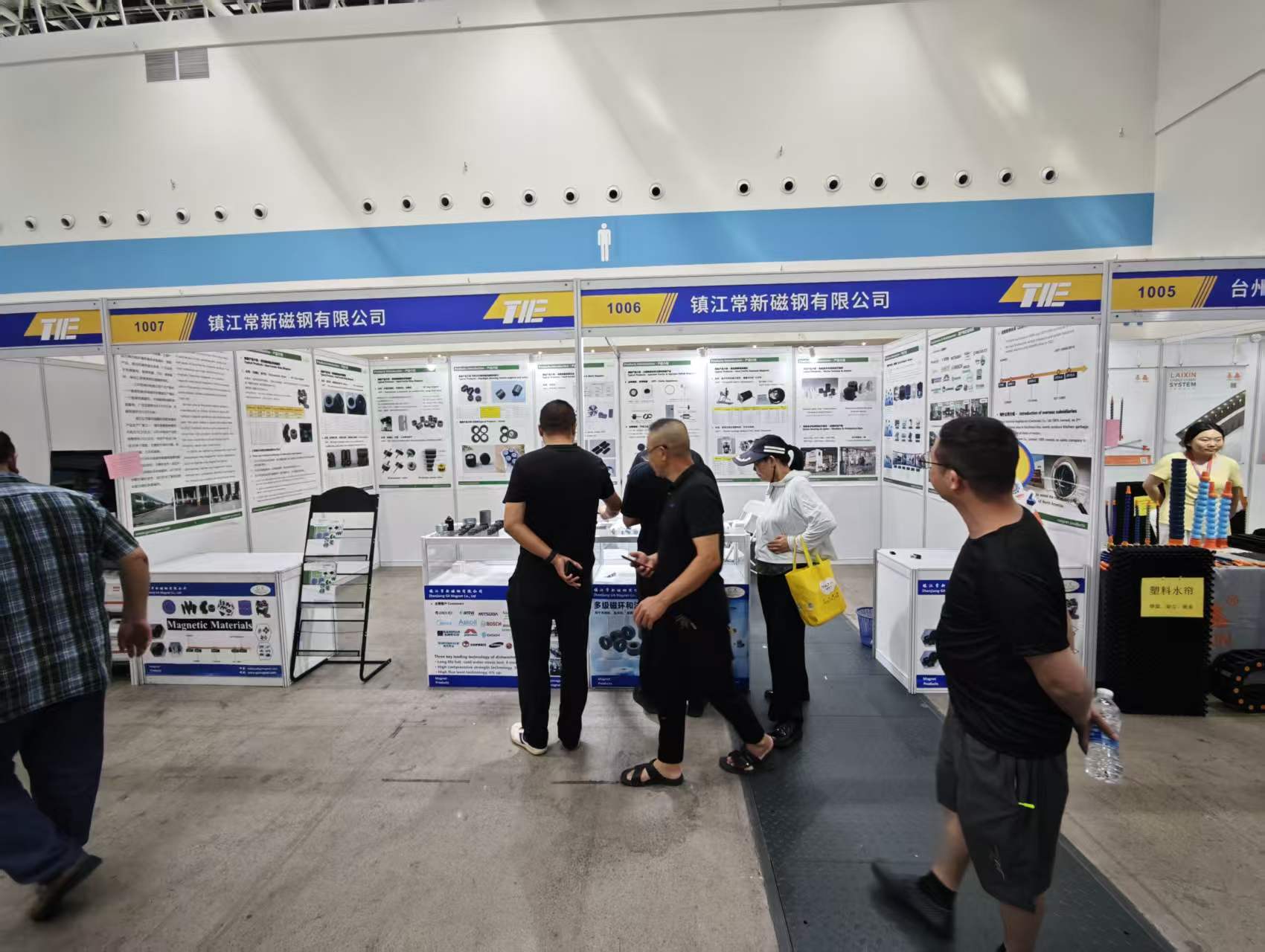
GX Magnet participates in magnetic-material and motor-component exhibitions to present custom NdFeB magnet capabilities and discuss project requirements with engineers and buyers. Visitors can review magnet geometries, drawing-based development procedures and application-specific supply options.