GX MAGNET Logo
NdFeB Disc Magnet Manufacturing Facility

NdFeB Disc Magnet Manufacturer

GX Magnet supplies sintered NdFeB disc magnets manufactured to customer drawings for motors, sensors, actuators, and industrial magnetic assemblies. Diameter, thickness, material requirements, magnetization, and installation conditions are assessed together to define the sample and supply specification.

  • Diameter, thickness, edge condition, and flat mounting surfaces reviewed against the customer drawing
  • NdFeB material requirements, magnetization direction, and polarity identification aligned with the intended assembly
  • Sample scope and repeat-order requirements defined around the agreed product specification
View Magnet Options
NdFeB Disc Magnet
Bosch logo
Midea logo
Siemens logo
WEG logo
Gree logo
Shimge logo
Copreci logo
Buhler logo
Samsung logo
Nidec logo
Project Review

Information Required for NdFeB Disc Magnet Quotation

To provide an accurate quote and custom sampling plan, GX completes a thorough technical review upfront, covering disc geometry, magnetic performance, mounting requirements and operating conditions. These details establish the technical baseline for your OEM disc magnet solution.

DISC GEOMETRY & MOUNTING REQUIREMENTS

Supply disc diameter, thickness, edge preparation, and critical flatness or mounting face specifications. Your drawing should define the mating surface, tolerance grades, and all dimensions critical to installation alignment.

MAGNETIC PERFORMANCE & APPLICATION

Specify your required NdFeB grade or magnetic performance targets, along with the intended application (sensing, holding, motor, actuator, etc.). Note that disc dimensions alone do not determine actual magnetic output in the final assembly.

MAGNETIZATION ORIENTATION & POLARITY

Indicate the required magnetization axis, polarity marking, and any custom pole configurations for your project. These parameters are evaluated alongside the magnet’s installed position and operating air gap.

VALIDATION & PRODUCTION PLANNING

Share your operating environment, sample quantity, acceptance criteria, forecasted volume, and packaging requirements. This allows us to define a suitable sample scope and a realistic production and delivery schedule.

RELATED NDFEB SOLUTIONS

NdFeB Disc Magnet Product Options

Explore sintered NdFeB disc magnet configurations defined by diameter, thickness, mounting features, magnetization, and surface requirements. Final specifications are reviewed against the customer drawing and project conditions.

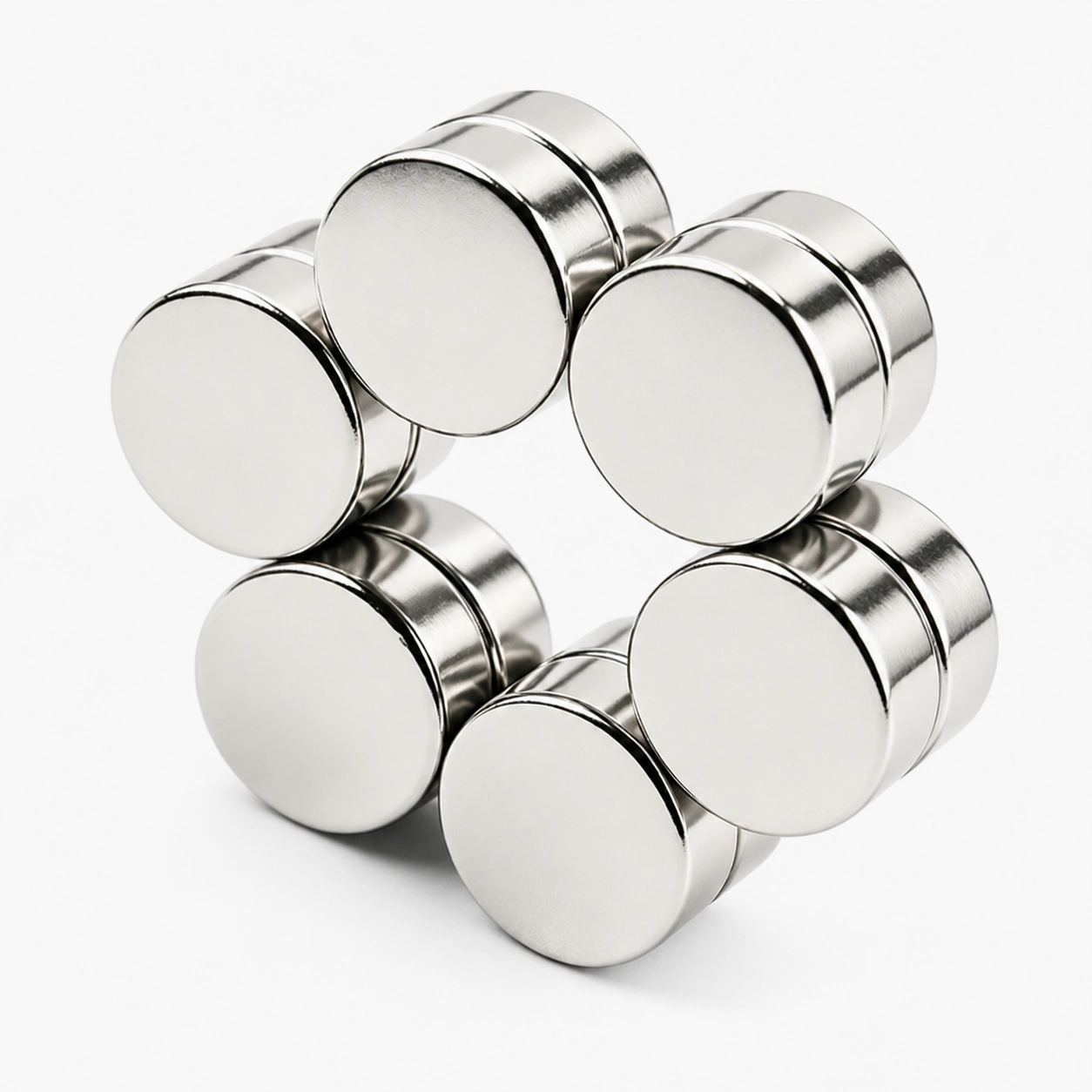
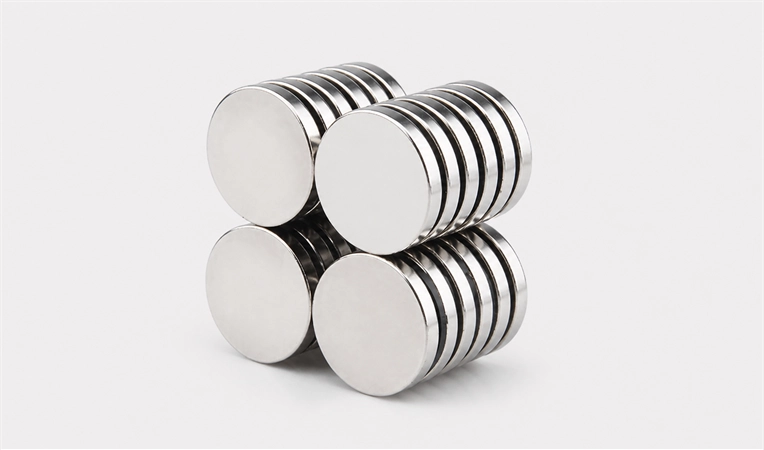
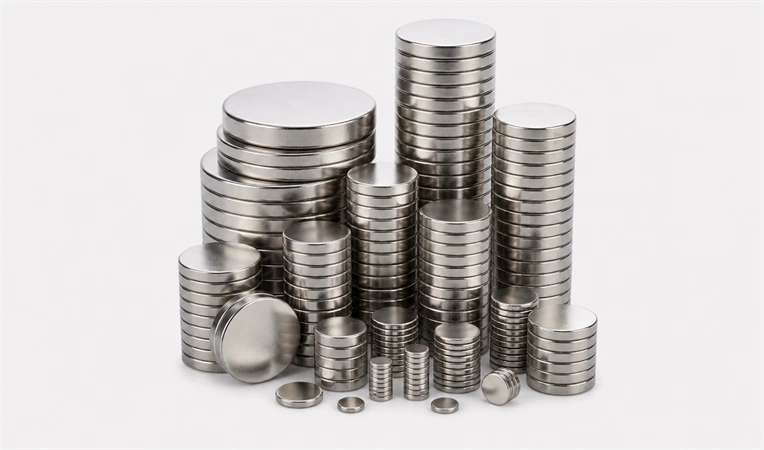
Standard Solid NdFeB Disc Magnets

Standard Solid NdFeB Disc Magnets

Characteristics:

Full-solid circular neodymium magnets with no central bore or mounting features. A versatile, cost-effective standard option with mature production and wide size availability, ideal for holding, sensing, small actuation and magnetic positioning applications.
Specification Focus:
Disc diameter, thickness and tolerance grades; edge preparation and appearance limits; material grade (N/M/H/SH/UH series) and magnetic performance targets; magnetization direction (axial / diametral); basic surface protection requirements.

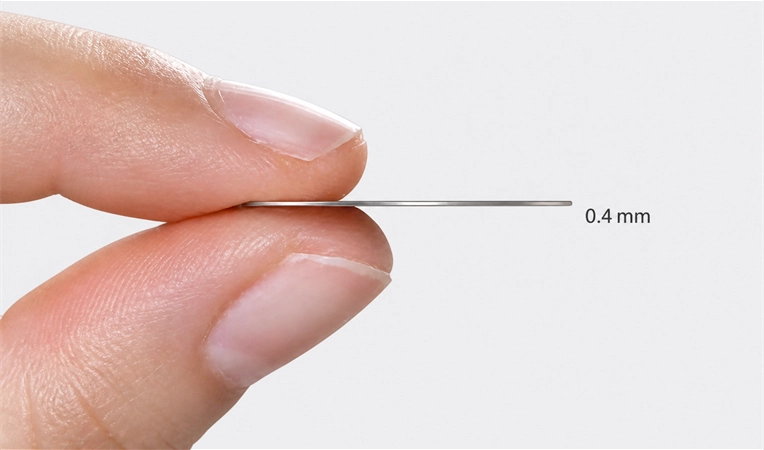
Thin NdFeB Disc Magnets

Thin NdFeB Disc Magnets

Characteristics:

Ultra-low-profile neodymium discs with a high diameter-to-thickness ratio, purpose-built for assemblies with tight axial space. Precision thickness control and strict flatness / parallelism management minimize warping, suited for slim electronics, micro sensors and precision instruments.
Specification Focus:
Outer diameter, nominal thickness and precision thickness tolerances; face flatness, parallelism and warp control; edge chipping and burr limits; magnetization uniformity; handling and assembly protection requirements.

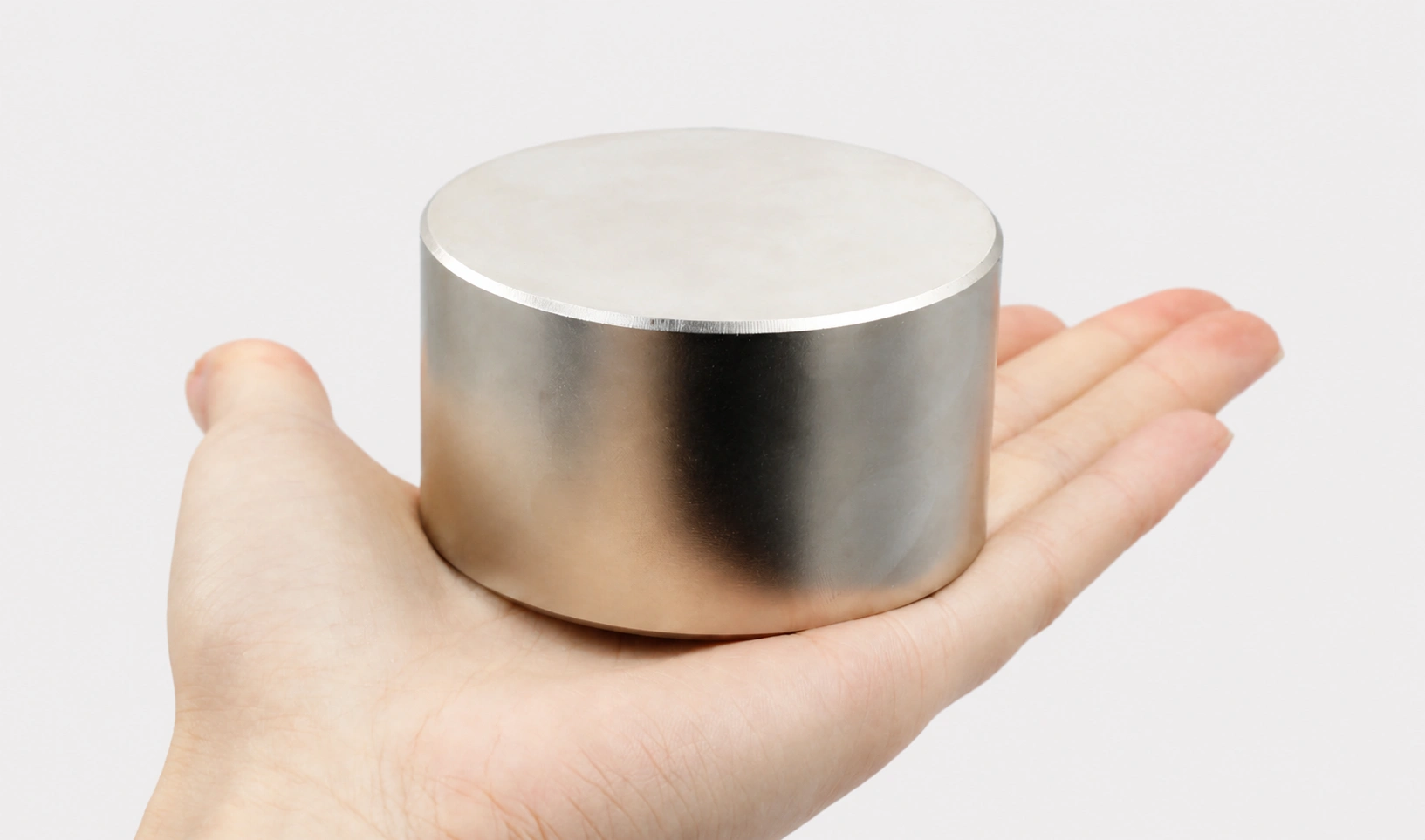
Large-Diameter NdFeB Disc Magnets

Large-Diameter NdFeB Disc Magnets

Characteristics:
Industrial-grade neodymium discs with an extended pole face, delivering high holding force and strong magnetic flux output. Tight dimensional consistency and flatness control guarantee full surface contact, built for magnetic fixturing, heavy lifting, separation equipment and high-torque actuators.
Specification Focus:
Large outer diameter, thickness and machining tolerances; face flatness, parallelism, roundness and perpendicularity; effective contact area and assembly fit requirements; application-specific force / flux density targets and demagnetization resistance; edge impact protection specifications.

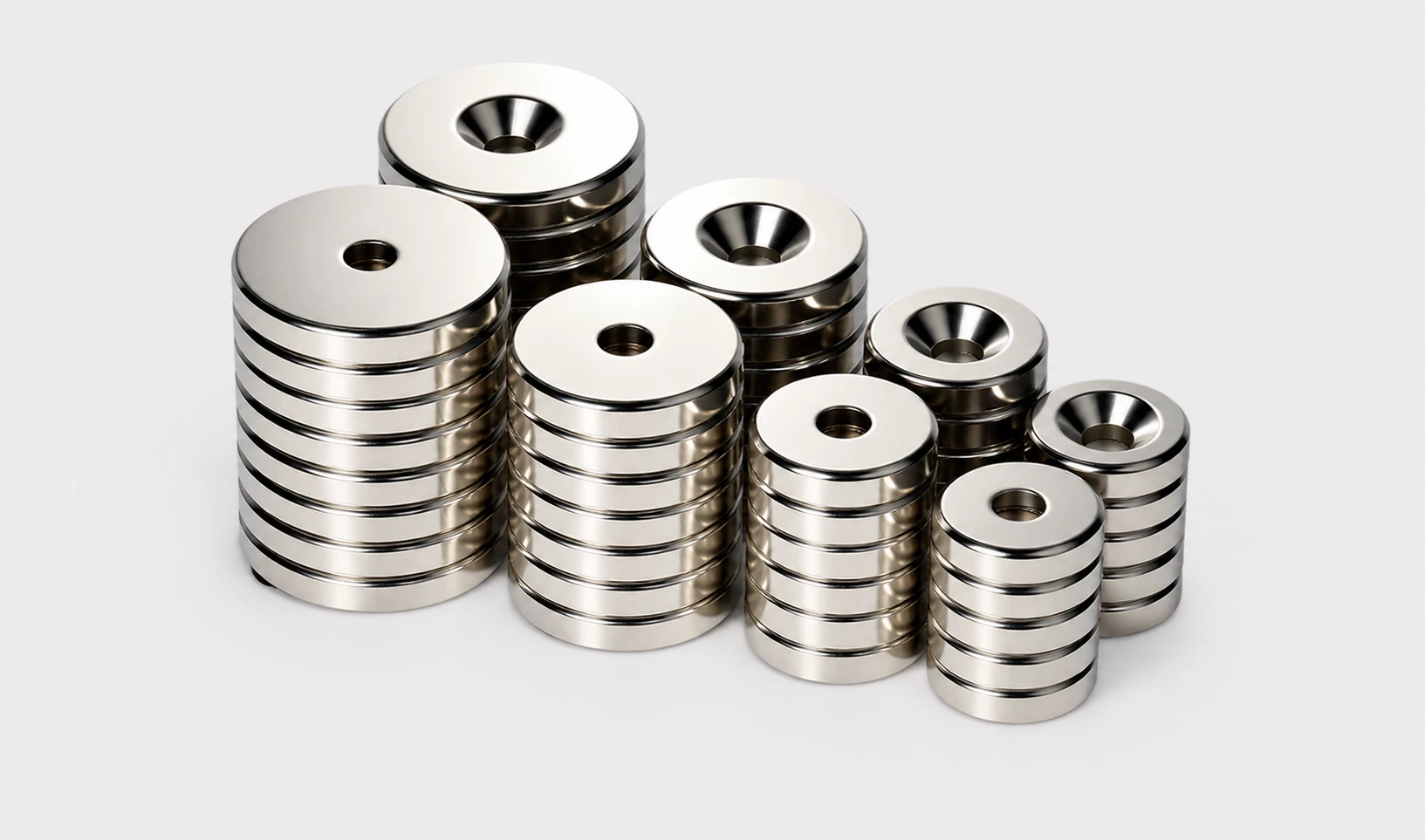
Countersunk NdFeB Disc Magnets

Countersunk NdFeB Disc Magnets

Characteristics:
Neodymium discs with precision-engineered countersunk mounting holes for flush screw installation. Delivers secure, accurately aligned fastening with a smooth, unprotruding surface, designed for mechanical assemblies requiring removable fixation and a clean, finished appearance.
Specification Focus:
Hole diameter, countersink profile / depth / angle and hole concentricity; remaining wall thickness at the countersink base; mounting orientation and matching screw size; magnetization alignment relative to the hole; edge and hole deburring requirements.

Custom-Magnetization NdFeB Disc Magnets

Custom-Magnetization NdFeB Disc Magnets

Characteristics:
Bespoke magnetized neodymium discs beyond standard axial / diametral configurations. Supports multi-pole magnetization, Halbach arrays, angled magnetization and custom pole patterns to match your unique magnetic circuit, ideal for servo motors, encoders and precision sensors.
Specification Focus:
Magnetization axis, pole count, pole pitch accuracy and pole width ratio; magnetic waveform (sine / square / trapezoidal), peak flux density and field uniformity; polarity marking and reference pole location; air gap and circuit compatibility; magnetic testing methods and acceptance criteria.

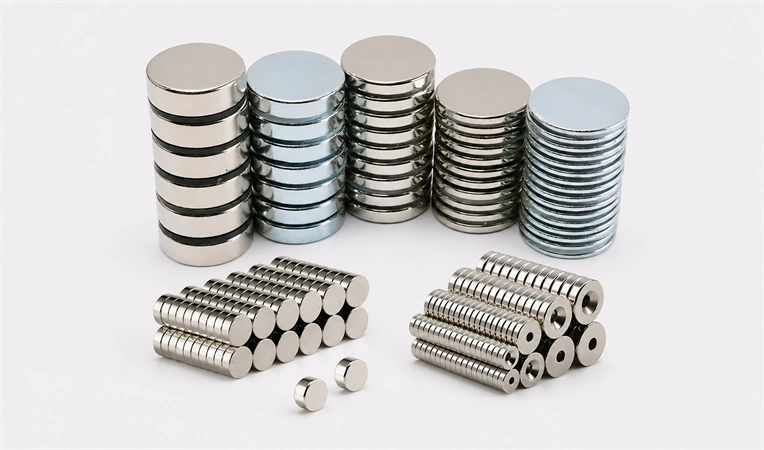
Coated NdFeB Disc Magnets

Coated NdFeB Disc Magnets

Characteristics:

Application-tailored surface protection systems that address the inherent corrosion risk of raw NdFeB. Available in metal plating or organic coating options to balance corrosion resistance, wear resistance, electrical insulation and cosmetic requirements for harsh or specialized environments.
Specification Focus:
Operating temperature, corrosion severity (salt spray rating), humidity and exposure conditions; coating type (NiCuNi, Zn, Sn, epoxy, passivation, Everlube, etc.), thickness, adhesion and porosity limits; assembly-related wear resistance; cosmetic finish requirements; reliability validation standards.

Why Choose GX Sintered NdFeB Disc Magnets
Beyond standard off-the-shelf products, GX has built dedicated manufacturing capabilities for disc magnets, solving common industry pain points and delivering unique competitive value for your OEM 

What Are NdFeB Disc Magnets?

NdFeB disc magnets, also known as neodymium disc magnets or round neodymium magnets, are solid, flat cylindrical permanent magnets made from neodymium-iron-boron material. A standard disc magnet has a circular profile without a central bore and is commonly specified by diameter and thickness.


In OEM drawings, disc magnets are often selected where a compact circular mounting area, flat contact face, or defined magnetic field through or across the disc is required. Common applications include sensors, compact motor components, actuators, latching mechanisms, and magnetic holding assemblies.

Disc magnet selection is not based on diameter alone. The thickness-to-diameter ratio, magnetization direction, material requirement, mounting arrangement, and surface condition all influence performance after installation.

NdFeB Disc Magnet Application

Disc Dimensions & Mounting Face

Diameter, thickness, edge condition and the flat contact surface are reviewed with the available installation space and mating-component drawing.

Magnetization Orientation

Axial or diametrical magnetization may be considered according to the intended magnetic field direction, sensor position or assembly arrangement.

Material & Operating Context

The NdFeB material requirement or magnetic target is evaluated together with temperature, working air gap, surrounding materials and the expected function of the assembly.

Surface Condition & Validation

Surface-protection requirements, handling method, appearance expectations and project-specific sample checks are defined according to the final use conditions.

Project Specifications

How to Specify an NdFeB Disc Magnet for OEM Procurement

A complete disc magnet RFQ links the disc geometry to its installed function. Review these five inputs before requesting a quotation or samples.

1 Size Envelope & Mating Surface

Provide disc diameter, thickness, edge condition and the dimensions that control contact, bonding, seating or installed clearance.

2 Field Direction & Performance Need

State whether the required field acts through the flat faces or across the disc diameter, together with the magnetic target, working distance and surrounding magnetic circuit.

3 Material, Environment & Surface

Share the operating temperature, humidity or corrosion exposure, handling process and any required surface condition for the round neodymium magnet.

4 Sample, Forecast & Delivery Inputs

Indicate sample quantity, acceptance method, expected order volume, packaging preference and required delivery timing for the purchasing plan.

5 Disc Magnet RFQ Checklist

For a faster technical review, send the available drawing or dimension list, diameter and thickness, magnetization requirement, application context, operating environment and expected quantity. A grade name or disc size alone does not define the final installed result.

Engineering Specs

Technical Data for Sourcing NdFeB Disc Magnets

A disc magnet quotation should be based on the approved drawing, required magnetic function, and sample-acceptance basis. A grade, diameter, or coating alone is not a complete specification for every neodymium disc magnet project.

NdFeB Disc Magnet Purchase Specification Matrix
Parameter Available or Reviewed Scope Buyer Input Approval Basis
Disc profile Solid circular disc defined by diameter, thickness, edge condition and any drawing-defined feature 2D/3D drawing, diameter, thickness, critical dimensions and mounting details Approved drawing and dimensional sample check
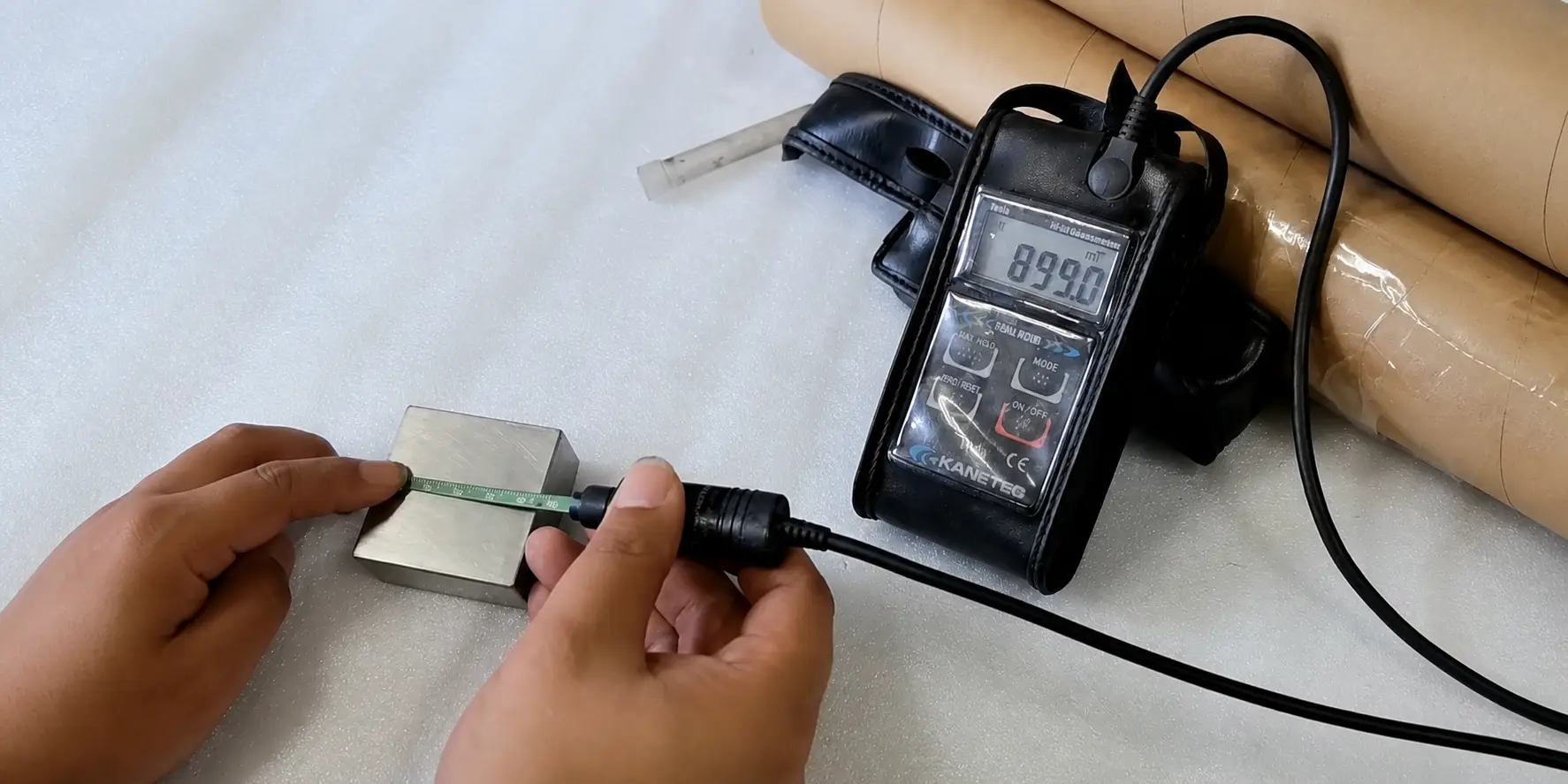
Magnetic function Project-specific NdFeB material requirement or magnetic target reviewed with the intended function Required magnetic behavior, working distance, test condition and operating temperature Agreed requirement and sample result
Magnetization orientation Axial, diametrical or other project-defined orientation reviewed for the disc structure Field direction, polarity marking, pole arrangement and installation position Approved magnetic sample or project specification
Face condition & tolerances Flat contact faces, edge condition and critical tolerances reviewed according to the assembly method Fit-related dimensions, contact requirements and permissible variation Drawing approval and sample inspection
Surface requirement Surface condition reviewed against handling, bonding, assembly and environmental exposure Surface-protection requirement, appearance expectation and exposure profile Project-specific review and sample confirmation
Operating context Temperature, humidity, corrosion exposure, mechanical loading and duty cycle reviewed for the finished product Operating profile, validation plan and application description Agreed validation method
Assembly interface Seating surface, adhesive area, housing pocket, sensor spacing or other mating interface reviewed with the disc profile Assembly drawing, working air gap, mounting method and functional requirement Assembly review and sample evaluation
Order & delivery inputs Sample quantity, packaging, identification and repeat-order requirements reviewed for the purchasing plan Forecast demand, delivery timing and packaging instruction Confirmed order plan

For a complete disc magnet RFQ, provide the drawing or diameter × thickness information together with magnetization, magnetic target, application context and expected quantity. Disc size alone does not define the installed field, assembly fit or acceptance method.

Development Flow

From RFQ to Production Release

A disc magnet project progresses from the buyer’s functional and dimensional inputs through sample definition, approval, and production release. Each stage is based on the requirements of the final assembly, not a generic catalogue size.

NdFeB Disc Magnet RFQ to Production Handover Flow
01

RFQ Intake

Collect the available disc drawing, diameter and thickness, end-use context, operating conditions and expected quantity.

02

Disc Geometry Review

Check the circular profile, flat contact faces, edge details, installation space and critical dimensions that affect the mating assembly.

03

Magnetic Specification Definition

Align the material requirement, field direction, polarity identification and required magnetic behavior with the intended function.

04

Sample Scope Confirmation

Prepare a sample scope covering the reviewed dimensions, magnetization, surface condition, product identification and acceptance items.

05

Sample Evaluation & Approval

Evaluate the sample against the agreed fit, magnetic, and application-related requirements before production is released.

06

Production Release & Delivery Planning

After sample approval, finalize batch quantity, packaging format, delivery instructions, and product identification for production release.

Quality Control

Release Checks for NdFeB Disc Magnet Orders

Each pre-shipment release check is performed against the latest approved disc magnet drawing and agreed order requirements. The focus is on disc geometry, magnetization direction, surface condition, and shipment identification required by the specified assembly.

NdFeB Disc Magnet Inspection Checkpoints
Inspection Item Control Approach Why It Matters
Disc profile & face condition Diameter, thickness, edge condition, flat contact faces and agreed visual requirements are checked using the applicable inspection method. Supports seating, bonding, contact alignment and the specified incoming-product condition.
Magnetic orientation & identification Magnetization direction, polarity marking and other project-defined magnetic identification are reviewed where required by the product specification. Helps the customer install the round magnet in the intended orientation within the assembly.
Surface, packing & lot information Surface condition, packaging format, product label, quantity identification and shipment documentation are prepared according to the confirmed order instruction. Supports handling, receiving, product identification and delivery preparation.

Drawing Reference

Diameter, thickness, edge condition, and any drawing-defined features are checked against the latest approved product specification.

Acceptance Reference

Where a sample or acceptance basis has been agreed, the relevant dimensional and magnetic criteria provide the release reference.

Dispatch Record

Packaging, labels and shipment information are prepared in line with the confirmed order and delivery instructions.

Sintered NdFeB Disc Magnet Applications

Engineered for demanding industrial sectors including motion control, factory automation, energy storage, medical equipment and automotive sensing.

Neodymium Motor Magnets

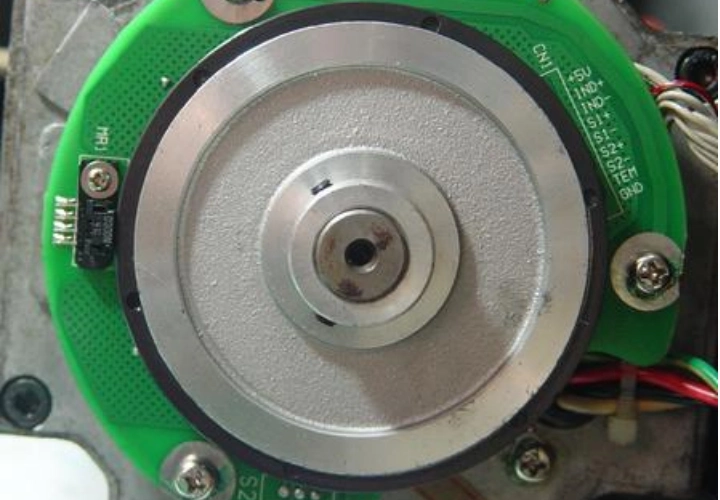
High-Precision Servo Encoder Magnetic Discs

Used in industrial servo motors, robot joints and CNC rotary feedback systems. These discs require accurate pole pitch, low waveform distortion, uniform thickness and high end-face flatness. GX supports precision disc geometry, custom multipole magnetization and magnetic-circuit review to help stabilize sensor signals and support high-resolution position feedback.

Ceramic Ferrite Magnets Production

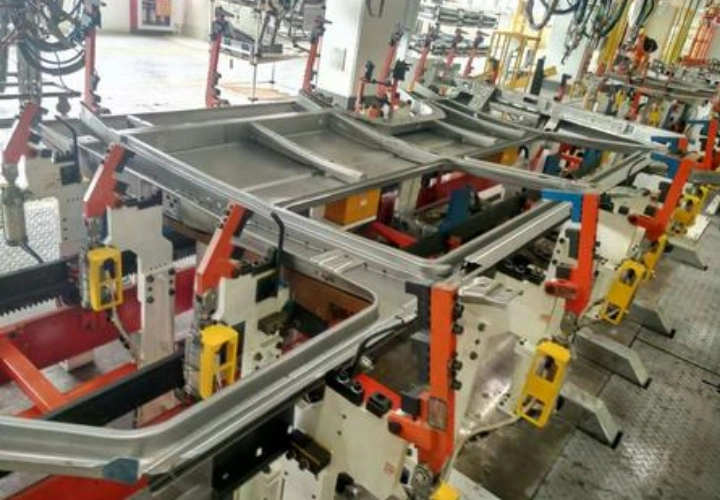
Magnetic Holding Fixtures for Automated Assembly Lines

Used for positioning, holding and alignment in 3C electronics, automotive parts and lithium-battery assembly. The key requirement is consistent holding force across multiple fixtures. GX supports large-face disc magnets with controlled flatness, batch magnetic consistency and repeatable supply for production lines that require stable adsorption and reliable workpiece positioning.

Custom Engineered Magnetic Assemblies

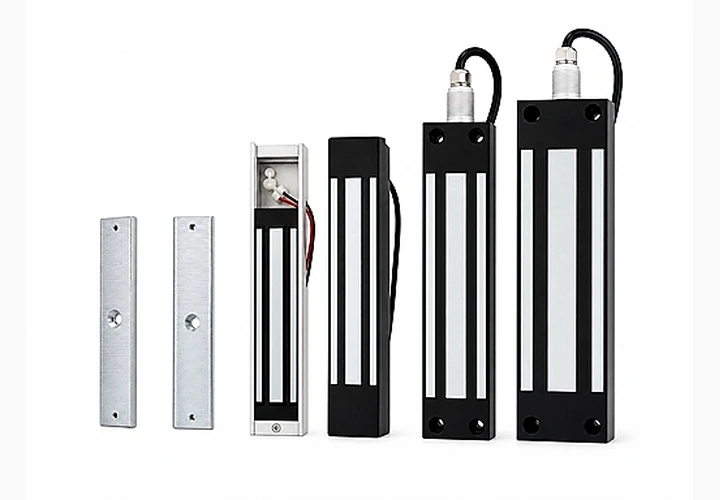
Outdoor Energy-Storage Cabinet Electromagnetic Locks

Used in outdoor PV storage cabinets, telecom cabinets and charging-station lock mechanisms. These applications require corrosion resistance, stable magnetic performance and accurate countersunk mounting under humidity, salt spray and temperature variation. GX can match high-coercivity NdFeB grades with suitable coating systems and machining controls, subject to the agreed drawing and validation standard.

Aerospace Grade SmCo Magnets

Precision Drive Magnets for Medical Diagnostic Equipment

Used in infusion pumps, blood analyzers and medical imaging equipment where compact assembly, dimensional accuracy and clean surface quality are important. GX supports precision-machined NdFeB disc magnets with controlled magnetic consistency, fine edge finishing and optional protective coatings selected according to the device environment, material requirements and customer validation process.

Industrial Magnetic Separators

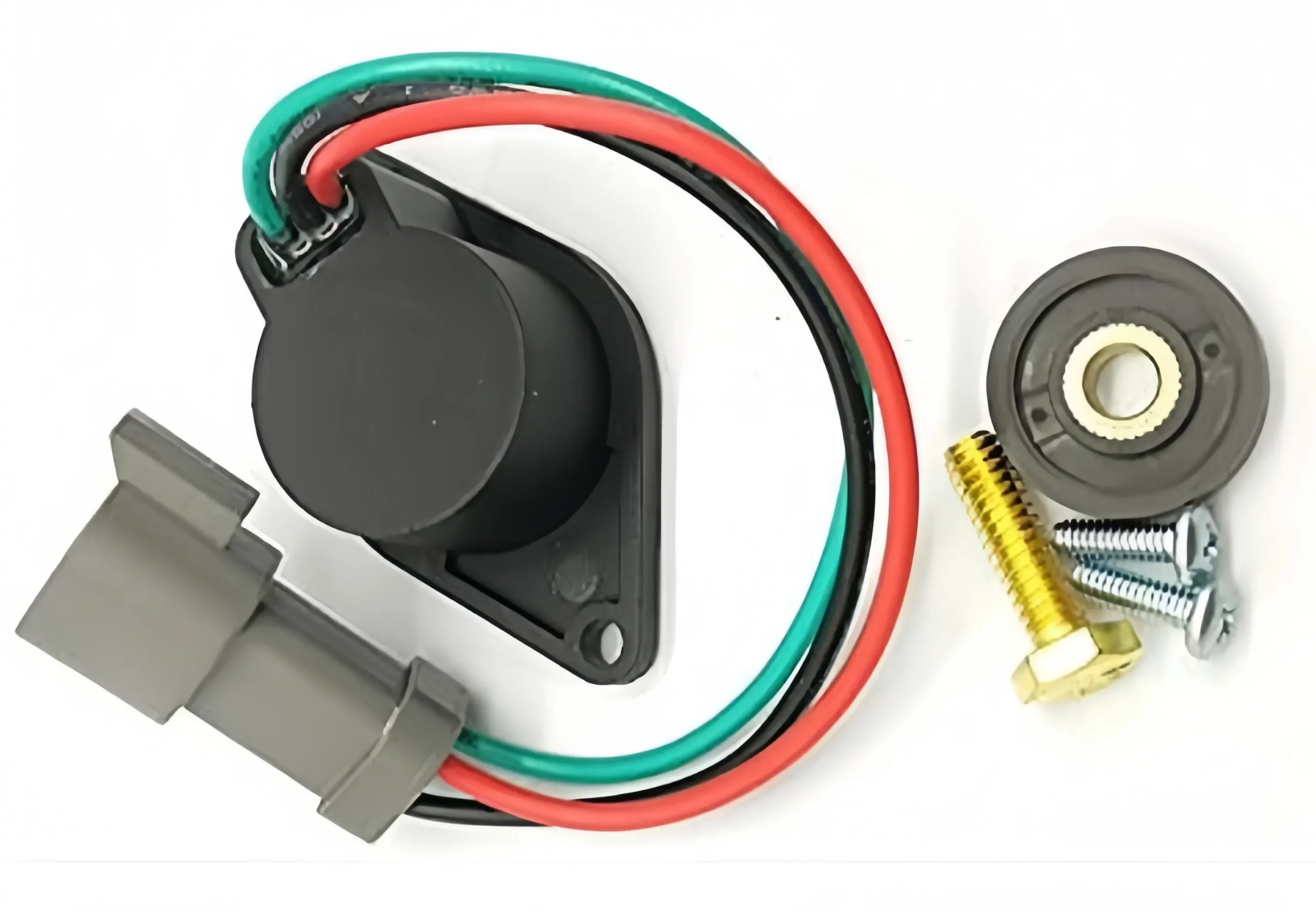
Custom Sensor Magnets for New-Energy Vehicles

Used in traction-motor speed sensors, accelerator-position sensors and battery-pack locking mechanisms. These programs require fast design iteration, customized magnetic output and stable performance under automotive temperature and vibration conditions. GX can support material selection, magnetization design, prototype sampling and batch consistency control from early validation to production release.

Customer & Industry Experience

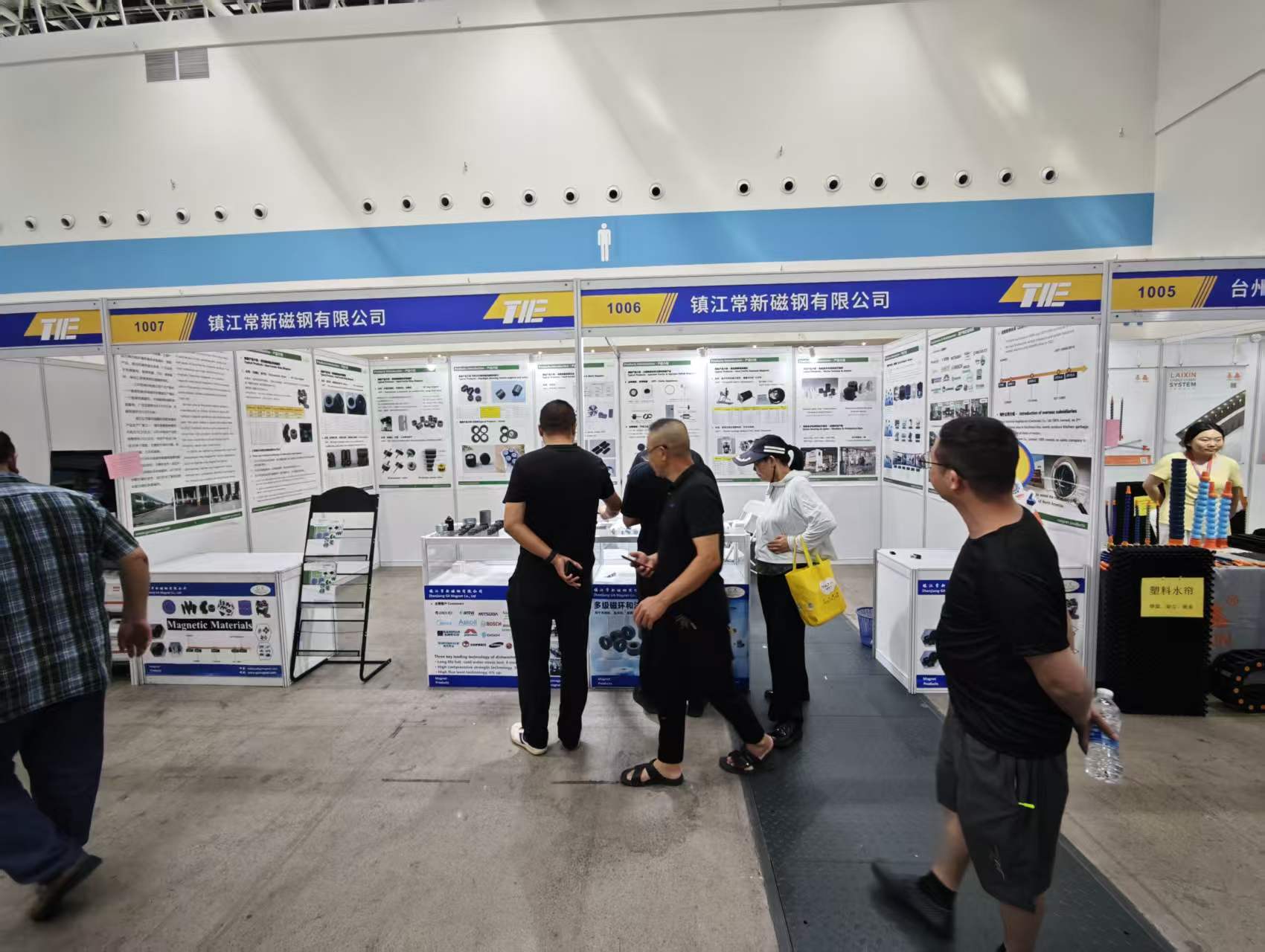
OEM Program and Industry Exhibition Presence

Selected logos identify organizations associated with GX’s documented supply programs; they do not constitute endorsements of GX’s NdFeB disc magnets. The exhibition record documents GX Magnet’s participation in magnetic-material and motor-component industry events.

OEM Relationships and Exhibition Presence

NdFeB Disc Magnet Buying Questions

Answers to common technical and purchasing questions about neodymium disc magnets for OEM assemblies.

What is an NdFeB disc magnet?
An NdFeB disc magnet is a solid, flat circular permanent magnet made from neodymium-iron-boron material. It is usually specified by diameter and thickness and differs from a ring magnet because a standard disc has no central bore.
What information is needed to quote a neodymium disc magnet?
Please provide the drawing or disc diameter × thickness, required magnetization direction, magnetic target or material requirement, operating environment, installation method and expected quantity. These inputs help establish an appropriate sample and quotation basis.
How do axial and diametrical disc magnetization differ?
Axial magnetization produces a magnetic field through the disc thickness, from one flat face to the other. Diametrical magnetization produces a field across the disc diameter. The correct option depends on the installed position and required magnetic function.
Does a larger disc diameter always provide the required magnetic result?
Not necessarily. Diameter, thickness, material requirement, magnetization direction, working air gap, opposing material and magnetic-circuit design all influence the result in the final assembly.
Can surface protection be specified for an NdFeB disc magnet?
Yes. Surface requirements can be reviewed according to the handling process, bonding or mounting method, appearance requirement and operating environment. The final requirement should be confirmed through project review and sample validation.
What happens after GX receives a disc magnet drawing?
GX reviews the available product and application inputs to define the required disc geometry, magnetic requirements, sample scope, and project-specific acceptance basis before preparing the next project stage.
How should the pull force of an NdFeB disc magnet be evaluated?
The pull force of an NdFeB disc magnet depends on its diameter, thickness, material grade, magnetization state and the magnetic circuit. Test results are also affected by the steel plate material and thickness, contact area, surface flatness, coating, air gap, pull direction and test fixture. Pull-force values are only comparable when measured under the same conditions. For an RFQ, specify the required holding force, test arrangement and applicable safety factor.
How does operating temperature affect an NdFeB disc magnet?
The magnetic output of an NdFeB disc magnet generally decreases as temperature rises. Excessive temperature or an unfavorable magnetic-circuit load line may cause irreversible demagnetization. The suitable operating range depends on the material grade, intrinsic coercivity (Hcj), disc dimensions, working air gap, opposing magnetic field and exposure duration. Coating, adhesive and housing temperature limits must also be considered. Grade selection should be based on the demagnetization curve at the actual operating temperature and validated in the intended assembly.
What are neodymium disc magnets used for?
Neodymium disc magnets are used in sensors, magnetic encoders, speakers, compact motors, actuators, magnetic catches, positioning devices, holding fixtures and small magnetic assemblies. Their circular geometry and relatively broad pole face make them suitable for applications requiring compact axial installation or alignment around a defined center. The appropriate diameter, thickness, grade, coating and magnetization direction depend on the working air gap, required magnetic output, operating temperature and assembly method.
Can custom NdFeB disc magnets include holes, countersinks, adhesive backing or housings?
Yes. Custom NdFeB disc magnets can be reviewed for through-holes, countersinks, grooves, adhesive backing, steel cups or other assembly features. Because sintered NdFeB is hard and brittle, machined features, thin wall sections and small edge distances require a feasibility review. Holes and countersinks are normally machined before coating and magnetization. GX reviews the customer drawing, tolerances, coating allowance, magnetization direction, assembly method and required validation criteria before defining the proposed manufacturing route.

Need technical support with your magnetic circuit design?

Let's Discuss Your Project

Contact our engineering and sales team for technical consultation, a custom quotation, or a factory-audit request. We aim to respond within 24 hours.