Custom Neodymium Magnets for OEM Projects
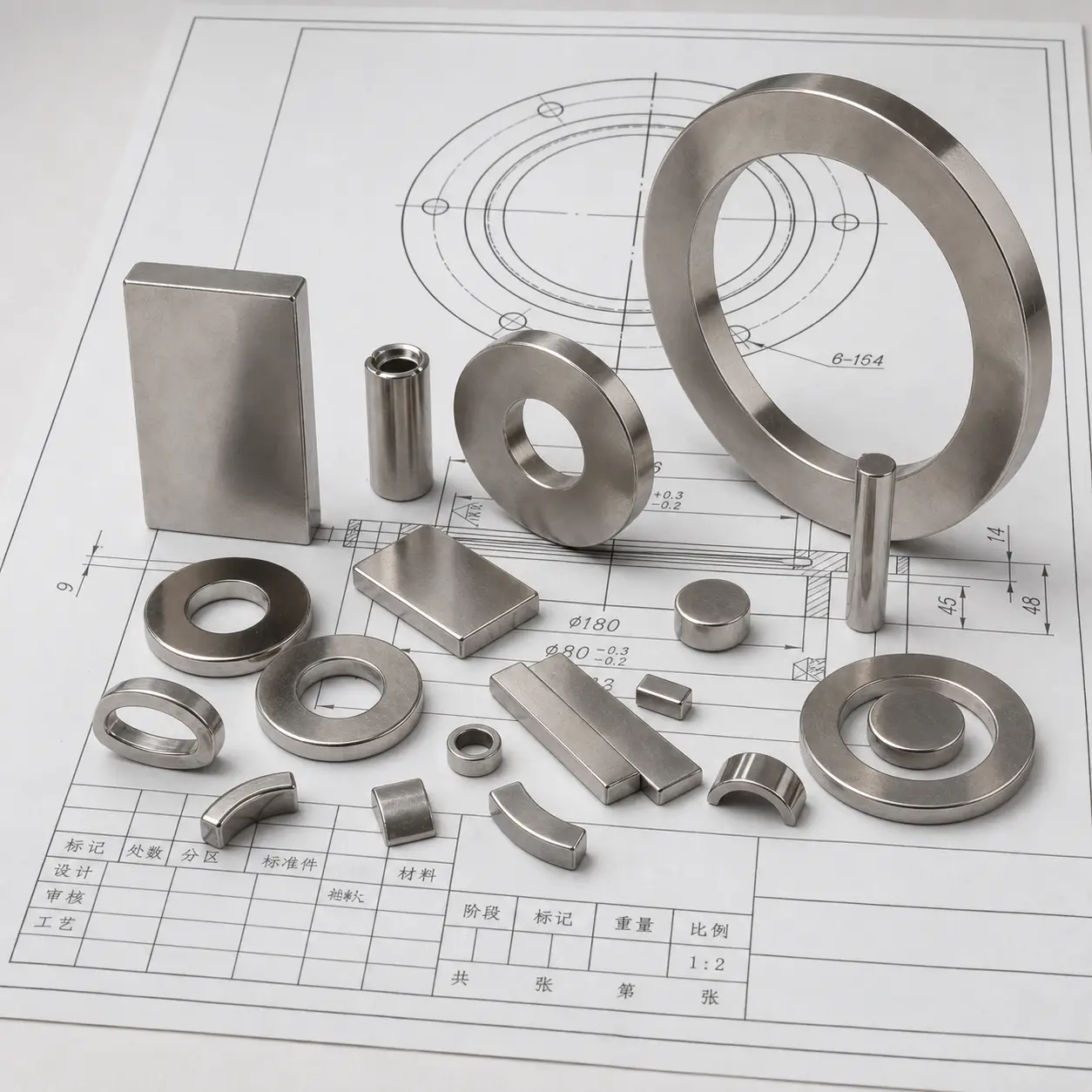
GX coordinates drawing-based supply of custom sintered NdFeB magnets for motors, sensors, actuators and other industrial assemblies. Geometry, material requirements, magnetization, surface protection and acceptance criteria are reviewed against the customer drawing and application conditions before quotation and sampling.
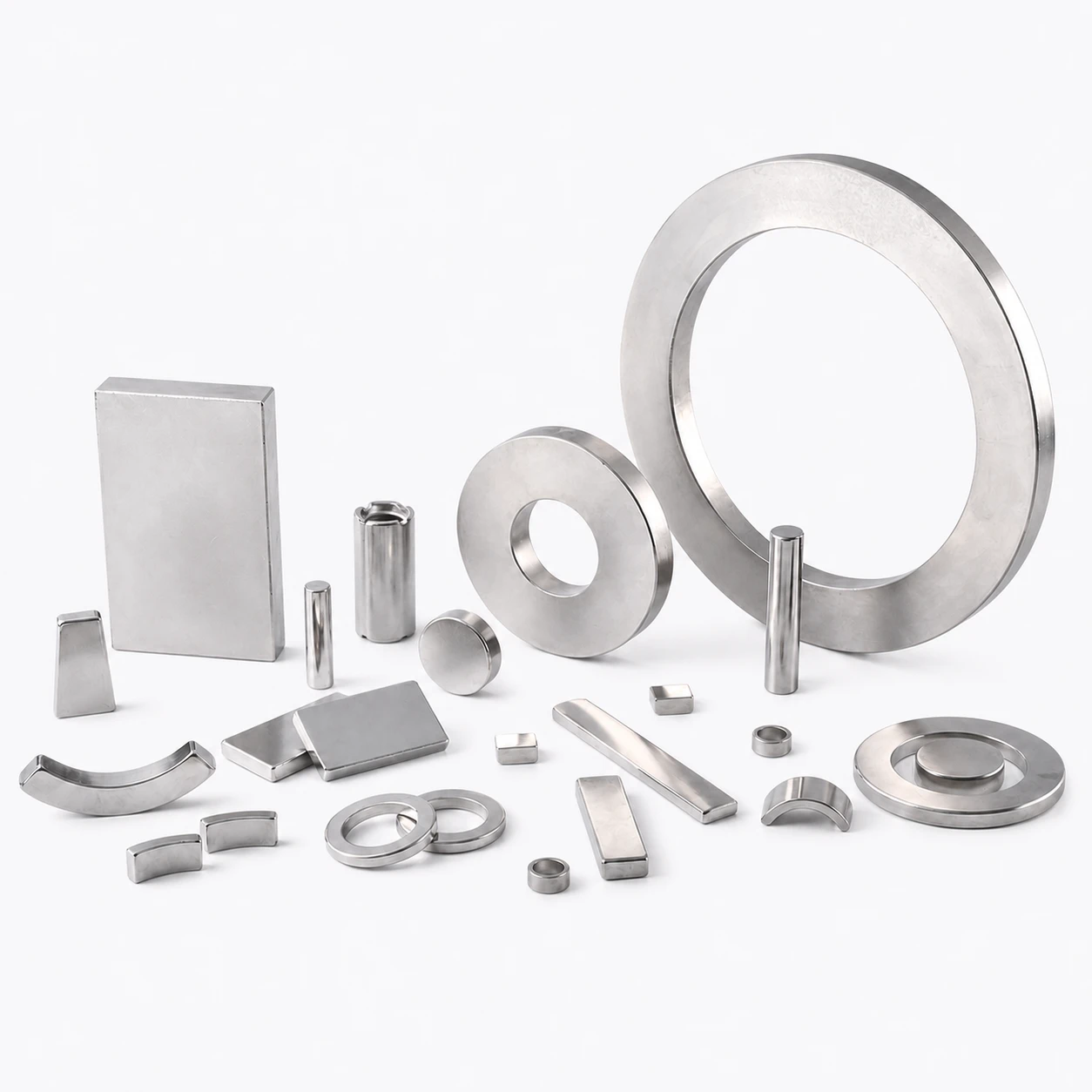
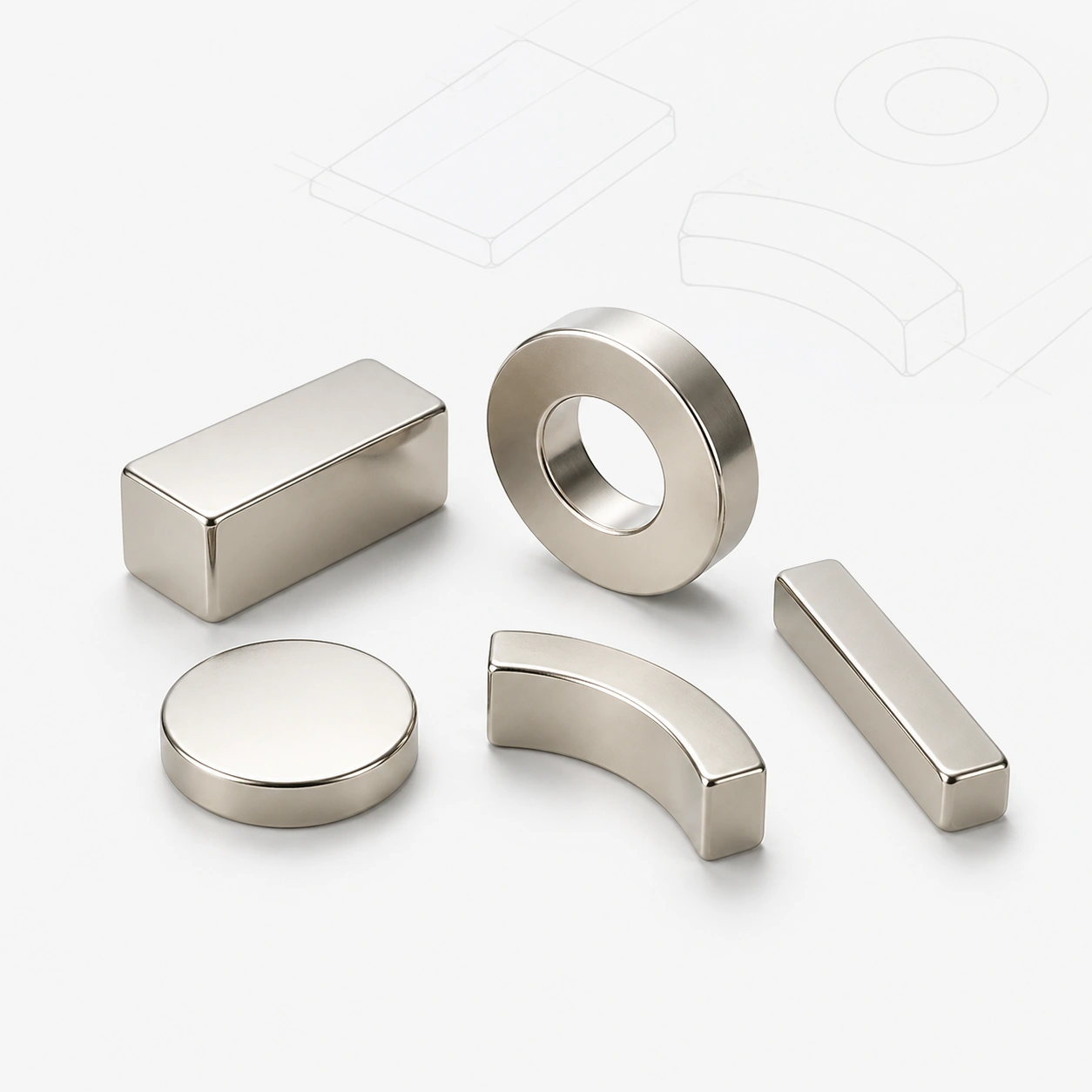
- Custom block, disc, ring, arc and special-shaped NdFeB magnets
- Dimensions, tolerances, material requirements and magnetization reviewed for each project
- Sample validation and repeat-order planning aligned with the approved specification





Technical Requirements for Custom Neodymium Magnet Projects
Before quotation and sampling, GX reviews the part drawing, required magnetic function, magnetization, surface protection and operating conditions. Together, these inputs define the technical basis for a custom NdFeB magnet; a shape or grade designation alone is not sufficient.
Define the complete part geometry, including length, width, thickness, diameter, bore, radius, chamfers and drawing datums. Critical tolerances should reflect the mating interface and assembly method.
Specify the required NdFeB grade or material-property targets such as Br, Hcb, Hcj and (BH)max. Grade selection should also consider the operating temperature, load line, demagnetizing field and acceptable irreversible magnetic loss.
Define the magnetization direction, pole count or pole pattern, polarity identification and finished-part magnetic criteria where applicable. Any flux or surface flux density requirement should include the measurement position, air gap, fixture and test condition. Select the coating or surface treatment according to the environment and assembly process.
Provide the end use, working air gap, mating materials, retention method, environmental exposure and validation criteria. Include the sample quantity, estimated annual demand, packaging requirements and requested delivery schedule so that the quotation scope is clear.
What Are Custom Neodymium Magnets?
Custom neodymium magnets are sintered NdFeB components specified for a defined assembly rather than selected only by a catalog size. Their geometry, material properties, magnetization, surface protection and finished-part acceptance criteria are established from the customer drawing and application requirements.
The specification is confirmed through drawing review and sample validation. Material properties are considered separately from finished-part magnetic output, while both are evaluated against the operating temperature, magnetic circuit, mounting method and supply conditions.
Drawing-Defined Geometry
Dimensions, datums, tolerances and assembly interfaces are specified by the customer drawing.
Material & Finished-Part Magnetic Criteria
Grade properties, finished-part magnetic criteria and operating conditions are reviewed as related but distinct requirements.
Custom Magnetization
Direction, polarity and pole configuration are defined for the installed magnetic circuit.
Project-Based Supply
Sampling, validation, packaging and repeat-order planning are aligned with the approved project specification.
Why Choose GX Magnet for Custom Neodymium Magnet Projects?
GX integrates material development, controlled forming, grain boundary diffusion and automated quality control for drawing-defined sintered NdFeB projects.
Broad NdFeB Grade Coverage
Cost-Optimized Rare-Earth Routes
Automated Forming-to-Sintering Flow
Multiple Grain Boundary Diffusion Routes
Controlled Pressing and Demolding
Automated Inspection and Packaging
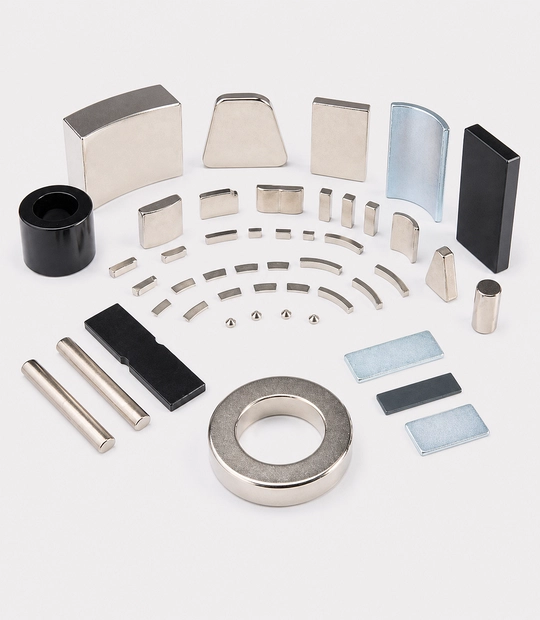
Broad NdFeB Grade Coverage, Selected for the Actual Operating Point
GX supports HRE-free, conventional and grain-boundary-diffused sintered NdFeB grades through its integrated manufacturing resources. The appropriate material route is evaluated against the required Br, Hcb, Hcj and (BH)max, together with the magnet geometry, magnetic circuit, load line, operating temperature and acceptable irreversible magnetic loss.
- HRE-Free Grade CoverageHRE-free material routes can be evaluated up to 56M, 54H and 48SH. Final availability and performance are confirmed for the specified magnet geometry, manufacturing route, operating point and test temperature.
- Grain-Boundary-Diffused High-Coercivity GradesGrain boundary diffusion routes can support grades up to 58SH, 54UH, 50EH and 45AH. Spray coating, physical vapor deposition (PVD) and screen-printing deposition routes are available for evaluation, allowing the process to be selected according to part geometry, target intrinsic coercivity, production requirements and cost.
- Project-Specific Grade DevelopmentBeyond the typical grades shown in the reference map, GX can evaluate project-specific targets for Br, Hcb, Hcj and (BH)max. Manufacturing feasibility and supply status are confirmed through process review, trial production, sample testing and customer approval.
High-Abundance Rare-Earth Routes for Performance and Cost Balance
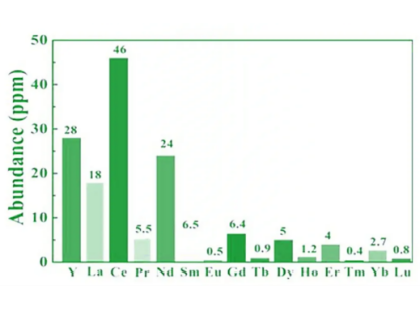
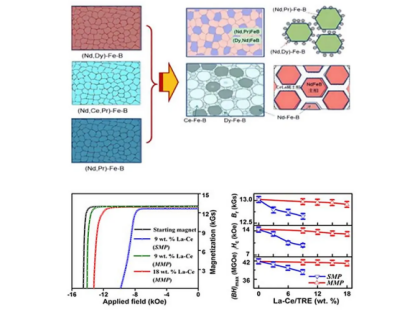
GX evaluates Ce-containing formulations and dual-alloy routes for selected sintered NdFeB projects. By coordinating phase formation, aging heat treatment and grain-boundary chemistry, these routes can reduce reliance on higher-cost rare-earth inputs while maintaining the magnetic properties required by the application.
Controlled Ce Introduction
Ce can partially replace higher-cost rare-earth inputs in selected formulations. The substitution level is determined by the required remanence, Br; coercivity, Hcb; intrinsic coercivity, Hcj; and maximum energy product, (BH)max—not by raw-material price alone.
Dual-Alloy Microstructure Control
A dual-alloy route can be evaluated to control the distribution of La-Ce-containing phases and rare-earth-rich grain-boundary phases. The objective is to balance remanence, intrinsic coercivity and microstructural stability in high-abundance rare-earth magnet formulations.
Qualified on the Finished Magnet
Each proposed material route remains subject to trial production, aging-heat-treatment optimization and finished-magnet testing. It is released only after the magnetic results, part geometry and agreed customer acceptance criteria have been satisfied.
Ce-containing and dual-alloy routes are evaluated on a project-specific basis. Material availability and the actual cost impact are confirmed for the responsible manufacturing site and production program.

Automated Forming-to-Sintering Line for Batch Consistency
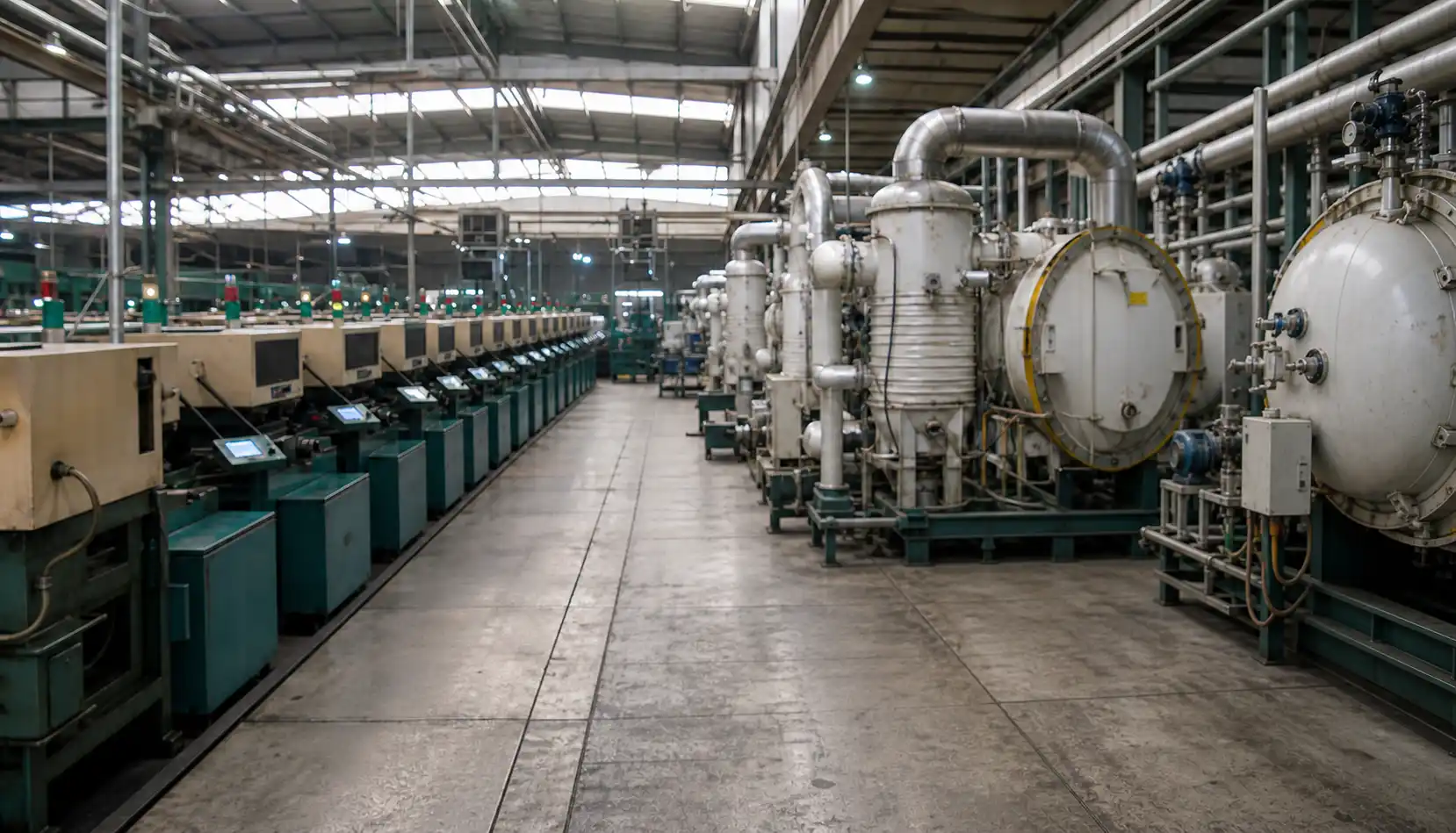
GX coordinates automated sintered NdFeB production resources that connect all-electric pressing, alloy dies, enclosed transfer and storage, automatic furnace loading and unloading, and process monitoring. The integrated flow reduces manual handling between forming and sintering and supports more consistent batch production.
Controlled Transfer
Green-compacts move through defined handling and protective-transfer steps before sintering.
Process Traceability
Production records are linked to the applicable batch route and inspection plan.
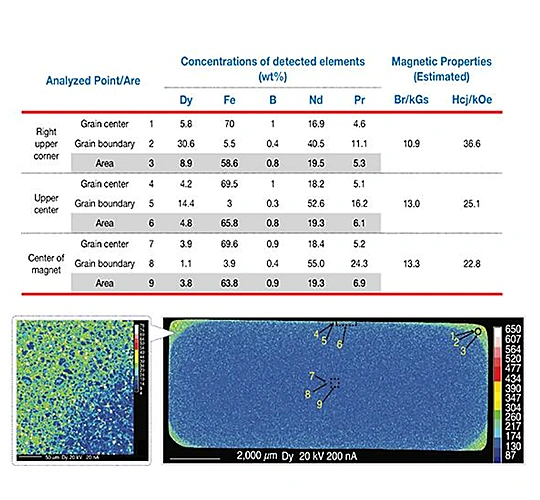
Multiple Grain Boundary Diffusion Routes for Coercivity Control
For suitable grades and geometries, grain boundary diffusion can increase intrinsic coercivity, Hcj, while limiting heavy-rare-earth consumption compared with bulk alloy addition. The achievable result depends on magnet thickness, diffusion source, heat-treatment route and the required magnetic balance.
- Application methods: PVD, screen printing or spray-based routes can be evaluated through qualified process resources.
- Verification: material properties and finished-part magnetic characteristics are checked separately.
- Engineering limit: diffusion depth and property distribution must be considered for thicker or complex parts.
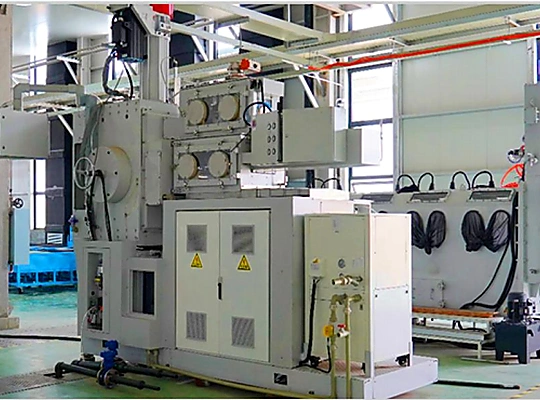
Controlled Pressing and Green-Body Handling
Electric pressing systems can provide programmable control of pressing and demolding actions. When combined with protected transfer to the next operation, this supports repeatable compact handling and reduces unnecessary exposure before sintering.
Pressing parameters are established for the powder route, geometry and alignment requirement.
Demolding and transfer are controlled to limit green-body damage and handling variation.
Finished dimensions are released only after sintering, machining and drawing-based inspection.
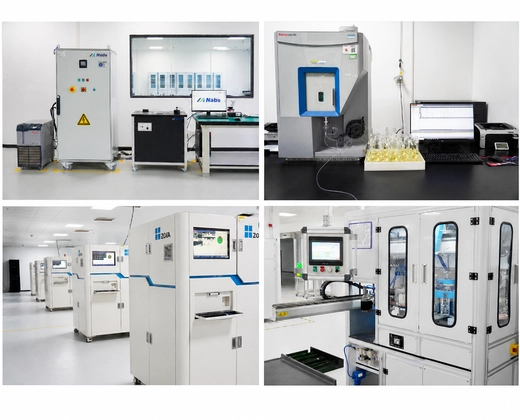
Automated Inspection, Magnetization and Packaging
GX can coordinate a project-specific control flow covering material-composition analysis, dimensional or visual inspection, magnetic-property testing, magnetization and protective packaging. The applicable equipment and inspection frequency are defined from the drawing and acceptance plan.
Measurement Basis
The characteristic, instrument, sampling level and acceptance limit are agreed before production release.
Protected Product Flow
Handling and packaging are selected to reduce chipping, collision and coating damage during transfer and shipment.
How to Specify a Custom Neodymium Magnet for OEM Sourcing
A custom neodymium magnet should be specified around its function in the final assembly. GX reviews the component drawing, magnetic circuit, magnetization, operating environment and supply requirements before defining the quotation and sampling scope.
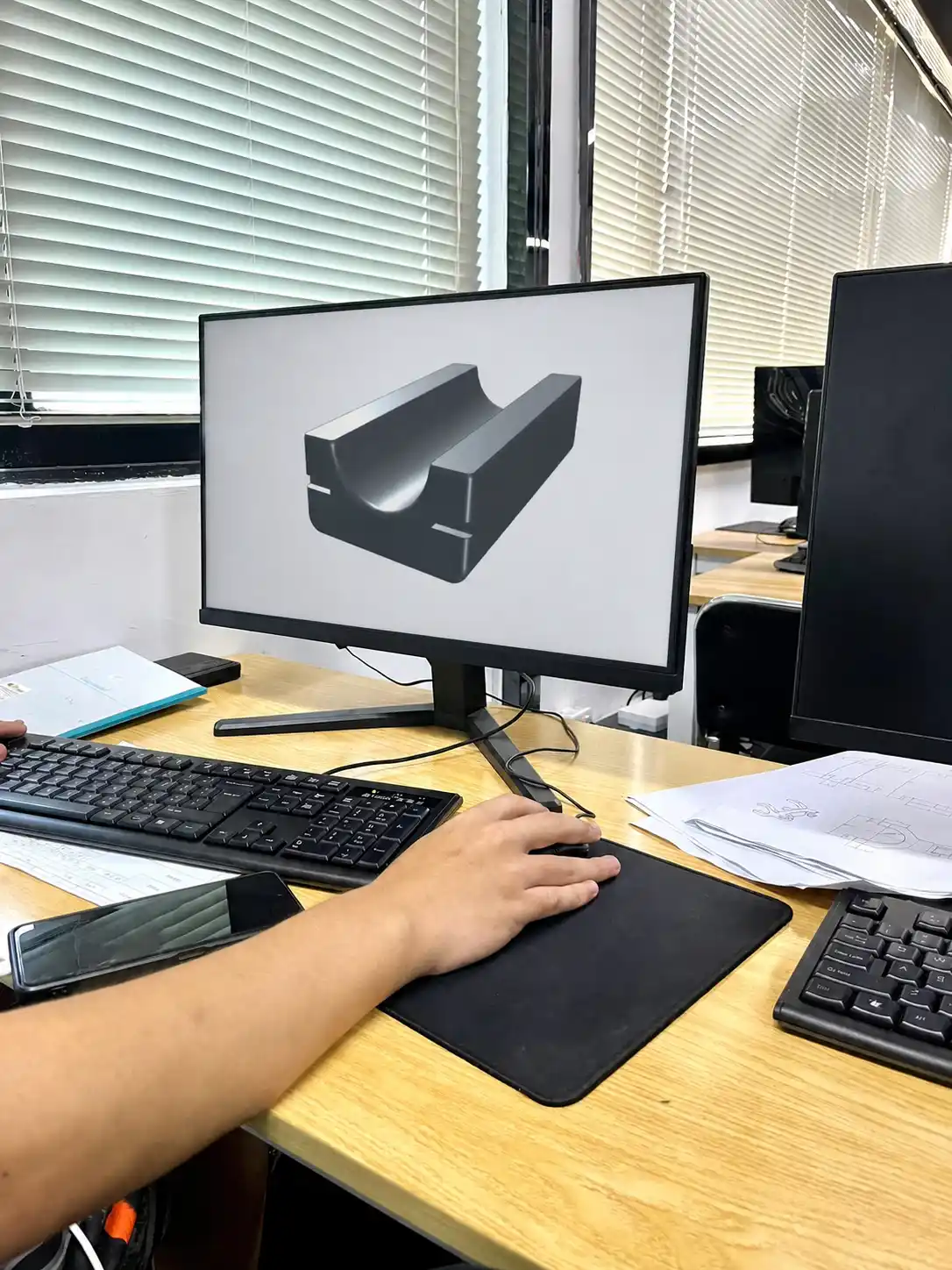
Drawing & Assembly Interface
Provide the 2D/3D drawing, reference datums, complete dimensions, critical tolerances and mating-component details. Available installation space and the proposed retention method should also be identified.
Functional Magnetic Requirement
Define the required magnetic function, such as flux at a specified position, holding force under stated test conditions, sensor response or assembly output. Include the NdFeB grade or Br, Hcb, Hcj and (BH)max targets where available, without treating material properties as finished-part performance values.
Magnetization & Delivery State
Specify the magnetization direction, pole count, pole pattern, polarity identification and magnetic test condition. Confirm whether the parts should be delivered magnetized or unmagnetized.
Environment & Supply Planning
Share the operating temperature, moisture or corrosion exposure, surface-protection requirement, assembly process and validation criteria, together with the sample quantity, estimated annual demand and packaging expectations.
Information Required for Project Review
Send the available drawing with the application, magnetic criteria, operating conditions and estimated demand. GX will identify any open technical or commercial items before confirming the quotation and sampling scope.
From Design Review to Custom NdFeB Production Release
Each custom neodymium magnet project begins with the required magnetic function and assembly conditions. GX translates the available design inputs into a project specification for feasibility review, sample preparation, qualification and production release.
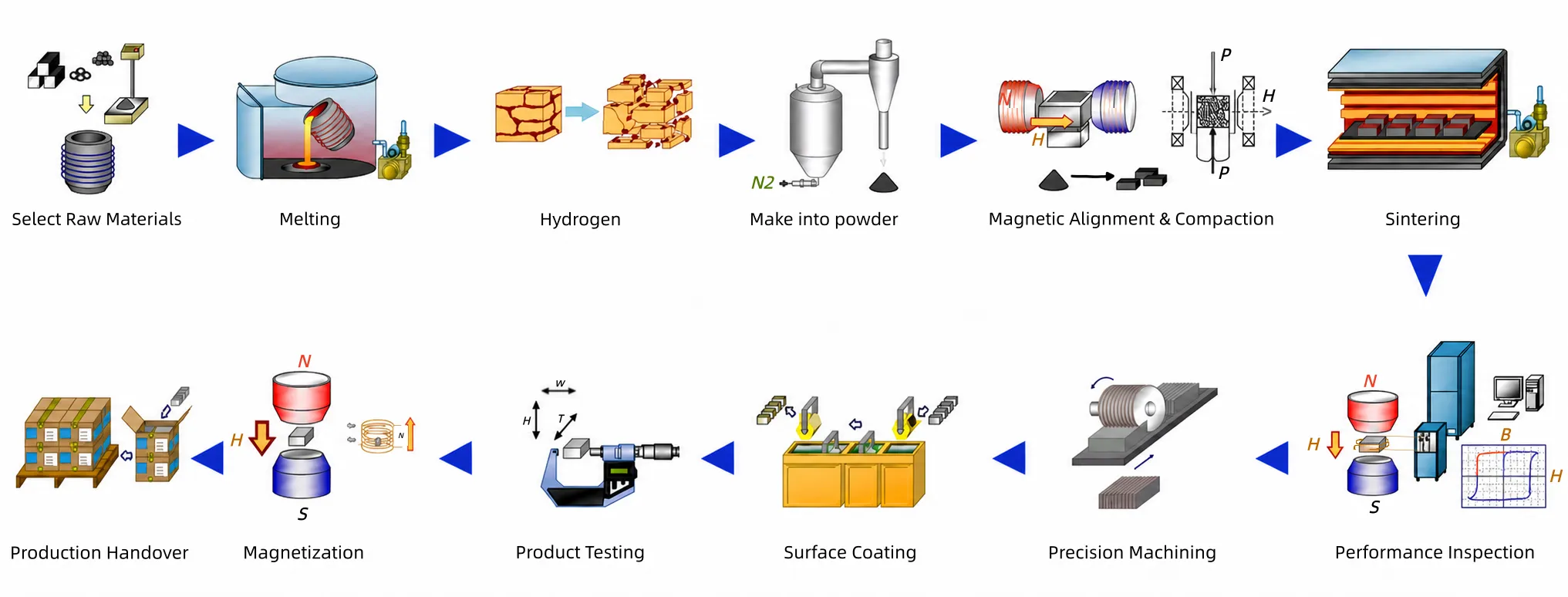
Requirement Capture
Collect the component drawing, end use, magnetic function, operating environment, assembly method, sample quantity and expected annual demand.
Manufacturability Assessment
Review the proposed geometry, critical tolerances, material-property targets, magnetization, surface protection, manufacturing route and inspection feasibility.
Specification Definition
Align the drawing revision, material requirements, finished-part magnetic test conditions, acceptance criteria and quotation scope.
Prototype & Sample Preparation
Prepare the agreed sample quantity to the reviewed specification, including the required magnetization state, identification, packaging and delivery condition.
Sample Evaluation & Feedback
Compare dimensional, magnetic, surface and assembly feedback with the agreed acceptance criteria, and record any approved revisions before release.
Production Release
Transfer the approved drawing revision, material requirements, inspection criteria, identification and packaging requirements into production planning.
Project-Specific Inspection for Custom Neodymium Magnets
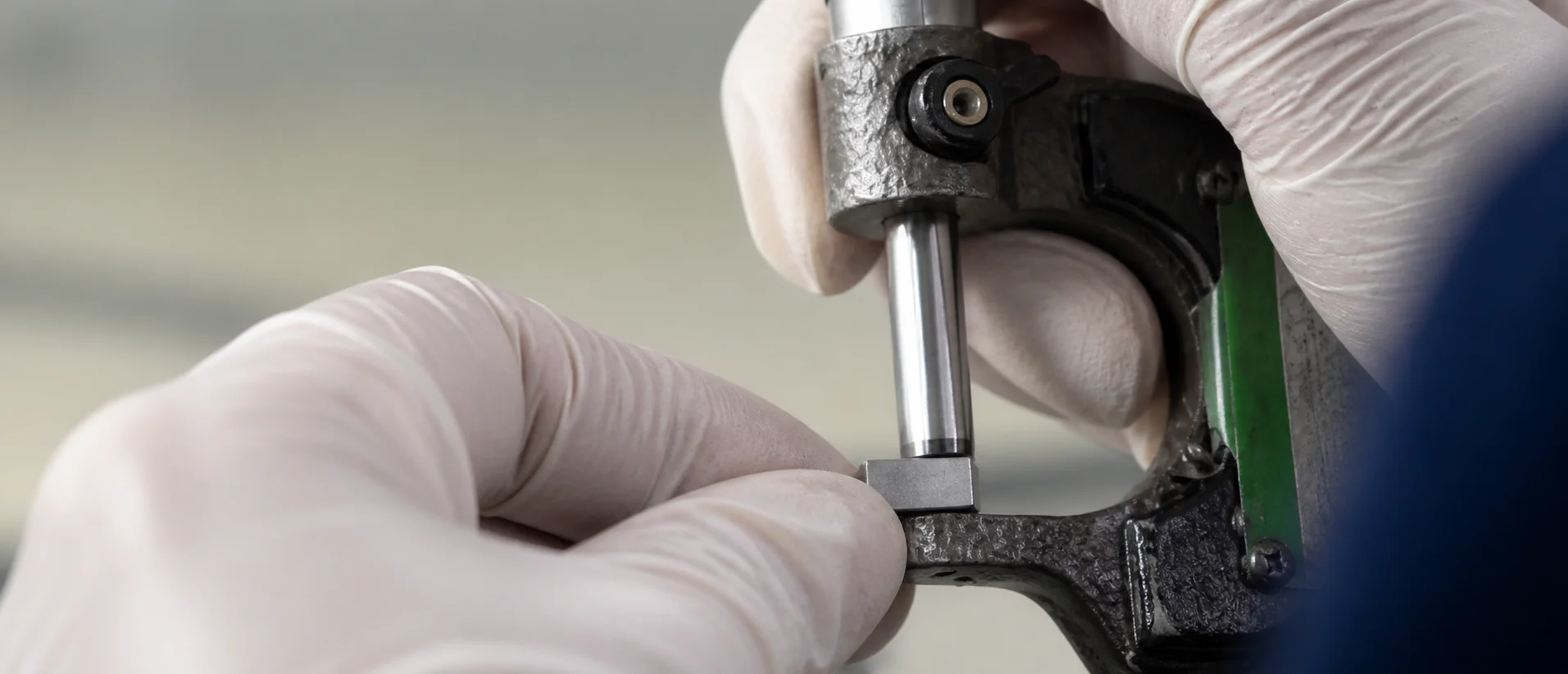
Custom NdFeB magnets vary in geometry, magnetic function and assembly interface, so GX does not apply one inspection plan to every part. Control items are established from the approved drawing, technical specification and approved sample before shipment release.
| Custom Neodymium Magnet Inspection Framework | ||
|---|---|---|
| Inspection Item | Control Approach | Why It Matters |
| Drawing-defined geometry | Critical dimensions, datums, tolerances, edge features and appearance are checked using methods appropriate to the part geometry. | Confirms that the custom magnet matches its mating component and intended assembly position. |
| Finished-part magnetic criteria & orientation | Project-defined flux, surface flux density, magnetic moment, pole pattern, magnetization direction or polarity identification are verified as applicable under agreed test conditions. | Links the supplied magnet to the approved magnetic requirement and helps prevent polarity or installation errors. |
| Surface, identification & packaging | Surface condition, product marking, quantity, packaging method and shipment information are reviewed against the delivery specification. | Supports receiving inspection, lot identification and protection of customized components during handling and transport. |
Revision Control
Inspection follows the approved drawing revision and the latest agreed technical specification.
Qualification Reference
The approved sample and project-specific acceptance criteria establish the comparison basis for subsequent supply.
Batch Release
Applicable inspection results, identification and packaging requirements are confirmed before shipment authorization.
Where Custom NdFeB Magnets Are Used in OEM Applications
Custom neodymium magnets are specified when a catalog part cannot satisfy the available space, magnetic circuit, operating environment or assembly interface. GX reviews the magnet geometry and finished-part acceptance criteria in the context of the intended OEM application.
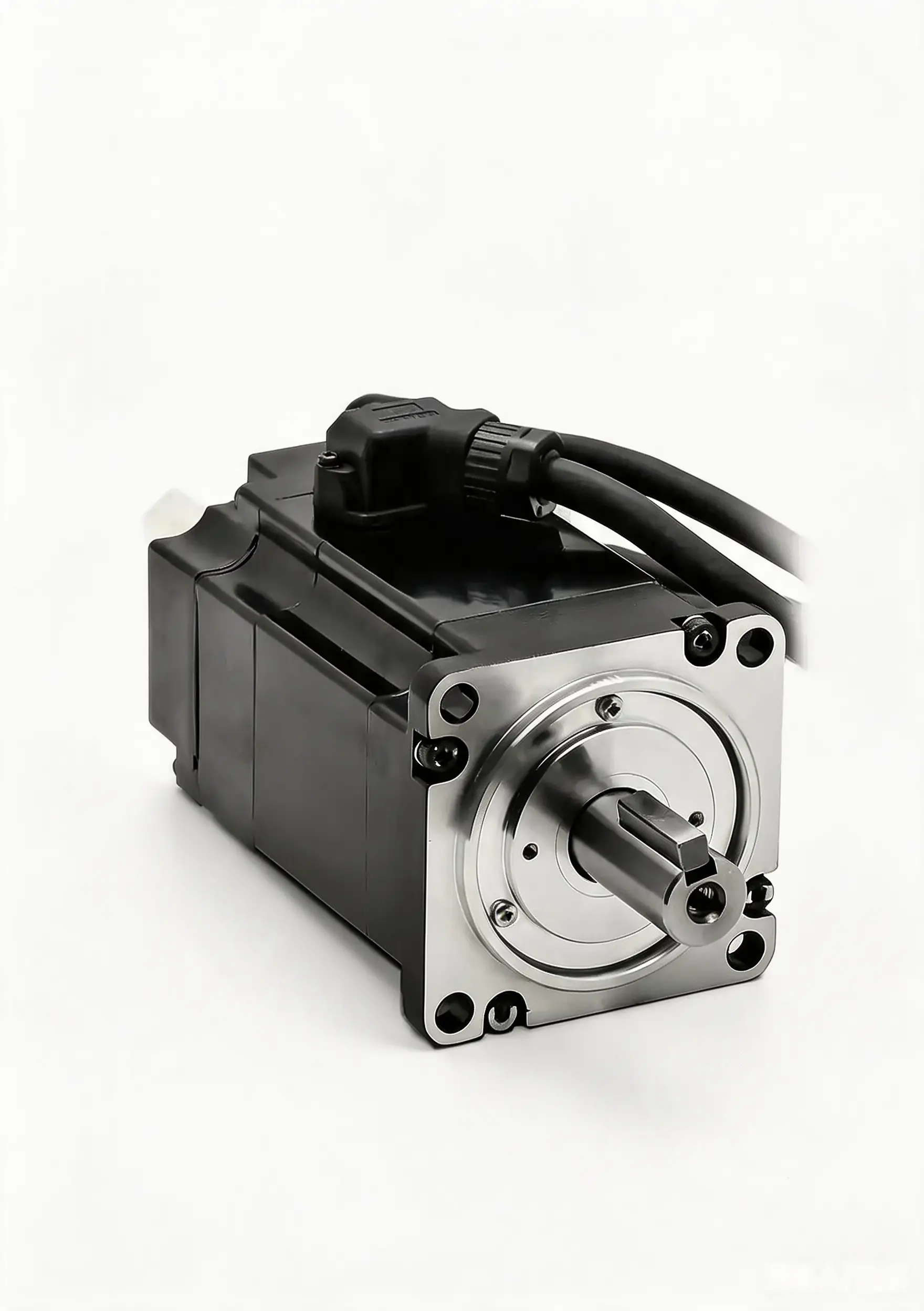
Industrial Motors & Automation
Custom NdFeB magnets are used in servo motors, industrial drives, pumps, compressors and automated equipment. Geometry, magnetization, working air gap, operating temperature and rotor or stator interfaces are defined around the equipment design.
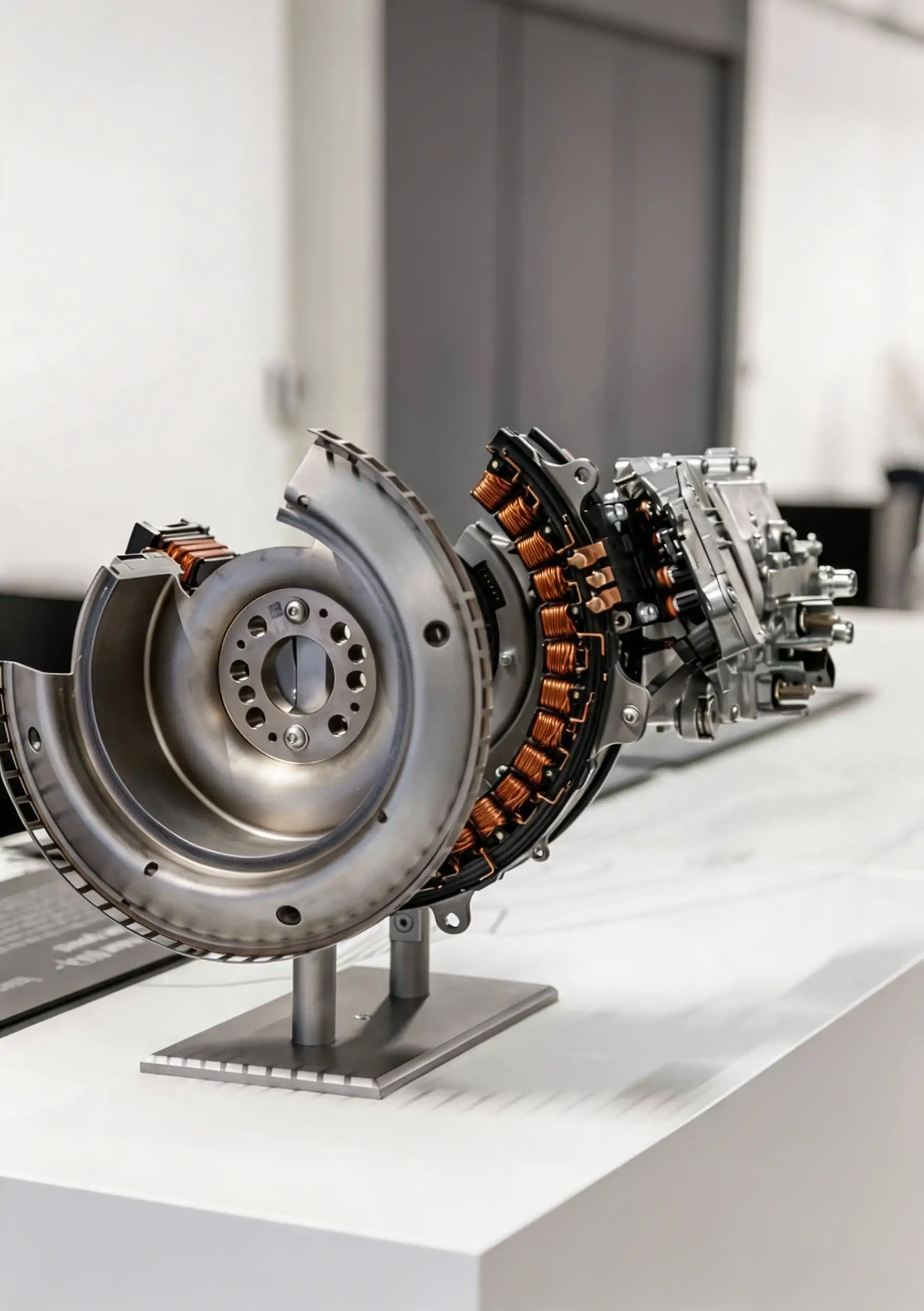
Automotive & Electric Mobility
Applications include traction systems, auxiliary motors, electric pumps, actuators and vehicle sensors. Material properties, finished-part magnetic criteria, installation method, environmental exposure and project-specific validation must be considered together.
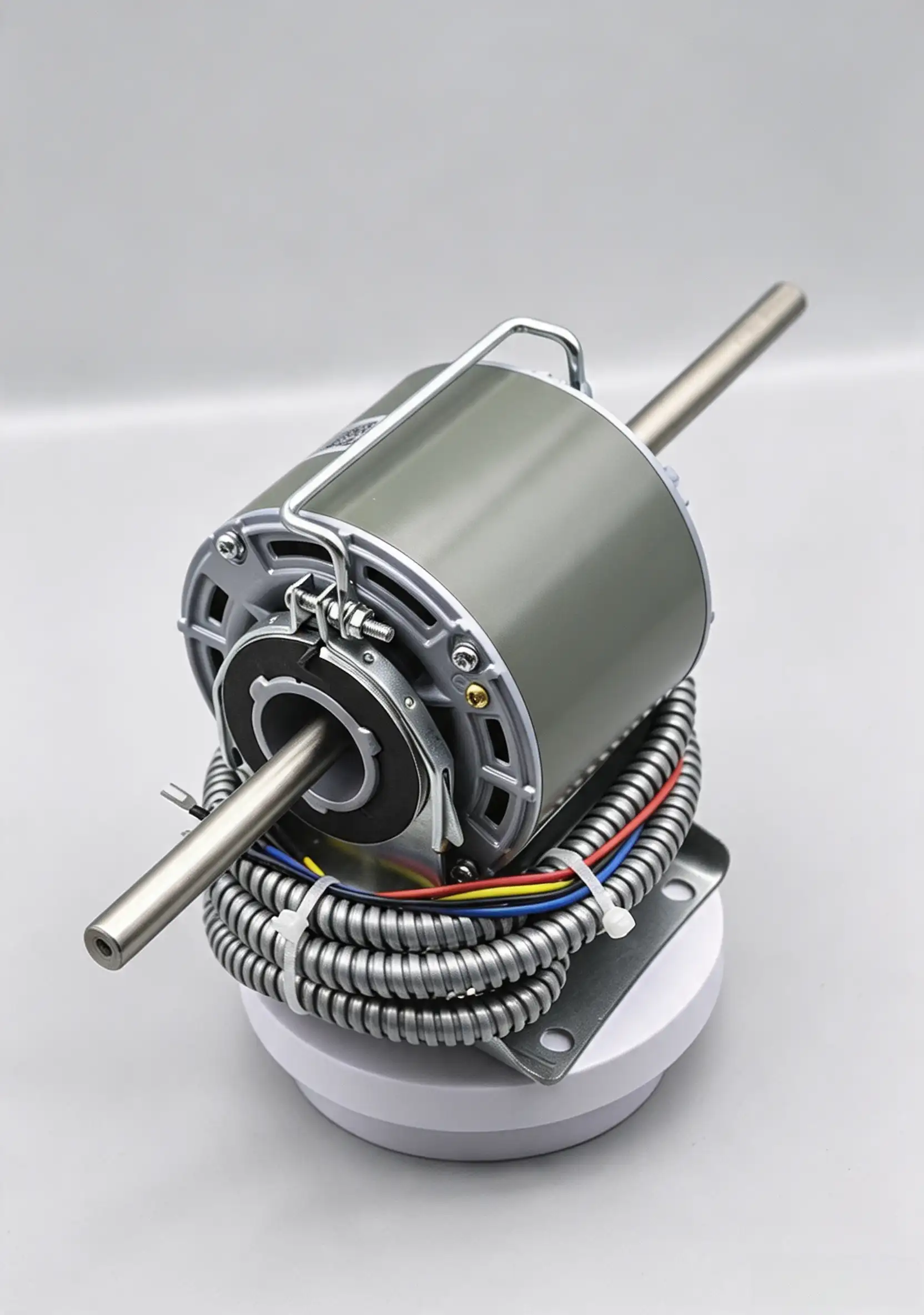
Consumer Electronics & Home Appliances
Custom magnets support compact motors, speakers, sensors, cameras and appliance assemblies where limited space and high production volumes influence the component design. Size, magnetic orientation, surface condition and automated-assembly requirements are reviewed by project.
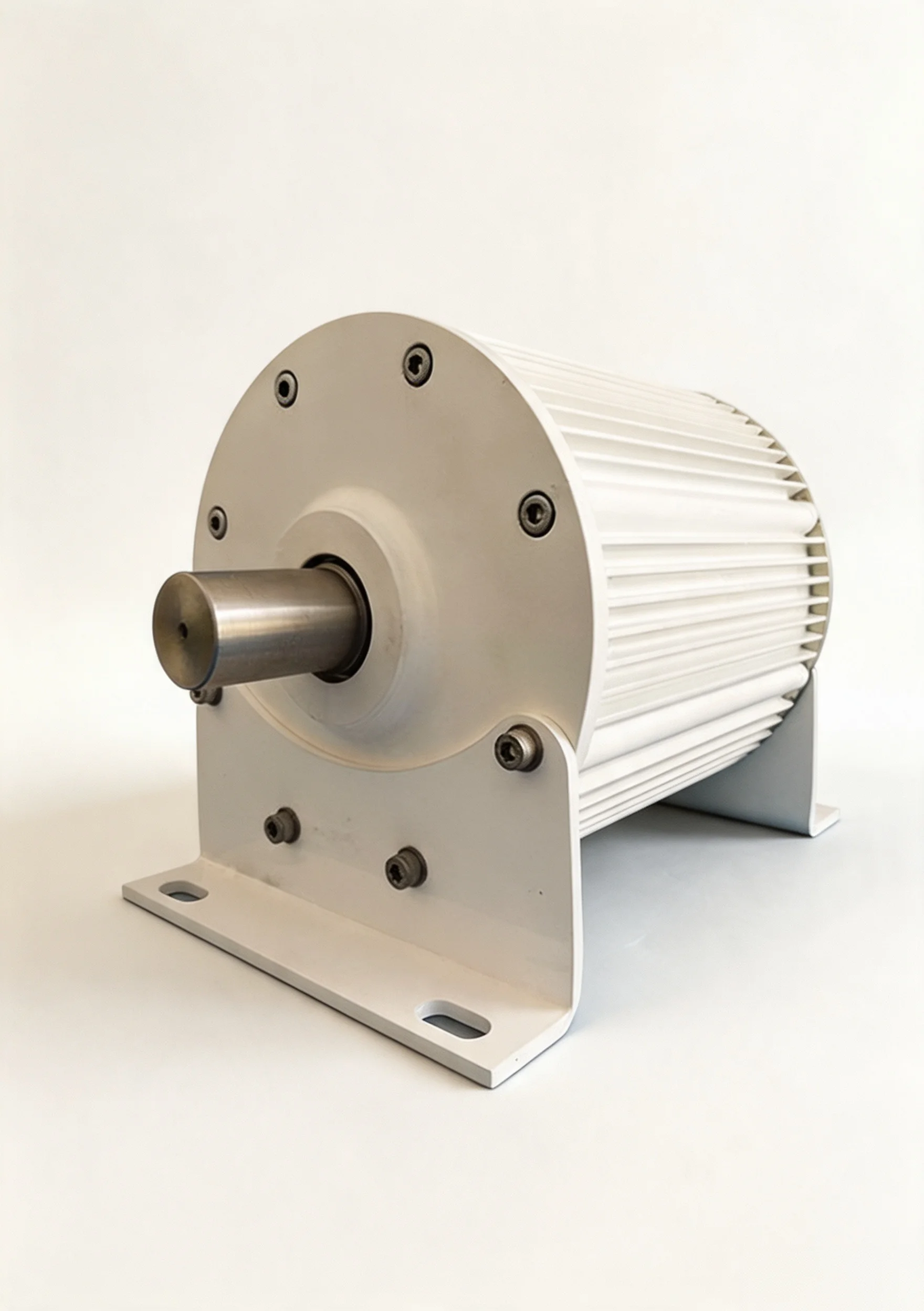
Wind Power & Energy Conversion
NdFeB magnets may be specified for permanent-magnet generators and other energy-conversion systems. The custom specification is developed around the generator structure, magnetic loading, retention method, operating environment and long-term supply requirements.
Post-Delivery Support for Custom Neodymium Magnet Programs
GX supports custom NdFeB magnet projects after delivery through documented feedback intake, technical investigation and follow-up control. Each case is reviewed against the applicable purchase order, approved drawing, sample basis and delivery specification.
Delivery Feedback & Traceability
The customer provides the part number, purchase order, batch identification, drawing revision, affected quantity and available evidence such as photographs, measurements or assembly observations.
Technical Review & Containment
Reported conditions are compared with the approved specification, inspection information and intended application. Additional measurements or returned samples may be requested where necessary.
Corrective Action & Supply Follow-Up
When corrective action is required, the findings, proposed actions and verification method are documented. Any changes to the drawing, magnet specification, inspection method or packaging are controlled before implementation.
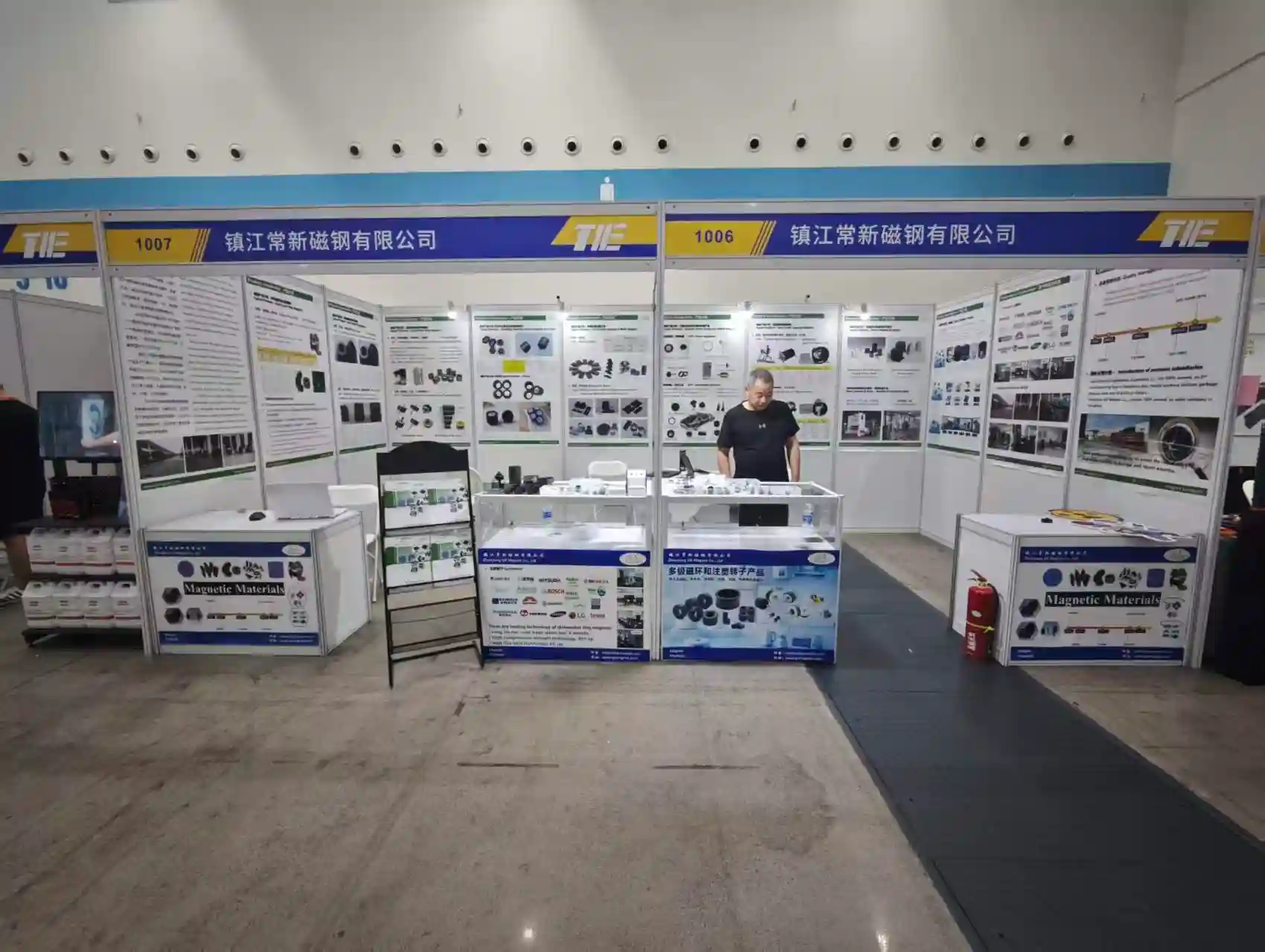
Industry Experience and Magnetic Materials Exhibition Presence
GX Magnet participates in magnetic-material and motor-component exhibitions to present representative magnet geometries and discuss drawing-based project requirements with engineers and buyers. Company logos, where shown, are presented as references to documented project or supply history and should not be read as endorsements of this page or of a specific magnet product.
Custom Neodymium Magnet RFQ & Design FAQ
Answers to common sourcing and engineering questions about drawing-defined custom NdFeB magnets from GX Magnet.
Can neodymium magnets be custom-made?
What information is required for a custom magnet quotation?
How should I select the correct NdFeB magnet grade?
What tolerances are available for custom neodymium magnets?
Which coating should I specify for a custom NdFeB magnet?
What are the MOQ and lead time for custom neodymium magnets?
What is the maximum operating temperature for custom neodymium magnets?
How should magnetization and polarity be specified?
Which magnetic acceptance criteria should be defined?
Can GX supply magnet assemblies as well as individual magnets?
Need help defining the drawing, magnetic target or purchasing requirements for your custom NdFeB magnet?
Let's Discuss Your Project
Send your drawing, magnetic criteria, operating conditions, sample quantity and estimated demand. GX will review the available information and identify any open items before preparing the quotation and sampling scope.