
Speaker Magnets Manufacturer
GX Magnet supplies ferrite and neodymium speaker magnets for loudspeaker and audio OEM projects. From ferrite rings for woofers and subwoofers to compact NdFeB components, we match material, geometry, magnetization and surface protection to your speaker magnetic circuit, assembly requirements and operating conditions.

Speaker Magnet Applications by Driver & Audio System
Start with the speaker layout, magnetic target and available installation space. GX reviews ferrite speaker magnets, neodymium speaker magnets and drawing-defined shapes for woofers, tweeters and miniature transducers. Material and geometry depend on the magnetic circuit, temperature and assembly requirements.

Home Audio & Subwoofer Magnets
- Ferrite ring magnets suit many woofers and subwoofers where the enclosure allows a larger magnetic circuit and magnet material cost is a priority.
-
Define ring OD, ID, thickness, bonding faces and the required air-gap field. Review neodymium where depth or weight is constrained.
Typical End-Use Applications: Hi-fi loudspeakers, home subwoofers, bookshelf speakers, floor-standing speakers.

Professional Loudspeaker Magnets
- Ferrite and neodymium magnets both serve professional loudspeaker designs. Portable systems may prioritize lower weight, while fixed installations can allow larger ferrite circuits.
-
Review magnetic output, driver weight, sustained temperature and the dimensions of the pole-piece assembly.
Typical End-Use Applications: PA loudspeakers, stage monitors, line-array systems, compression drivers.

Automotive Speaker Magnets
- Car speaker magnets balance installation depth, system weight and the available magnetic volume. Ferrite and NdFeB options require circuit-specific selection.
-
Specify magnet temperature, humidity exposure, corrosion protection and the clearance available inside the door or dashboard.
Typical End-Use Applications: Car door speakers, dashboard tweeters, automotive subwoofers, headrest speakers.

TV, Soundbar & Compact Speakers Magnets
- Neodymium speaker magnets can reduce magnet volume in shallow or compact transducers. Useful magnetic output still depends on the complete pole-piece and air-gap geometry.
-
Define the component envelope, coating allowance, magnetization direction and assembly clearance for each miniature driver.
Typical End-Use Applications: Flat-panel televisions, soundbars, portable audio systems, desktop speakers.

Headphone & Miniature Speaker Magnets
- Small neodymium magnets are used in compact dynamic headphone drivers and miniature speakers. Ring or disc geometry follows the individual transducer design.
-
Review small-part dimensions, polarity, coating condition and handling cleanliness before approving samples.
Typical End-Use Applications: Over-ear headphones, on-ear headphones, in-ear earphones, miniature audio transducers.

Guitar & Bass Speaker Magnets
- Ferrite and neodymium offer different weight and magnetic-circuit choices for instrument speakers. Magnet material alone does not define the final tone or acoustic response.
-
Compare circuit geometry, thermal conditions, magnet mass and the complete driver response when selecting or changing material.
Typical End-Use Applications: Guitar cabinets, bass cabinets, combo amplifiers, portable instrument amplifiers.
Why Speaker Design Teams Choose GX Magnetfor Ferrite & Neodymium Magnets
Ferrite manufacturing, drawing-based magnet supply and inspection records aligned with the speaker component requirements.
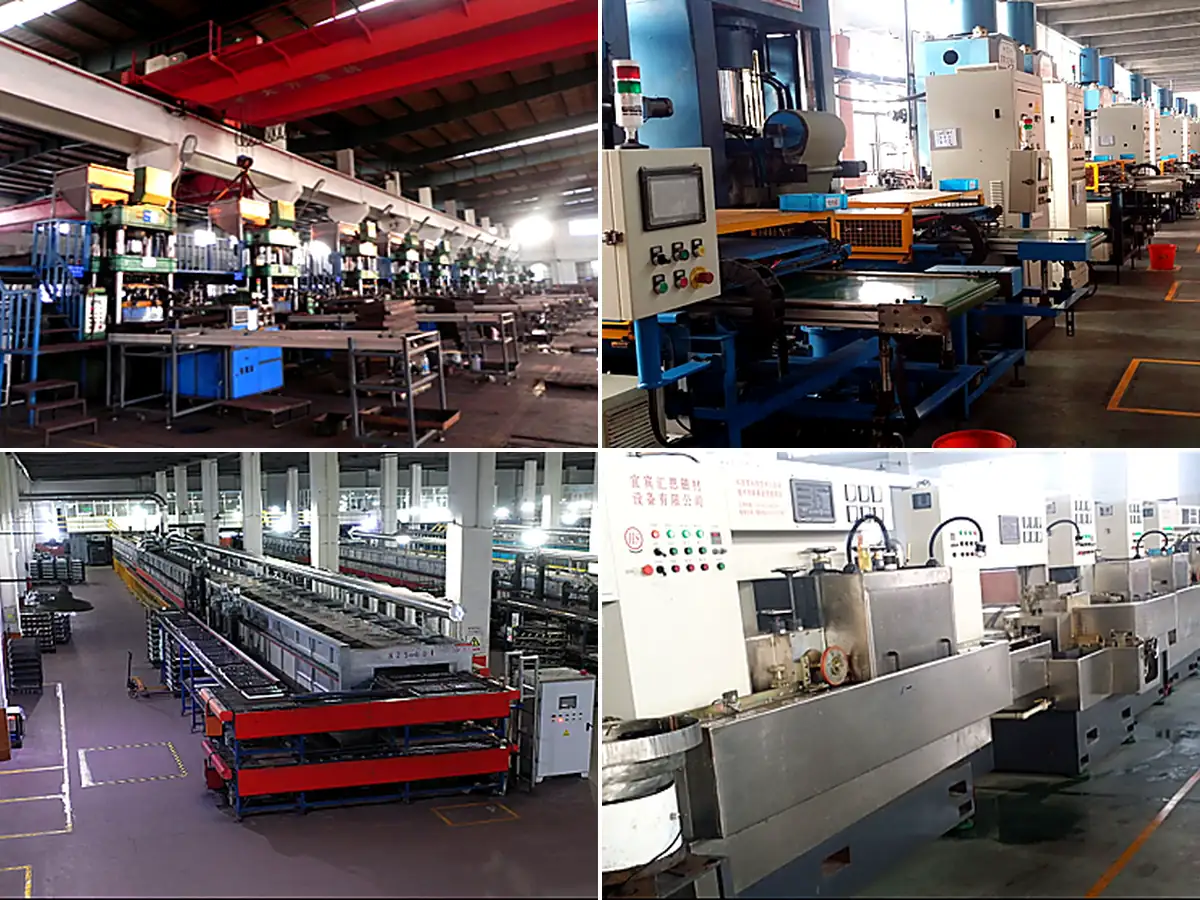
Manufacturing Control & Lot Traceability
GX manufactures ferrite components and supplies NdFeB magnets to agreed drawings. Material grade, critical dimensions, magnetization and surface condition are reviewed before sample approval and recurring production.
- Ferrite production: powder preparation, pressing, sintering and finishing support drawing-defined ring, block and other magnet geometries.
- Magnetic verification: polarity, flux or field distribution are checked under the agreed fixture, position and temperature conditions.
- Component control: critical dimensions, flatness, edge condition and bonding surfaces are included in the approved inspection plan.


Match Material & Geometry to the Speaker Circuit
1Ferrite Rings & Available Magnet Volume
Ferrite speaker magnets suit many conventional woofer circuits where installation space allows a larger ring. Specify ring OD, ID, thickness and the steel interfaces; the useful field depends on the complete magnetic circuit.
2Neodymium Magnets & Compact Driver Layouts
Neodymium speaker magnets provide higher magnetic energy density for compact or lightweight layouts. Compare grades against the required field, actual magnet temperature and demagnetizing conditions. Review coating and bonding compatibility together.
3Magnetization, Bonding & Pole-Piece Interfaces
Define the magnetization direction, polarity, bonding face and delivery state. Axially magnetized rings are common in moving-coil circuits, but the direction must follow the drawing; it is distinct from the radial field within the voice-coil gap.
Speaker Magnet Specification Guide
Use the magnet drawing, speaker circuit and operating conditions to define requirements. Final grades, dimensions, tolerances and magnetic acceptance limits are confirmed for each design.
| Magnetic Materials | Sintered hard ferrite or sintered NdFeB, selected against magnet volume, required magnetic output, temperature and cost. |
|---|---|
| Magnet Geometry | Rings, discs, blocks or drawing-defined shapes. Identify OD, ID, thickness, active surfaces and edge details. |
| Speaker Magnetic Circuit | Woofer, tweeter, compression driver or miniature transducer layout. Provide the relevant pole-piece geometry and working air gap. |
| Steel & Assembly Interfaces | Define mating diameters, locating faces, bonding surfaces and steel clearances. State whether the request covers the magnet component only. |
| Magnetization & Polarity | Direction, pole identification and magnetized or unmagnetized delivery state. Confirm orientation on the component drawing. |
| Dimensions & Mechanical Fit | Critical fits, thickness, flatness, parallelism and permissible edge chips. Define inspection datums and coating allowance. |
| Magnetic Acceptance | Separate material Br and Hcj from finished-part flux or field checks. Specify the fixture, probe location and measurement temperature. |
| Temperature & Environment | Continuous and peak magnet temperature, exposure duration, thermal cycling, humidity and corrosion conditions. |
| Air-Gap Field & Force Factor | Air-gap flux density requires the intended magnetic circuit. Force factor also depends on voice-coil geometry and position; it is not a bare-magnet specification. |
| Protection & Bonding | Specify NdFeB coating where required, surface preparation, adhesive compatibility and assembly cleanliness. |
| Sample & Quality Documents | Drawing revision, first-article dimensions and magnetic results. Agree lot identification, inspection records and change-control requirements. |
| Quotation Inputs | Magnet drawing, speaker application, material or magnetic target, operating conditions, sample quantity and annual demand. |
What Changes the Useful Field at the Voice Coil?
Evaluate the magnet within its intended magnetic circuit and operating temperature. Magnet size or material grade alone does not define the finished speaker output.
Air Gap & Pole-Piece Geometry
Gap width, steel geometry, concentricity and magnet dimensions affect the field where the voice coil moves. Use the actual circuit and assembly datums when evaluating a change in magnet material or size.
Temperature & Magnetic Stability
Review grade selection and demagnetization margin at the magnet’s operating point. Voice-coil heating and power compression are separate effects from permanent-magnet demagnetization.
Polarity & Measurement Conditions
Agree polarity, magnetization direction and the magnetic acceptance method. Compare surface or air-gap measurements only under the same fixture, probe position and temperature conditions.
From Drawing Reviewto Sample Approval
Send the magnet drawing together with the speaker layout, magnetic target and operating conditions. GX reviews geometry, material, magnetization and bonding interfaces, then agrees the sample quantity, tooling scope and inspection criteria before sample production.

Inspection & Batch Release
The inspection plan defines dimensional and magnetic acceptance limits for each magnet. Measurement conditions, surface checks and lot records are established before production. Validate approved samples in the intended driver to relate component results to acoustic performance.

One Speaker Circuit, Multiple Design Variables
1Ferrite Rings in a Conventional Woofer
The speaker illustration shows a conventional woofer together with a ferrite ring. Ring dimensions, pole-piece geometry and the voice-coil gap must be considered together. A larger speaker magnet does not by itself guarantee higher sensitivity, deeper bass or better sound.
2Compare Ferrite & Neodymium for Each Application
Home and fixed-installation speakers may allow larger ferrite circuits, while portable and miniature drivers may benefit from neodymium’s higher energy density. Review weight, available depth, temperature and cost; the same-size material substitution may require a circuit redesign.

Request Samples & a Speaker Magnet Quote
Share your magnet drawing, speaker application, magnetic target, operating conditions and annual demand. GX Magnet will review ferrite or neodymium options, geometry, magnetization, protection and sample requirements for your project.
Speaker Magnet Technical FAQs
Answers on speaker magnet materials, magnetic strength, geometry, material comparison and OEM sampling requirements.
What are speaker magnets made of?
Why do speakers have magnets?
How do speakers use magnets to produce sound?
Ferrite vs neodymium speaker magnets: which should I choose?
Does speaker magnet size matter?
How is speaker magnet strength specified?
What should I send for a speaker magnet quotation?
How should speaker magnet samples be approved?
Explore Related Magnets & Components

Ferrite Ring Magnets
Ring dimensions, grade and magnetization for drawing-defined magnetic circuits.

Hard Ferrite Magnets
Hard ferrite materials and geometries reviewed against magnetic and dimensional requirements.

Sintered Neodymium Magnets
NdFeB components selected by grade, geometry, temperature and surface protection.

Neodymium Ring Magnets
Ring geometry, bore clearance, magnetization and coating requirements.

Neodymium Disc Magnets
Compact disc shapes with drawing-defined diameter, thickness and polarity.

Custom Ferrite Magnets
Drawing-based ferrite shapes with material and inspection requirements agreed for the project.