
Channel Magnets
for Cabinet Doors & Panels
GX Magnet supplies ferrite and neodymium channel magnet assemblies for use as magnetic door catches on cabinet doors, equipment panels and industrial enclosures. Material selection depends on the required holding force, available space and operating environment. Channel dimensions, mounting holes and surface finish can be specified to your OEM drawing.

Magnetic Door Catches
for Cabinets & Enclosures
Used as cabinet door magnets, channel assemblies hold doors and access panels against a steel mating surface. Select ferrite or neodymium to suit the available space and holding-force target. For each magnetic cabinet catch application, check the mounting position, mating steel thickness and working gap before selecting the assembly.

Energy Storage Cabinets
- High-coercivity C8 ferrite core
- Maximized holding force via U-channel circuit
- Impact-proof steel casing, vibration resistant
- Long-term operational reliability

Electrical Cabinets
- Redirected magnetic circuit ferrite magnet
- Low flux leakage, secure circuit protection
- Rattle-free, smooth closing performance
- Flush mounting options available

Vent Access Doors
- High-coercivity C8 ferrite magnet
- Long strip design, constant sealing pressure
- Weather-resistant steel finish
- Quick release and closure

PV Inverter Cabinets
- C8 ferrite core, wide temperature range
- UV and heat resistant powder coating
- Secure holding prevents accidental opening
- Low-maintenance magnetic closure

Distribution Cabinets
- Heavy-duty square ferrite channel magnet
- Heavy-duty impact & tamper resistant
- Focused magnetic circuit for secure holding
- Standardized fitment

Server Cabinets
- Low-interference ferrite channel magnet
- Countersunk holes, sleek flush integration
- Precision alignment design
- Rigid steel-channel construction
Why OEM Buyers Choose GX Magnet
From magnet material and channel assembly to performance validation and drawing review,
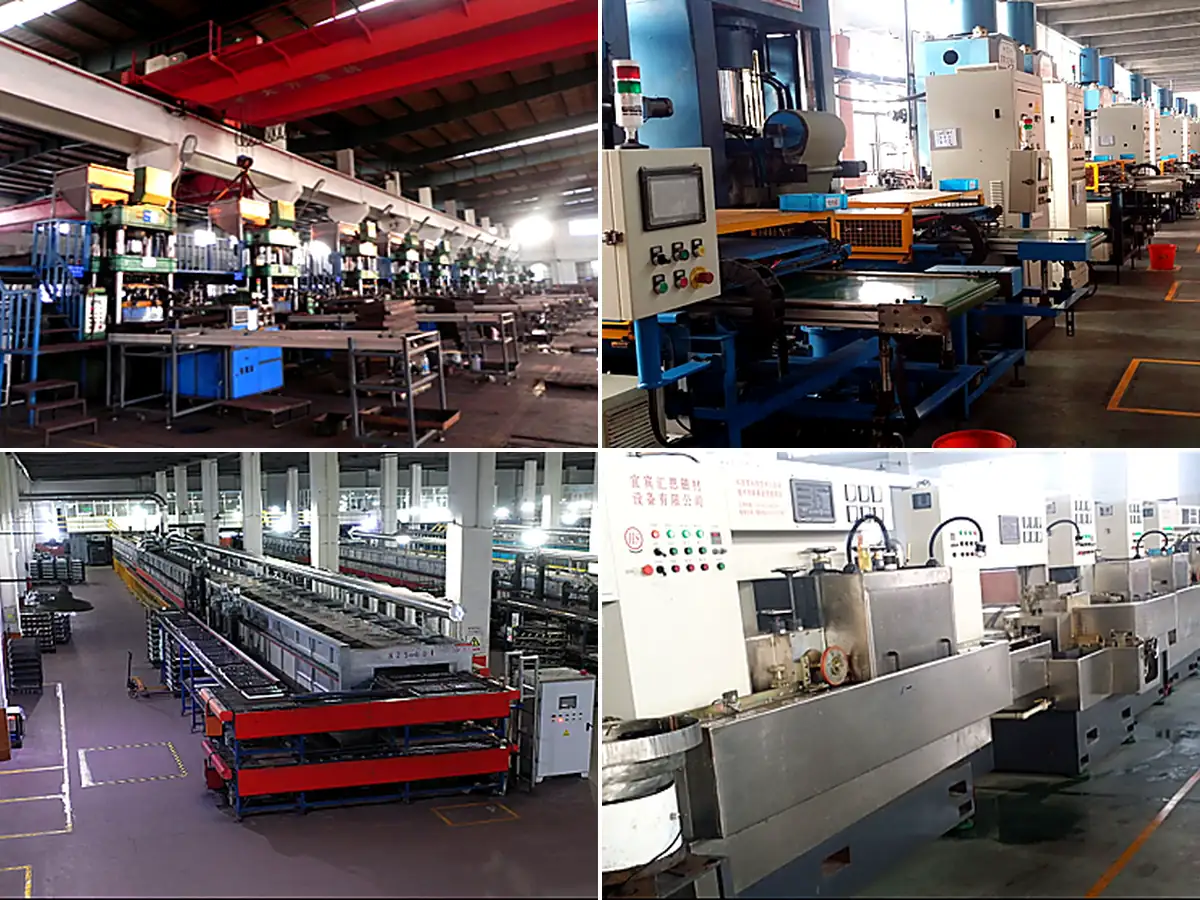
Controlled Magnet & Channel Assembly
Ferrite and NdFeB channel magnets produced to OEM drawings for repeatable fit and holding performance.
- Magnet Options: Ferrite / NdFeB
- Production Control: Forming, sintering & magnetization
- Lot Verification: Dimensions, flux & assembly fit
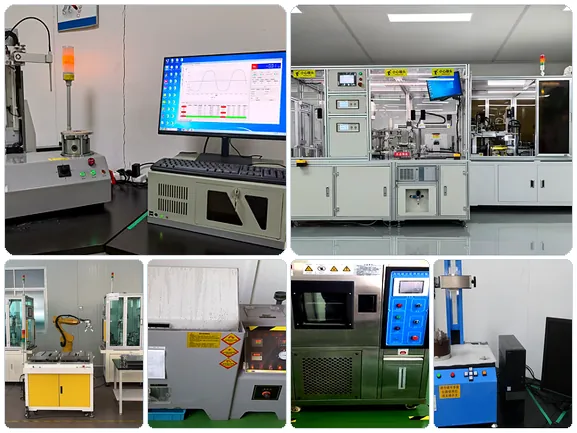
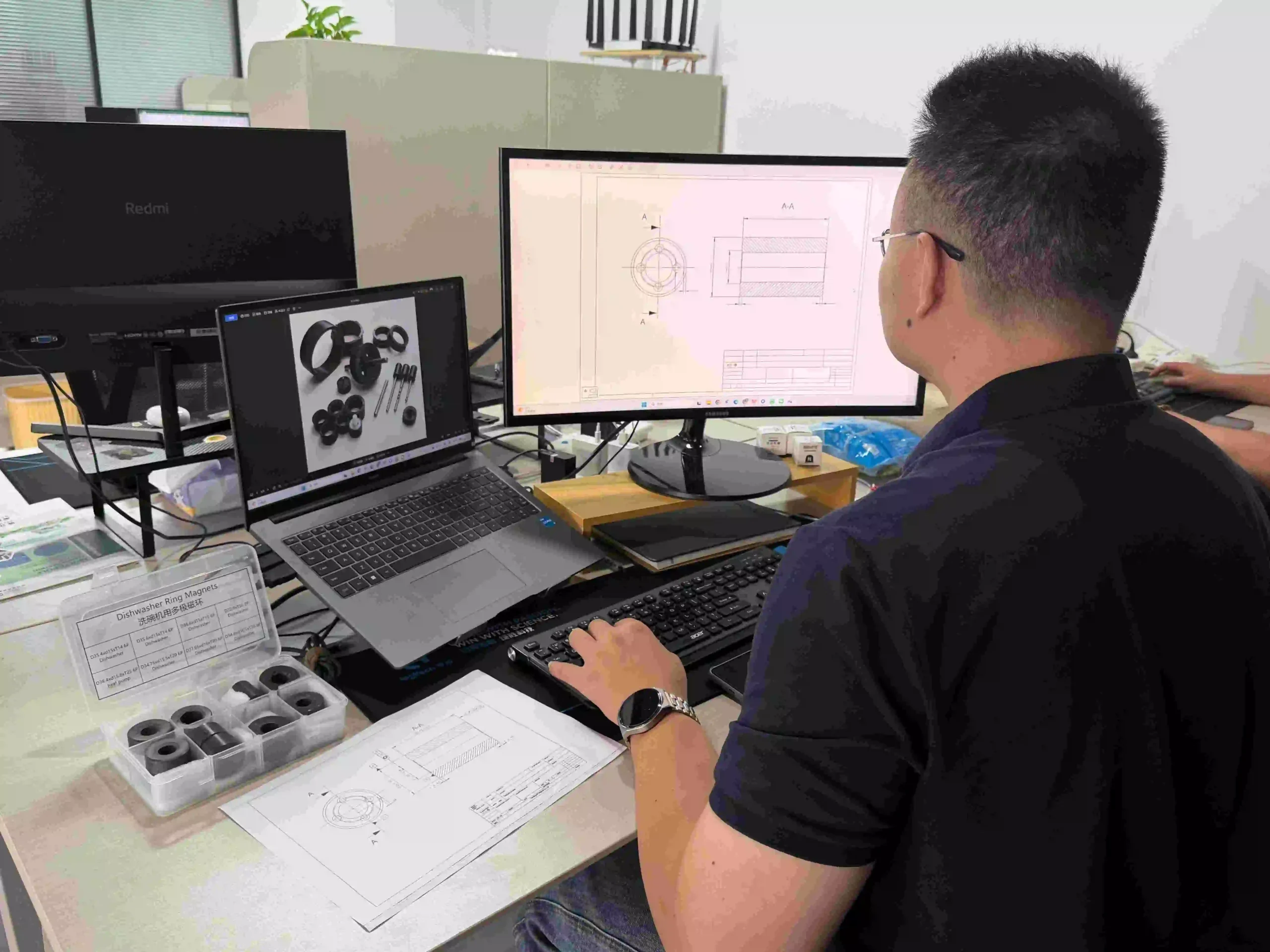
Engineered for Industrial Reliability
1 C8 Sintered Ferrite Stability
Unlike NdFeB magnets which can suffer from thermal demagnetization in warm enclosures, our C8 ferrite core maintains stable performance up to 80°C (175°F). It provides a cost-effective, highly stable magnetic field with a maximum energy product of 28 kJ/m³.
2 Zinc-Passivated Steel U-Channel
The low-carbon steel housing serves a dual purpose. Mechanically, it prevents the brittle ferrite from shattering during aggressive door closures. Magnetically, it acts as an armature, directing the magnetic flux to the open face to significantly increase the effective pull force compared to a bare magnet. The zinc passivation ensures corrosion resistance in diverse environments.
3 Precision Mounting
Featuring two Ø3.97 ± 0.05 mm through holes with a strict 58.74 mm center distance. Designed to accept standard No. 6 screws, ensuring rapid and repeatable assembly on OEM production lines without the need for secondary drilling.
Technical Specifications
Verified parameters for engineering integration and procurement validation.
| Core Material | C8 Sintered Ferrite |
|---|---|
| Housing Material | Low-carbon steel U-channel with zinc passivation |
| Overall Dimensions | 66.68 × 23.80 × 7.94 mm |
| Mounting Holes | 2 through holes, Ø3.97 ± 0.05 mm |
| Hole Center Distance | 58.74 mm |
| Recommended Hardware | No. 6 screw |
| Maximum Pull Force | 26.69 N / 6 lbf |
| Max Energy Product | 28 kJ/m³ |
| Max Operating Temp | 80°C / 175°F |
| Approximate Weight | 49.9 g |
| Compliance | RoHS 3, REACH, EAR99 |
Holding Force: Practical Values
& Key Influencing Factors
The rated 26.69 N (6 lbf) represents the maximum theoretical holding force. Actual holding force in your cabinet assembly depends on several critical engineering factors, and can be customized to match your specific application and mounting requirements.
Air Gaps & Paint
Magnetic force drops exponentially with distance. Even a 0.1mm layer of powder coating or paint on the cabinet door acts as an air gap, significantly reducing the effective pull force.
Mating Material
The 26.69 N rating assumes a thick, low-carbon steel mating surface. Thin sheet metal doors may become magnetically saturated, preventing the catch from achieving its maximum potential hold.
Alignment & Contact
Vibration or hinge sagging can cause misalignment. The steel U-channel must make flush, parallel contact with the strike plate or door surface to maintain optimal magnetic circuit closure.
OEM Drawing & Selection Logic
The 58.74 mm hole center distance is our standard specification for stock door catches, ideal for new enclosure designs. For existing panel tooling with different spacing, we support fully customized channel dimensions and custom stamping dies to match your requirements.
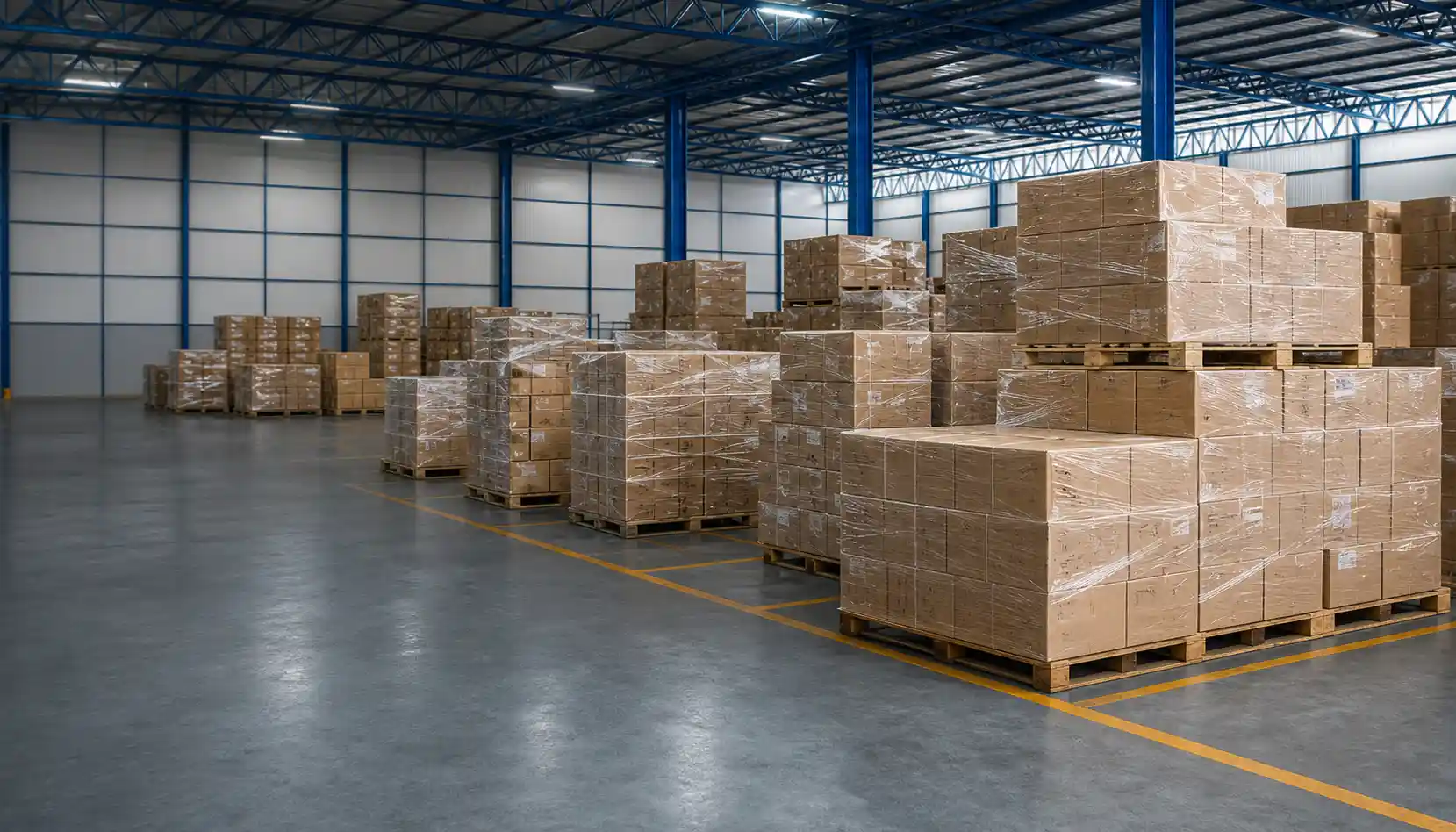
Inspection & Batch Release
Every production batch undergoes strict quality assurance before release. We verify zinc passivation thickness for corrosion resistance and perform sampling pull tests to confirm consistent holding performance under perpendicular pull conditions.

Engineered for Server Cabinet Reliability
1
C8 Sintered Ferrite Magnets Stability
NdFeB magnets have higher saturation magnetization, and poor magnetic circuit design can result in strong stray fields that risk interfering with sensitive server and storage hardware. Our C8 ferrite core, paired with a closed U-channel magnetic circuit, delivers a balanced and highly stable magnetic field optimized for continuous data center operation. Within the typical operating temperature range of server enclosures, it maintains consistent holding force over years of vibration and thermal cycling, eliminating door shake, rattling noise and loose closure, while keeping side flux leakage well below the EMC tolerance threshold of internal electronics.
2 Zinc-Passivated Steel U-Channel
The low-carbon steel housing serves two core functions. Mechanically, it protects the brittle ferrite core from impact during door operation and prevents chipping or shattering. Magnetically, it acts as a flux-concentrating armature that redirects magnetic flux to the sealing face, significantly increasing effective holding force while greatly reducing side flux leakage. The zinc passivation finish provides reliable corrosion resistance for long-term performance in controlled data center environments.

Request Engineering Samples & Quote
Submit your project details for rapid pricing and sample dispatch. For OEM modifications (different hole spacing or channel dimensions), please indicate this in the application details.
Frequently Asked Questions About Channel Magnets
Selection guidance on magnet materials, holding force, mounting interfaces and OEM requirements.


