
Particle Classification
The Raymond-mill and air-classification route controls the powder distribution, with a recorded narrow particle range around 2 μm.
Ferrite Magnet
Using in-house ferrite powder, GX presses, sinters and grinds ferrite block magnets for industrial motors and magnetic assemblies to drawing-defined dimensions and magnetic targets. Critical surfaces and finished-part field, flux or pull force are verified under agreed conditions, reducing fit and magnetic-output variation from sample approval through recurring production.








RFQ INPUT CHECKLIST
A complete drawing and specification package enables GX to evaluate manufacturability, confirm the material, tooling and inspection scope, and prepare the quotation and sample-approval plan on a consistent basis.
Why choose us for your project
GX prepares ferrite powder in-house. Air classification records a narrow particle distribution around 2 μm, followed by ball milling with 4 mm media. This controlled route establishes the powder condition used for pressing and sintering ferrite blocks.
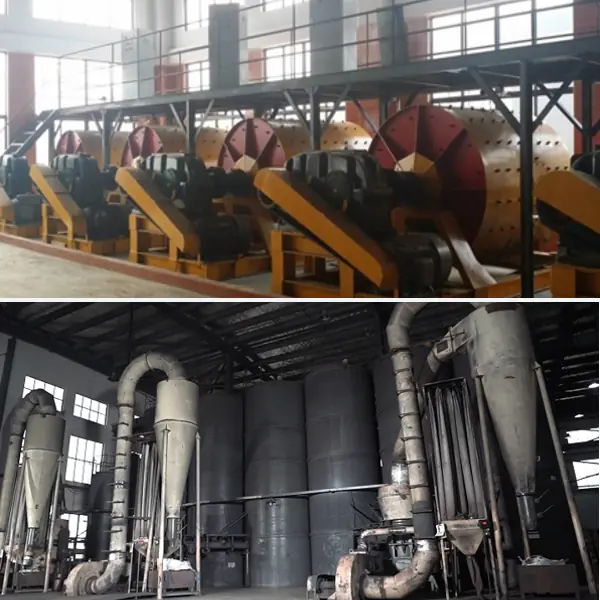
The Raymond-mill and air-classification route controls the powder distribution, with a recorded narrow particle range around 2 μm.
After air classification, 4 mm milling media continue particle refinement before the powder enters the forming route.
Selected GX grades list Br from 4,200 to 4,750 Gs, Hcj from 3,350 to 4,850 Oe, and (BH)max from 4.0 to 5.3 MGOe, based on standard specimens tested at 20°C.
A selected wet-pressed ferrite block recorded approximately 1,300 Gs at the center surface. Final magnetic output remains dependent on geometry, orientation and the agreed measurement condition.
Why choose us for your project
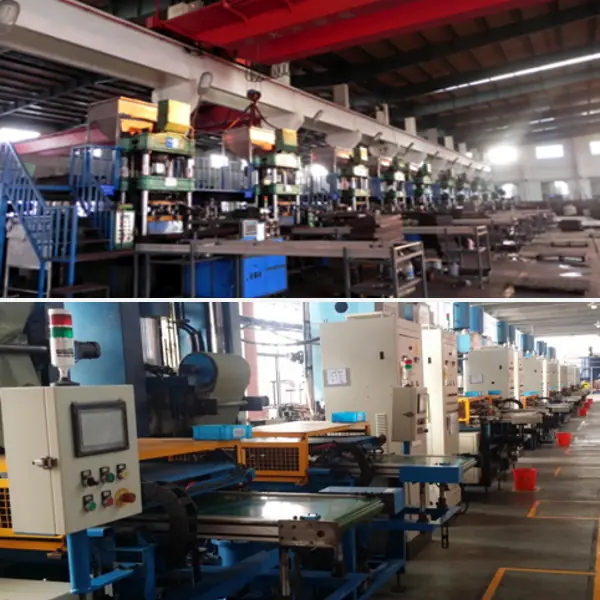
GX operates both wet- and dry-pressing routes for sintered ferrite blocks. Wet pressing is selected when magnetic orientation and output lead the design; dry pressing supports simpler rectangular geometries and efficient recurring production. Grade, dimensions, magnetization direction and annual demand determine the route before sampling.
Used for anisotropic blocks where magnetic orientation is the primary requirement, including selected electric-tool and soybean-milk-machine programs. One GX wet-pressed block recorded approximately 1,300 Gs at the center surface under its defined measurement condition.
Used for square and rectangular blocks with simpler geometry and recurring-volume demand. The route avoids slurry handling and supports efficient compaction; final magnetic output remains dependent on grade, pressing orientation, part geometry and magnetization.
Selected washing-machine block magnets and air-conditioning-fan magnets record approximately 95% yield. final release based on the approved drawing and magnetic test.
Why choose us for your project
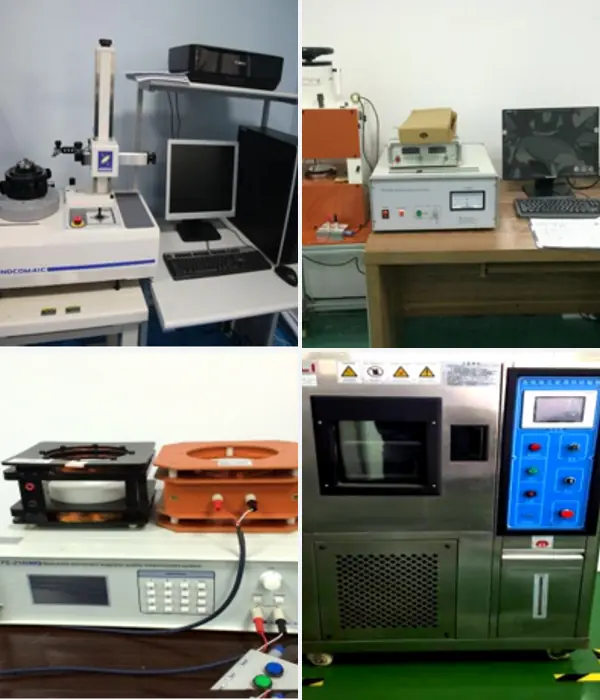
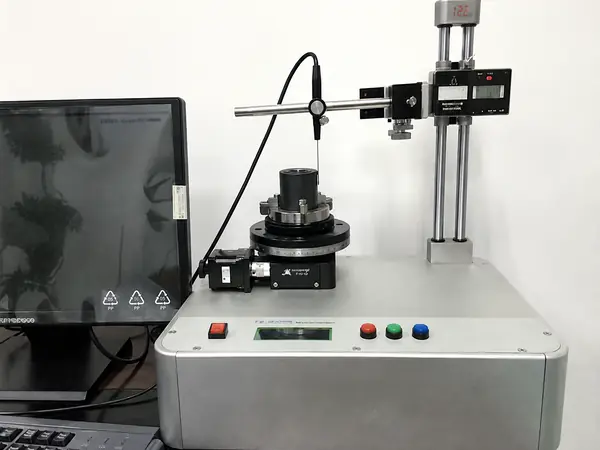
The four instruments shown are selected examples from GX’s broader inspection system. They demonstrate how profile geometry, material properties, finished-part flux and thermal response are verified at relevant production stages. Additional dimensional, visual and project-specific checks follow the approved control plan.
Product and supply scope
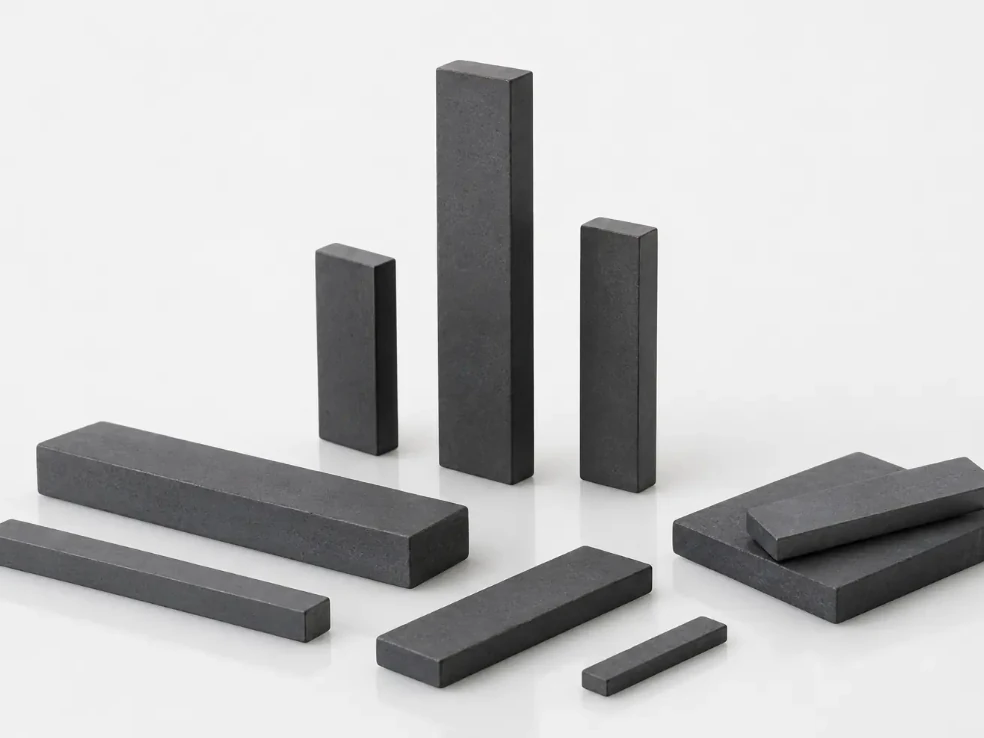
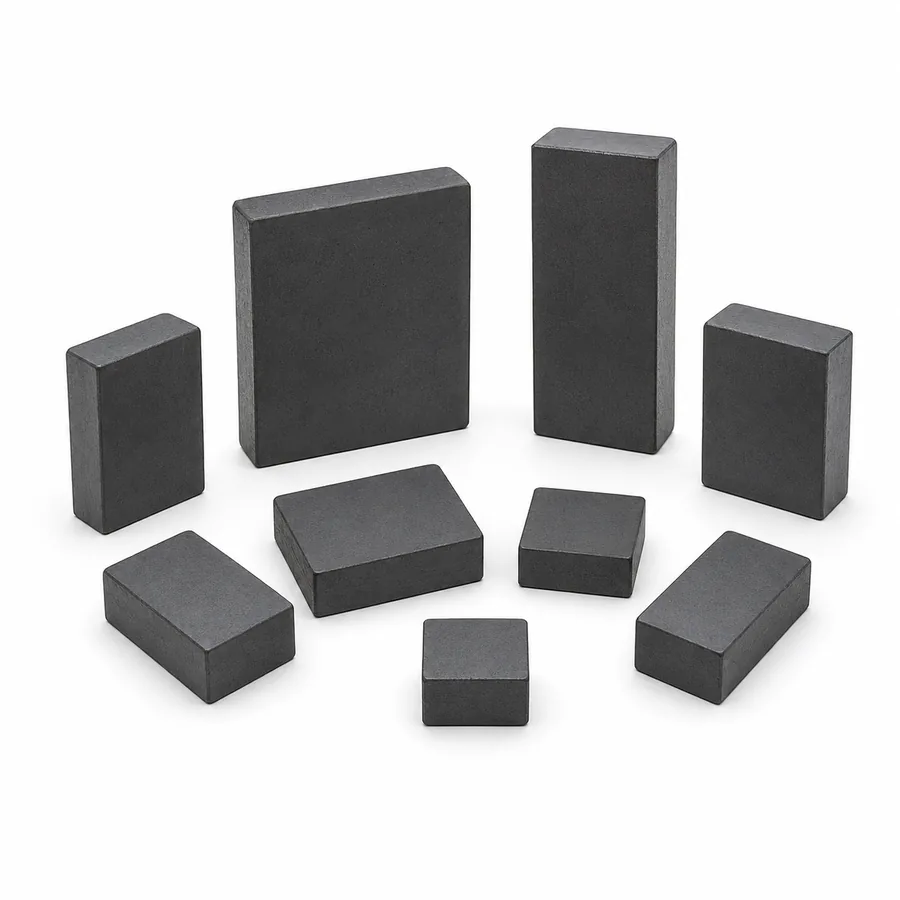
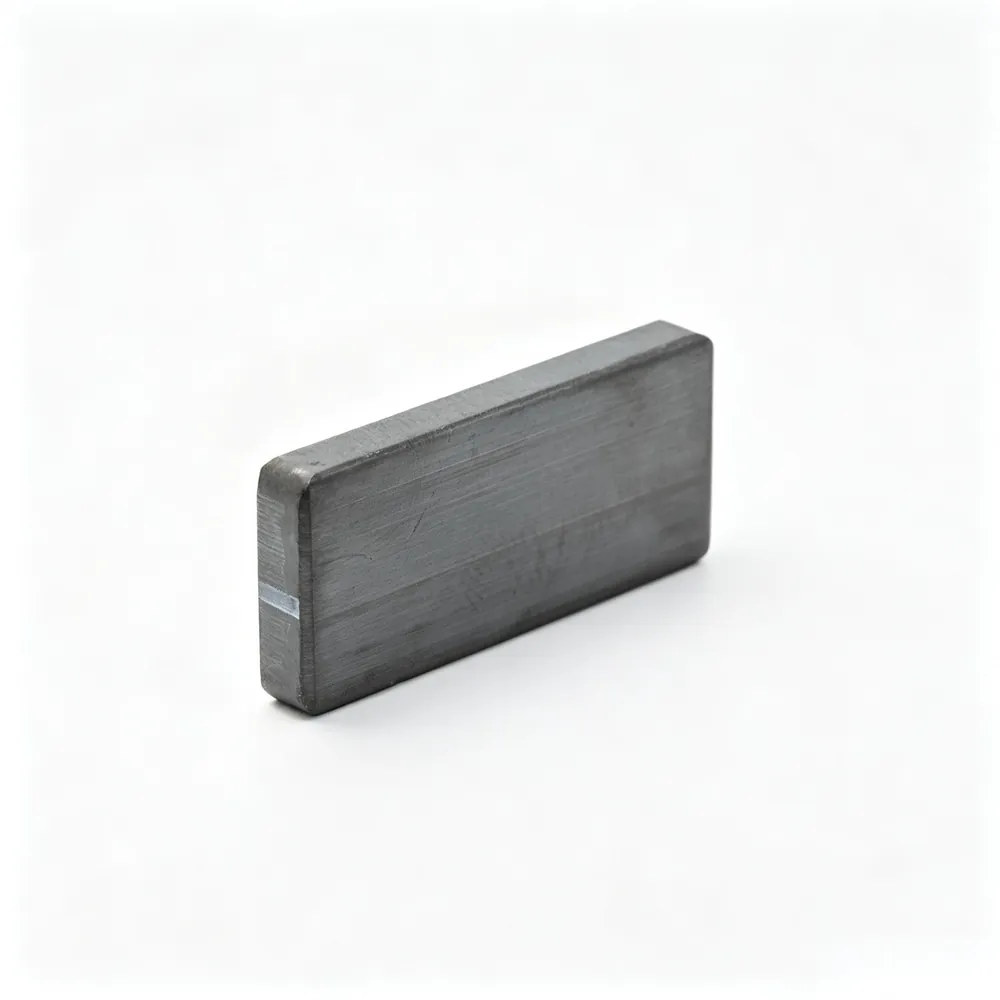
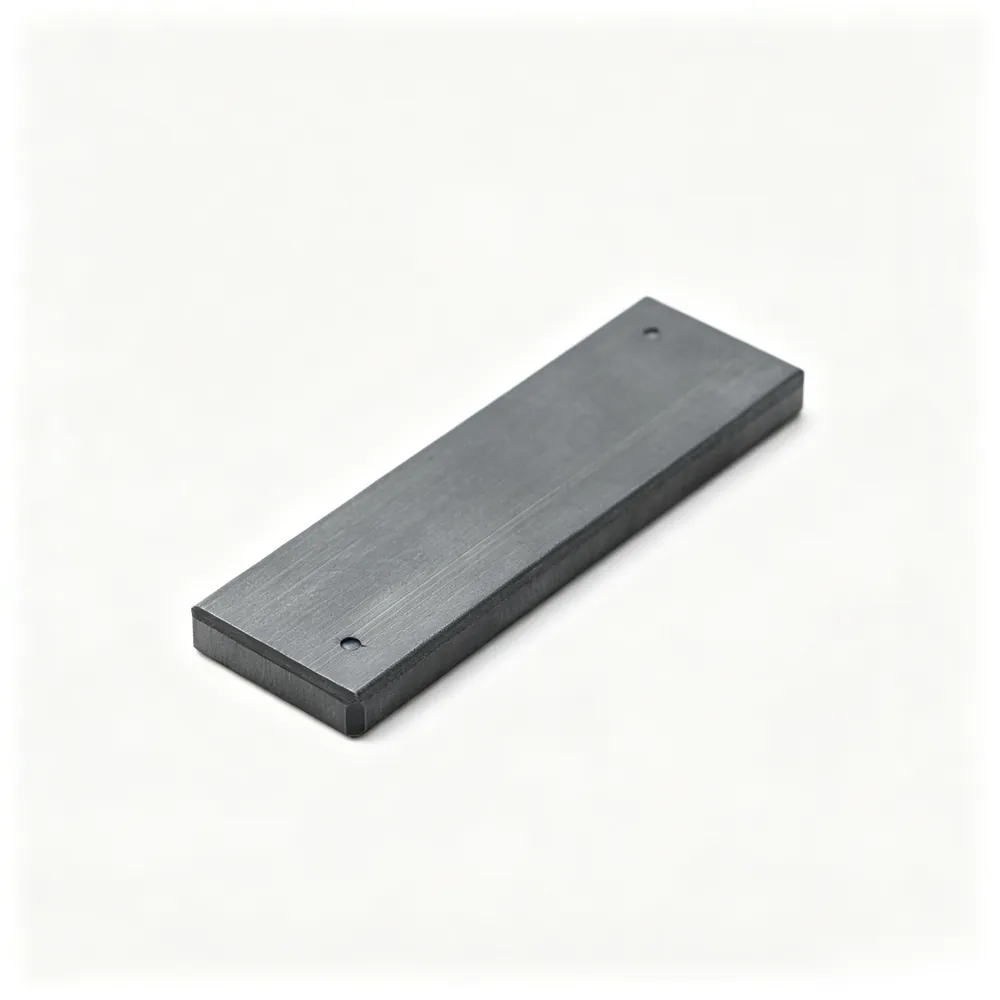
A ferrite block magnet is a sintered hard-ferrite permanent magnet with flat rectangular or square geometry. It is selected where the assembly needs a broad magnetic working face, stable material behavior and a drawing-defined fit.
GX supplies individual block ferrite magnets according to the approved drawing and magnetic requirement. Steel back plates, holders, adhesives and final magnetic assemblies remain separate unless their supply scope is confirmed for the project.
DRAWING INPUTS
These drawing inputs define assembly fit, working air gap, pole orientation and the dimensional inspection method.
FERRITE BLOCK MAGNET RFQ PARAMETERS
The table follows the engineering review sequence for ferrite block magnets. Reference ranges support initial selection; final length, width, thickness, flatness, magnetization direction, magnetic target, mounting interface and acceptance limits are confirmed in the released drawing, approved specification, quotation and control plan.
| Parameter group | Project-specific review basis | Confirmation and Release Evidence |
|---|---|---|
| Material / route | Sintered strontium ferrite; grade and orientation selected for the magnetic circuit | Approved strontium ferrite grade and isotropic or anisotropic orientation; Br, Hcb, Hcj and (BH)max report at 20°C when specified. |
| Geometry and tolerances | Length, width, thickness, flatness, parallelism, chamfers and functional datums | Released drawing defines length, width, thickness, flatness, parallelism, chamfers, datums and tolerances; verified by the first-article dimensional report. |
| Magnetic or functional requirement | Material properties plus field, flux or pull-force requirement with fixture and gap | Approved limits for surface field, flux or pull force, with the magnetization direction, measurement position, air gap, fixture and temperature defined. |
| Mechanical / assembly interface | Magnetization axis, bonding face and mechanical retention | Approved bonding face, mounting datum, bracket or retention feature, adhesive system and bond-line thickness; assembly or retention testing when specified. |
| Operating environment | Temperature, moisture, vibration, impact and corrosive medium | Agreed limits for temperature, moisture, vibration, impact and corrosive media; environmental tests include defined duration and pass criteria. |
| Inspection and acceptance | Drawing dimensions, appearance criteria and agreed magnetic test | Control plan defines dimensional and appearance inspection, magnetic test method, fixture, sample size, frequency, acceptance limits and lot-release records. |
| Supply boundary | Block magnet; brackets or assemblies only when included in the released scope | Quotation and drawing identify the supplied scope—block magnet, mounted bracket or magnetic assembly—and the included magnetization, bonding, inspection, packaging and documentation. |
Engineering requirements
A rectangular outline alone does not define how the magnet fits, works or will be inspected in the customer assembly.
Procurement constraint: L × W × T does not identify the datum, bonding face or magnetic working face.
Review input: mark the critical faces, mating parts, flatness or parallelism requirement and installed gap on the drawing.
Procurement constraint: surface-gauss readings change with the probe position, fixture, gap and magnetization direction.
Review input: define polarity, the north/south faces, test position and the magnetic acceptance method used for sample approval.
Procurement constraint: sintered ferrite is hard and brittle, so undefined chip limits can create handling and assembly disputes.
Review input: identify critical edges, chamfers, appearance limits, bonding or retention method and packaging needs.
GX VALIDATION STANDARD
GX verifies each sample against the buyer’s application conditions and drawing-defined parameters. The approved sample, test methods and acceptance limits then become the control basis for recurring production.
The validation plan covers the applicable temperature, moisture, vibration, impact, medium, working air gap and magnetic-circuit conditions, with agreed test methods and pass criteria.
Critical dimensions, flatness, magnetization direction, polarity and finished-part field, flux or pull force are measured under defined conditions. Recurring lots are inspected against the approved limits to control sample-to-production and lot-to-lot variation.
IN-HOUSE PROCESS CONTROL
GX controls powder preparation, pressing-route selection, sintering, finishing, magnetization and inspection as one connected manufacturing process. Each stage is aligned with the approved sample and drawing-defined acceptance limits.
Block geometry, working faces, magnetic target, material orientation and demand are reviewed to define the tooling, pressing route and inspection plan.
GX prepares ferrite powder in-house through calcination, Raymond milling and air classification, with a recorded narrow particle distribution around 2 μm.
Wet pressing is selected when stronger anisotropic orientation is required; dry pressing supports suitable geometries and efficient volume production. The route is matched to the drawing and magnetic target.
The upper kiln stage removes moisture before the lower stage completes rapid final sintering. Drawing-defined faces are then ground to control thickness, flatness and the assembled working air gap.
Dimensions, polarity, magnetization direction and finished-part field, flux or pull force are checked together with the applicable temperature, moisture, vibration or medium conditions.
Released drawings, approved samples, defined test methods and acceptance limits control recurring lots, reducing sample-to-production and lot-to-lot variation.
Inspection and validation
The inspection plan separates geometry, working surfaces, magnetic acceptance and edge condition so production is not released from a generic magnet specification.
| Control area | What is reviewed | Why it matters |
|---|---|---|
| Overall geometry | Length, width, thickness, squareness, radii and drawing datums | Supports assembly fit and repeatable positioning |
| Working surfaces | Flatness, parallelism, ground faces and bonding interfaces where specified | Controls the installed air gap and contact condition |
| Magnetic properties | Material or agreed magnetic target under a defined method | Connects the block to the customer magnetic circuit |
| Polarity | Magnetization direction and north/south face identification | Prevents reversed installation or incorrect field direction |
| Edges and appearance | Chamfers, chips, cracks, surface condition and agreed acceptance limits | Reduces handling and assembly risk for brittle ferrite |
| Packaging interface | Part separation, impact protection and orientation marking where agreed | Protects edges and working faces during transport and handling |
Revision, datums, critical faces and special features remain traceable.
Dimensions, magnetization, magnetic acceptance and appearance are approved before release.
Recurring orders follow the released drawing, approved sample and agreed checks.
Application review
These are application categories for engineering evaluation, not claims that one standard block fits every assembly.

Specify block dimensions, mounting face and magnetization direction from the motor envelope and working air gap. Sample approval verifies flatness, edge condition and field or flux at the agreed position, with retention checked under the required vibration and load conditions.
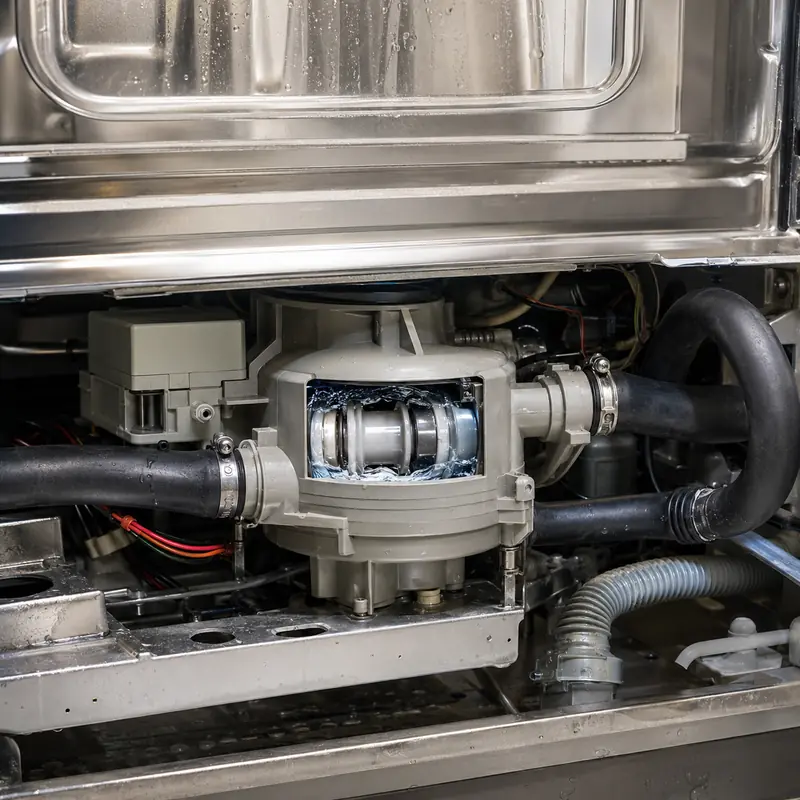
Moisture and hot/cold cycling make the bonding interface and magnetic stability critical. Define the block size, bracket or retention feature, magnetization direction and target flux or pull force. Validate dimensions, adhesion and magnetic output before and after the specified exposure cycle.

Compact auxiliary motors require controlled fit under temperature, vibration and impact. Define the magnet envelope, mounting datum, magnetization direction and magnetic target. First-article approval checks dimensions, edge criteria, retention and field or flux at the specified measurement position.

Fan and appliance motors require consistent magnet position and field distribution during repeated operation. Define the block dimensions, mounting method, pole orientation, air gap and operating temperature. Approve dimensional fit and magnetic output using the agreed fixture and measurement position.
Customer and industry presence
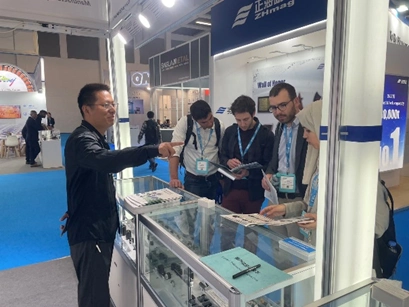
Selected logos identify organizations served by GX and are not presented as Ferrite Block Magnet endorsements. The exhibition record confirms GX's magnetic-materials and motor-component industry presence.
GX Magnet Booth at CWIEME Berlin 2024. Event or visit photograph documenting the people and setting shown.
DOCUMENTED QUALITY AND COMPLIANCE
GX supports ferrite block projects with IATF 16949-certified manufacturing controls and SGS RoHS and REACH sample testing. Drawing-defined dimensions, tolerances, magnetization and magnetic limits provide the acceptance basis for each released part.
GX manufactures permanent ferrite components under an IATF 16949-certified quality management system. Drawing-revision control, production records, dimensional inspection and finished-part magnetic checks support sample approval and recurring production.
Submitted Fe₂O₃ magnet samples have passed SGS screening against the applicable EU RoHS restricted-substance requirements, providing third-party material-compliance evidence for customer review.
Submitted ferrite magnet samples have passed SGS REACH SVHC screening within the tested scope, providing documented third-party evidence for material review and project approval.
Engineering and sourcing FAQ
Eight practical answers to common ferrite block magnet sourcing questions, covering block-versus-bar selection, material grade, dimensions and tolerances, magnetization direction, magnetic targets, mounting method, inspection and production approval.
The main differences are the material route, achievable geometry, magnetic output and assembly method. Compare them in the actual magnetic circuit and operating condition; the product name alone is not enough to select the part.
Start with ferrite grade and orientation through thickness or another drawing axis. Then check the required magnetic output, geometry, temperature and commercial volume before fixing a grade in the drawing.
Control the dimensions that set fit, air gap or working position. For this product, review length, width, thickness, flatness, edge condition and pole direction; avoid applying a tight general tolerance to non-functional surfaces without a measurement reason.
Specify the magnetization axis or pole pattern, pole count where applicable, and the acceptance method. A field value must also state the measurement location, fixture or air gap so supplier and buyer evaluate the same condition.
Temperature capability depends on material grade, geometry, magnetizing state and the magnetic circuit. Provide temperature, air gap, retention method and corrosion environment; GX can then review demagnetization risk and whether the proposed material route fits the duty.
Use an agreed method tied to the application: material-property testing, surface field at a defined position, flux, pull force, pole pattern or waveform. The released drawing and acceptance plan should state the instrument, fixture and limits.
Send the drawing or 3D model, material or magnetic target, length, width, thickness, flatness, edge condition and pole direction, temperature, air gap, retention method and corrosion environment, expected quantity and acceptance method. State whether tooling, inserts, assembly or magnetization is included in the requested supply scope.
Agree the drawing revision, tooling state, critical dimensions and magnetic test method before sample release. Approval should identify the sample record and any deviations; recurring orders then follow the released specification, quotation and control plan.
Project inquiry
Attach the part and assembly drawings. GX reviews block geometry, material or magnetic target, magnetization, application conditions and inspection method before defining the sample route.