







GX MAGNET Logo

Ferrite Magnet

Hard Ferrite MagnetsManufacturer

GX Magnet supplies sintered hard ferrite magnets for motor, pump, appliance and industrial OEM projects. Material system, orientation, dimensions, magnetic targets and magnetization are reviewed against the customer drawing before sample approval and production release.

  • Permanent ferrite component manufacturing since 1992
  • Strontium ferrite for current programs; barium ferrite for released legacy or drawing-specific requirements
  • Isotropic or anisotropic orientation matched to the specified magnetic direction
WhatsApp Contact
Supply route: drawing review, sample approval and recurring production
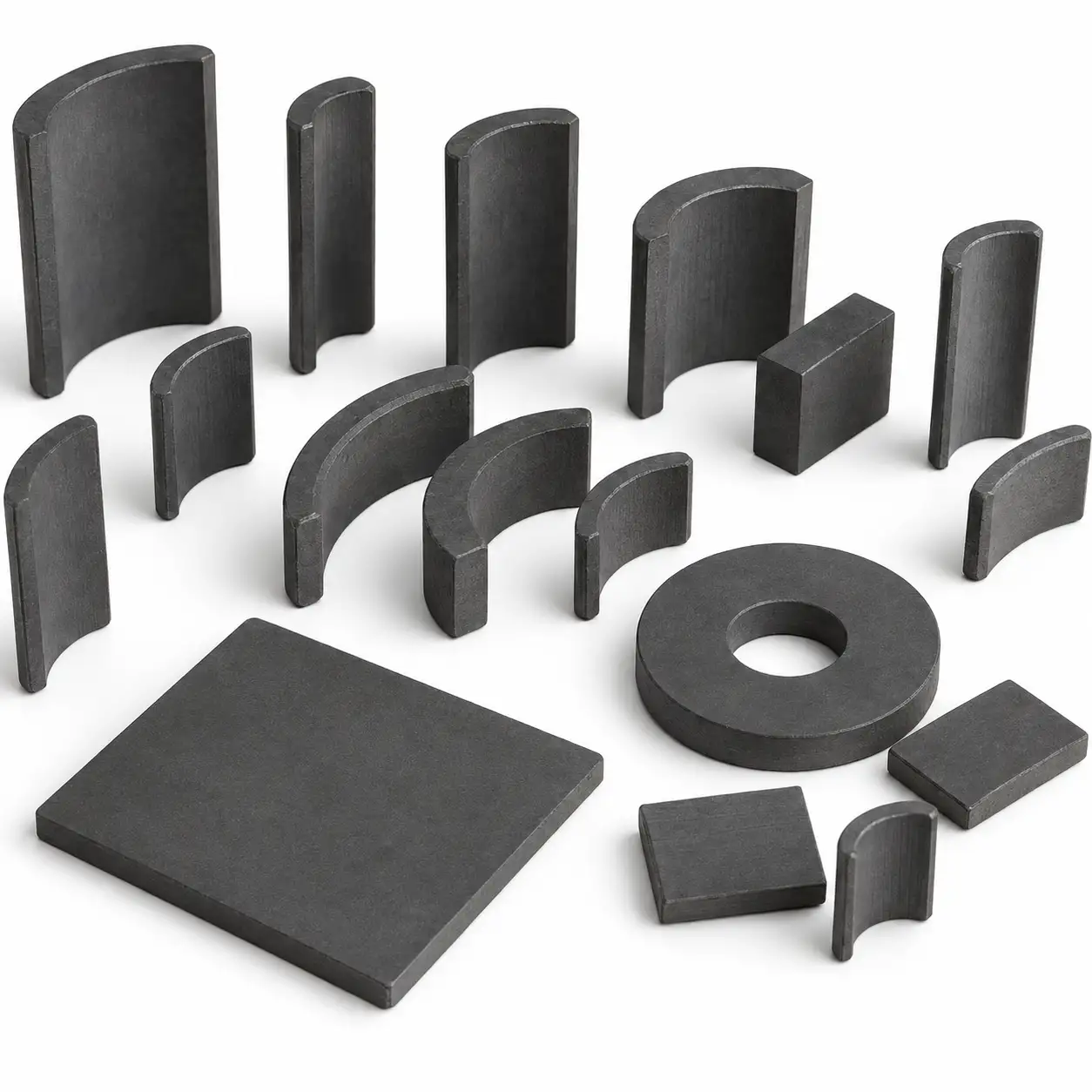
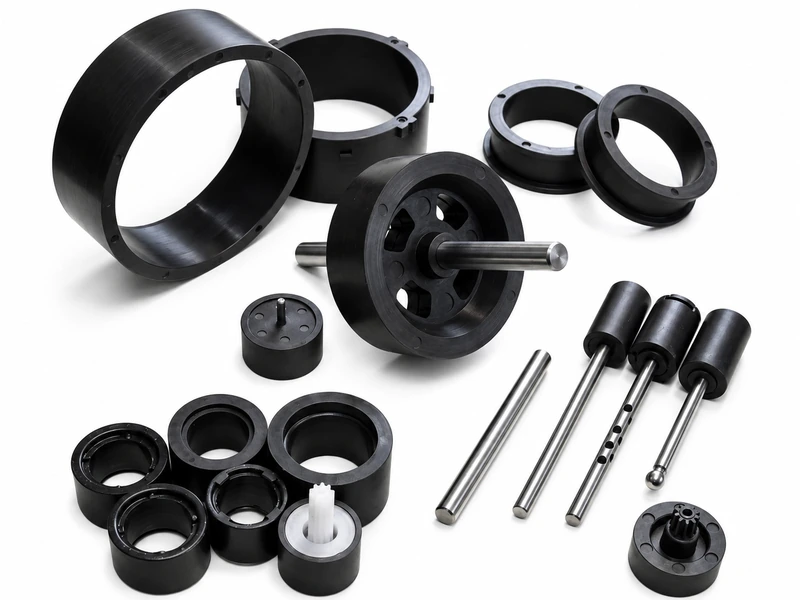
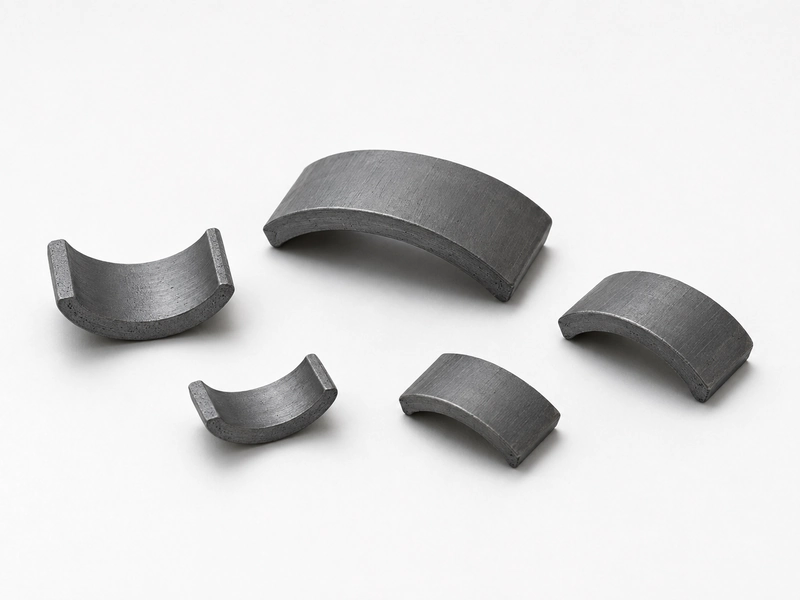
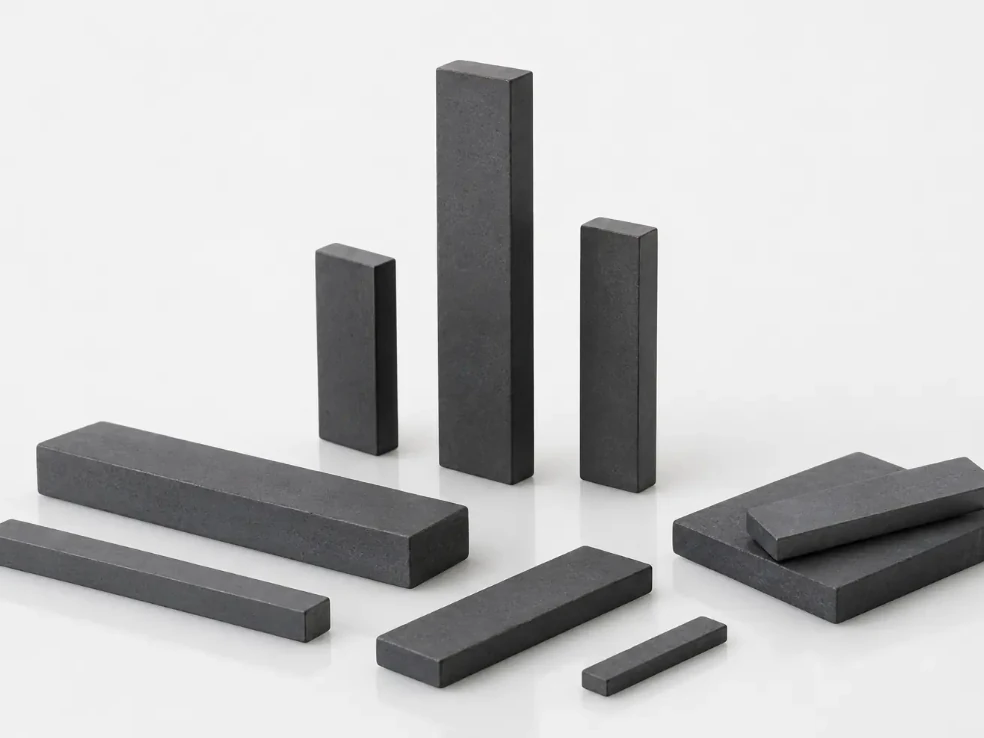
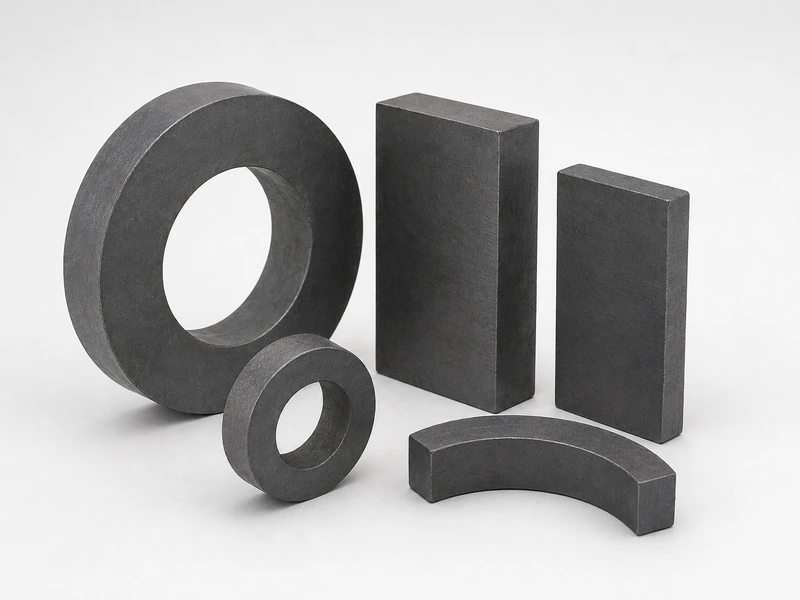
Hard ferrite magnets in ring, arc, block, bar and disc forms

Over 30 Years in Ferrite Component Manufacturing

GX manufactures drawing-defined ferrite magnets and motor components for appliance, automotive, pump and industrial motor applications.

Bosch logo
Midea logo
Siemens logo
WEG logo
Gree logo
Shimge logo
Copreci logo
Buhler logo
Samsung logo
Nidec logo

Quote preparation

Define the Ferrite Magnet Before Quotation

Send the controlled drawing and revision, material or magnetic targets, critical dimensions, datums and tolerances, magnetization direction or pole pattern, operating temperature and media, sample quantity, annual forecast and proposed acceptance method. GX uses these inputs to review manufacturability and define the sampling route.

Material systems
Strontium ferrite for current programs; barium ferrite only for established legacy designs or applications where it is explicitly specified in the customer drawing.
Orientation
Anisotropic or isotropic structure selected for the intended magnetization direction and installed magnetic circuit
Manufacturing route
Powder preparation, pressing, orientation, double-layer kiln sintering, grinding and drawing-defined final magnetization
Quality system
IATF 16949:2016 and ISO 9001:2015 certified manufacturing scope, with project-specific inspection and sample approval

Why choose us for your project · 01

Air Classification 
for Higher Ferrite Magnetic Performance

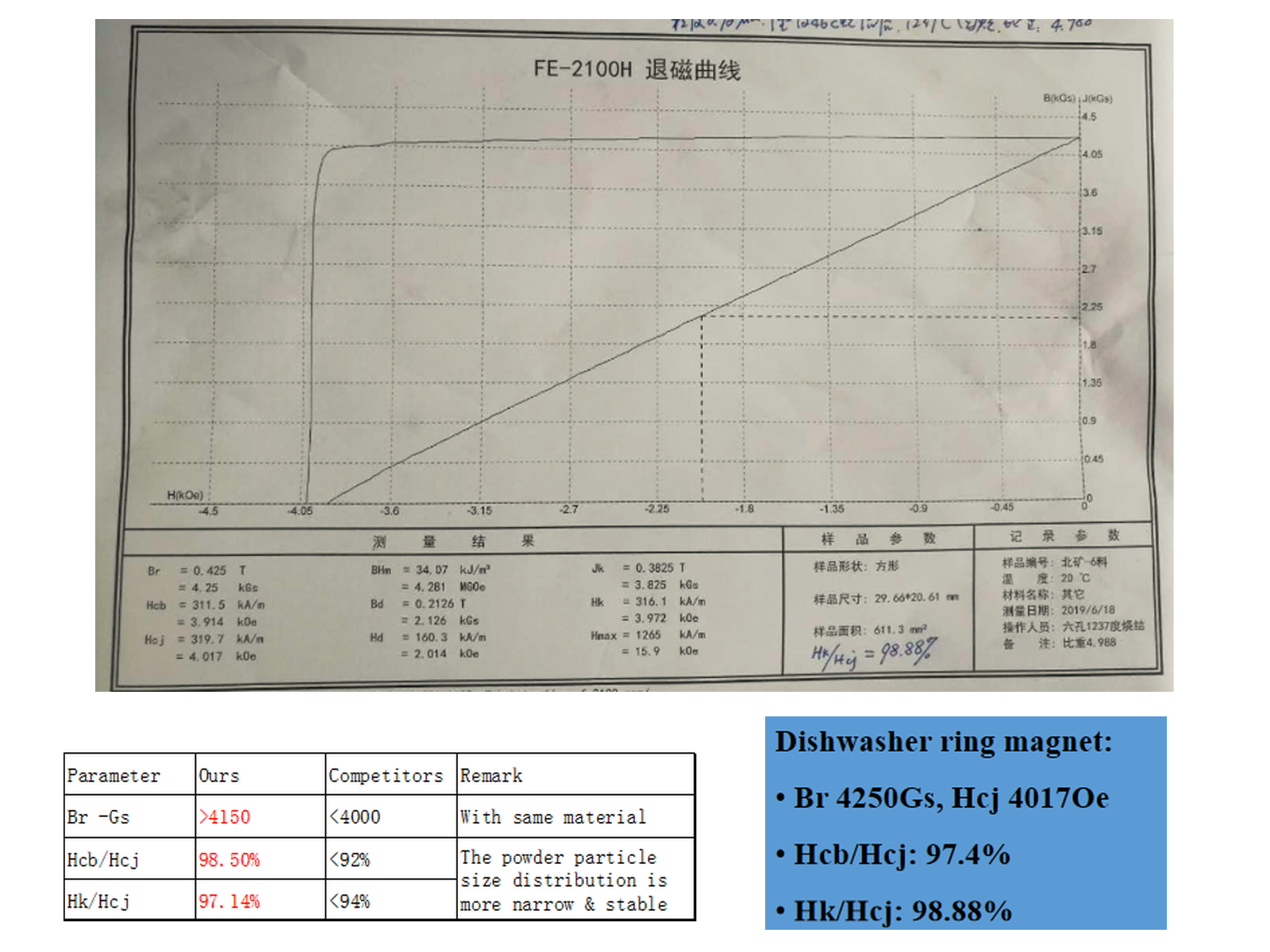
GX uses air classification in coarse powder processing to achieve a narrower and more stable particle size distribution. With the same raw material, this delivers higher residual flux density, a better coercivity ratio, and a squarer demagnetization curve.

GX hard ferrite magnet forms and magnetic orientation options

Performance gains start with powder preparation

Powder Particle SizeNarrower, more consistent particle size distribution achieved through air classification of coarse powder.
Residual Flux Density (Br)>4150 Gs from the same raw material — over 150 Gs higher than standard competitors (<4000 Gs).
Coercivity Ratio (Hcb/Hcj)98.50% Hcb/Hcj ratio vs. <92% for competitors, ensuring stronger resistance to demagnetization under heat.
Demagnetization Squareness (Hk/Hcj)97.14% Hk/Hcj squareness vs. <94%; dishwasher ring measured at Br 4250 Gs, Hk/Hcj 98.88%.

Why choose us for your project · 02

Hexagonal Tooling Design for Uniform 
6-Pole Ring Magnets

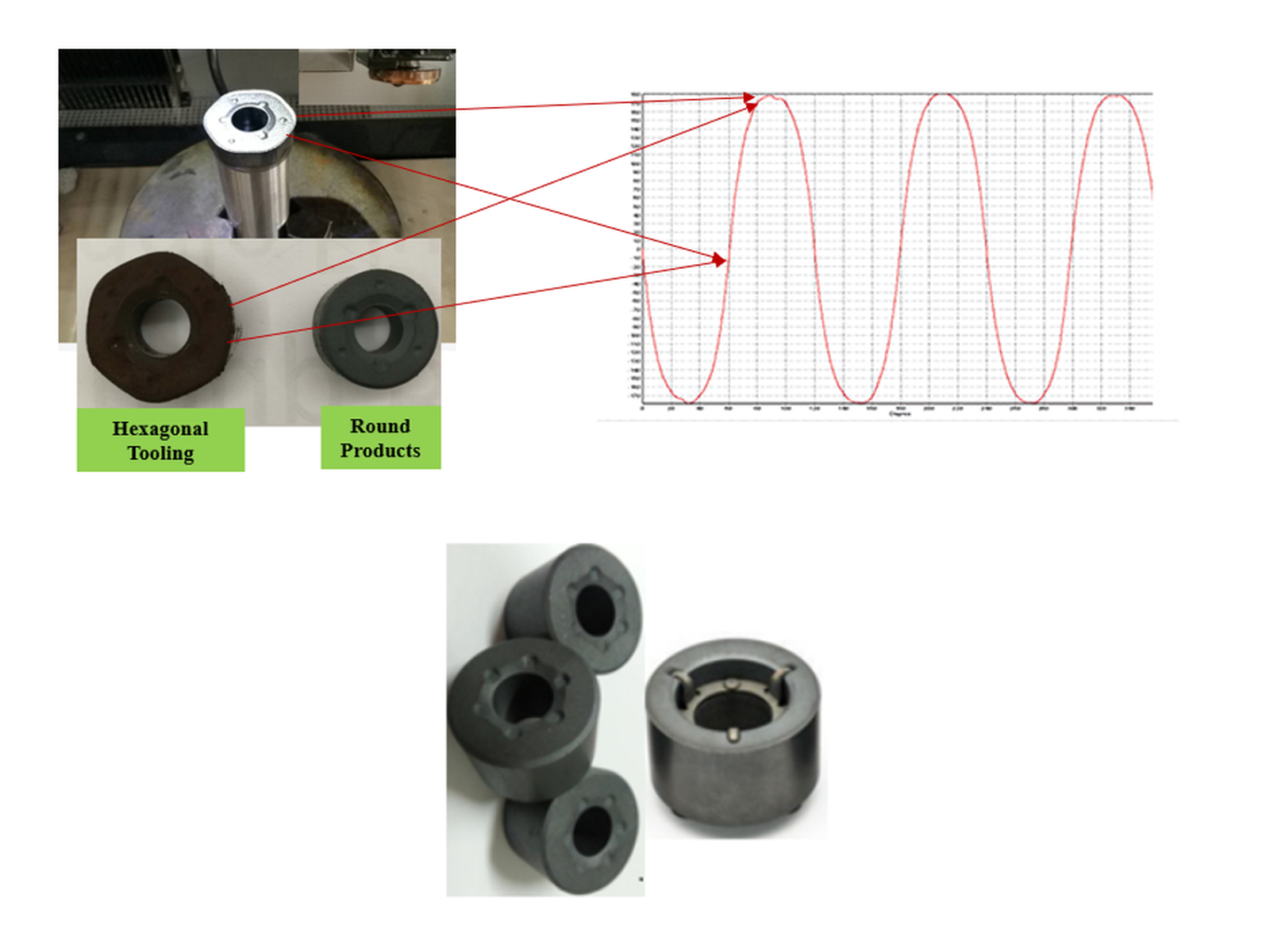
Most suppliers press 6-pole ferrite rings with round tooling, but uneven sintering shrinkage distorts the geometry and pole distribution. GX uses a hexagonal outer-profile tool that pre-compensates shrinkage, so the green part sinters into a near-perfect round ring with evenly balanced magnetic poles.

Tooling geometry

The tool uses a hexagonal outer profile with a round inner bore. The hexagonal shape is engineered to offset differential shrinkage across the six pole regions during sintering.

Sintering compensation

Due to 6-pole orientation, shrinkage rates differ across the ring during sintering. The hexagonal green compact contracts unevenly and emerges as a near-perfect round part — the intended result, not a defect.

Pole uniformity verification

The resulting 6-pole flux waveform is symmetric and balanced, with consistent flux density across all poles. This uniformity is why GX rings pass BSH 30,000-cycle thermal shock testing.

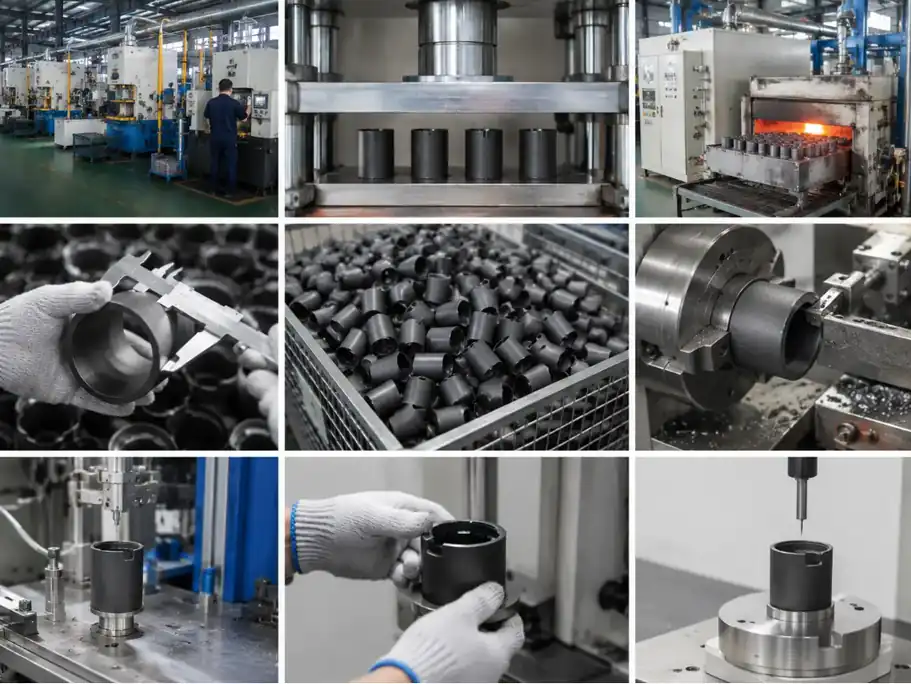
GX hard ferrite magnet manufacturing and inspection process

Why choose us for your project · 03

Full‑Auto Production Line For Multi‑Pole Ferrite Ring Magnets

Our multi‑pole ring magnet workflow covers dry pressing, auto demolding, palletizing, buffering and high‑temperature sintering. Every step runs automatically without manual handling of green compacts, delivering stable dimensional & magnetic consistency for high‑volume OEM orders.

Dishwasher pump motor program using a GX ferrite magnetic component

From dry‑press forming to finished sintered parts

Auto dry‑press & DemoldingMechanical arm automatically takes green ring compacts out of pressing moulds, avoid scratch and contamination by human contact.
Automatic Pallet LoadingGreen parts are neatly arranged onto refractory pallets with uniform spacing, guarantee even heating condition during sintering.
Buffer Conveyor SystemAutomatic buffer zone balances production rhythm between pressing station and sintering kiln, prevent material backlog or waiting.
Full‑auto Sintering KilnPallets are fed into double‑layer kiln for high‑temperature sintering. Batch‑to‑batch magnet performance keeps low deviation for mass customer orders.

Product and supply scope

What Is a Hard Ferrite Magnet?

A hard ferrite magnet is a ceramic permanent magnet produced by pressing and sintering ferrite powder into rings, arcs, blocks, or other drawing-defined geometries. GX uses strontium ferrite for current programs; barium ferrite is considered only for established legacy designs or when explicitly specified in the customer drawing. Isotropic or anisotropic material is selected according to the required magnetization direction and magnetic output.

In OEM drawings and sourcing documents, the terms hard ferrite magnet, sintered ferrite magnet and ceramic ferrite magnet are commonly used for this material family. To evaluate a project, GX reviews the part geometry, material grade or magnetic target, magnetization direction and operating conditions before confirming manufacturability and the sampling route.

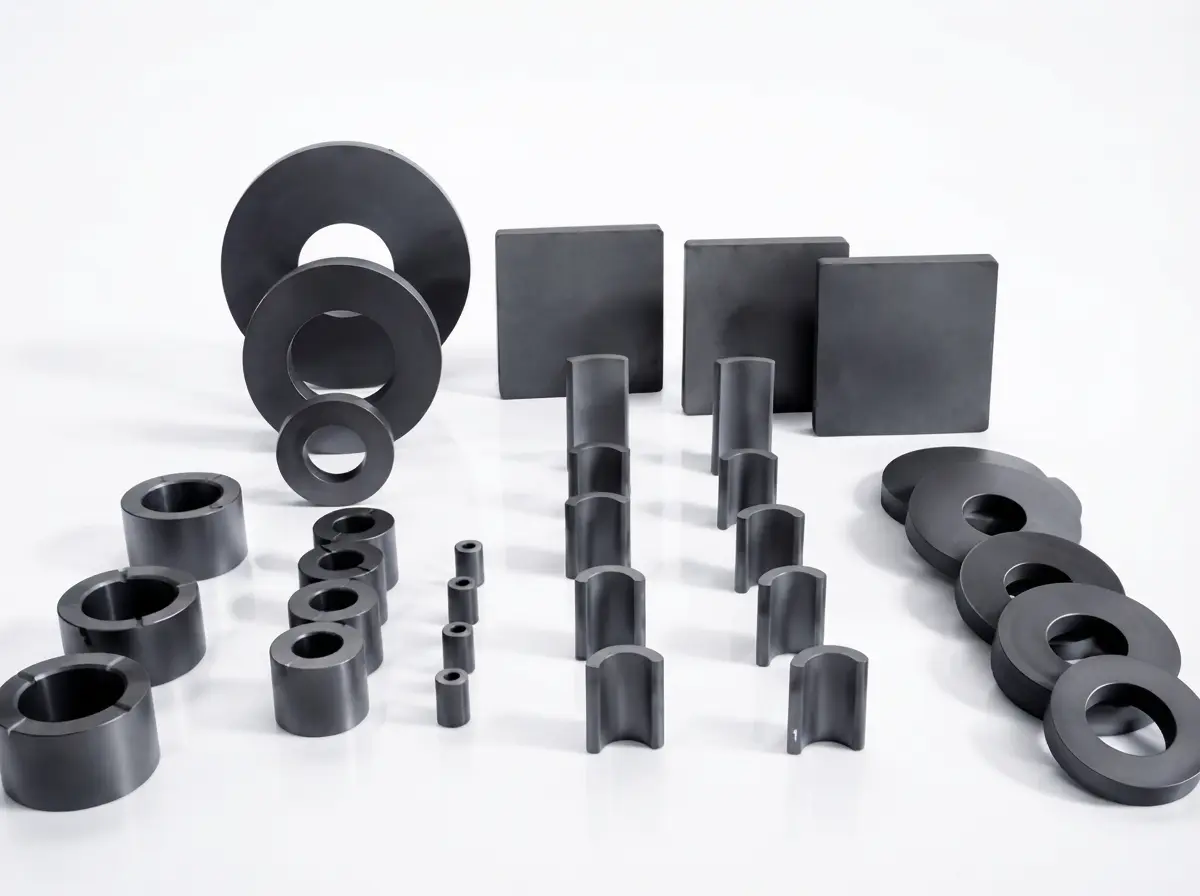
GX Magnet sintered hard ferrite product forms
Recurring OEM SupplyGX supplies drawing-defined ferrite components for recurring production after drawing review and sample approval. Retail stock magnets are outside this supply scope.
Manufactured to Customer DrawingsDimensions, tolerances, material grade, magnetic target and magnetization pattern are reviewed against the customer drawing and mating assembly.
Project RequirementsFor disc, ring, arc or speaker-magnet projects, provide the complete geometry, magnetic target, magnetization direction, operating temperature and annual demand for evaluation.
Size and Process FeasibilityLarge or non-standard geometries are reviewed against tooling size, press capacity, sintering distortion, grinding access and inspection method before supply is confirmed.

Selection criteria

Choose Ferrite Material and Magnetic Orientation

Select the ferrite material system and grade by evaluating the operating temperature, corrosion exposure, component geometry, magnetic orientation, magnetization direction, working air gap and installed magnetic circuit together.

GX hard ferrite magnet material and shape range

Strontium Ferrite Magnets

GX uses strontium ferrite as the primary material system for current programs. Grade, geometry, magnetic orientation and magnetization are reviewed together with the operating temperature, working air gap and required finished-part magnetic output.

Barium Ferrite Magnets

Barium ferrite is not a standard material for current GX programs. It is reviewed only for established legacy designs or when explicitly specified in the customer drawing. GX does not substitute the material automatically; any proposed alternative must be evaluated against the drawing-defined magnetic target and finished-part acceptance criteria.

Anisotropic Ferrite Magnets

Magnetic orientation is established along a defined axis during forming. Component geometry, orientation axis, final magnetization direction and the installed magnetic circuit are reviewed together before sample approval.

Isotropic Ferrite Magnets

Isotropic ferrite can be magnetized in different directions but generally provides lower magnetic output than anisotropic material of comparable geometry. Selection depends on the pole pattern, working air gap, required magnetic target and sample-validation results.

Drawing-Specified Grade Review

For Y30BH or another grade named in the customer drawing, provide the OD, ID, thickness, magnetization direction, finished-part magnetic target and operating environment. GX reviews grade availability and any proposed equivalent during technical evaluation. A material-grade designation alone does not guarantee the magnetic output of the finished part.

Specification inputs

Set Material and Finished-Part Acceptance Requirements

Final values are controlled by the approved material specification, drawing and sample. 

Project specification framework
ParameterAvailable or reviewed scopeBuyer inputApproval basis
Material systemStrontium ferrite for current programs; barium ferrite by legacy or drawing-specific reviewApplication and material requirementApproved material specification
Material gradeGX ferrite grade or reviewed drawing-specified gradeGrade and magnetic targetsMaterial data and sample results
Magnetic propertiesBr, Hcb, Hcj and (BH)max reviewed as a property setRequired values, units and test conditionAgreed specification and inspection record
OrientationAnisotropic or isotropicWorking direction and magnetic circuitDrawing and magnetic review
FormsRing, round, arc/segment, block, bar and drawing-defined ferrite components2D/3D drawing and assembly interfaceDrawing review
Dimensions and tolerancesDefined according to geometry, pressing and machining routeCritical dimensions, datums and fitApproved drawing and sample inspection
MagnetizationDirection and pole pattern according to product structureDirection, pole count and flux targetApproved magnetic sample
Operating conditionReviewed for temperature, moisture, mechanical load and assembly methodEnvironmental profile and validation planProject-specific test agreement
GX ferrite material-property reference
GX gradeBr (Gs)Hcb (Oe)Hcj (Oe)(BH)max (MGOe)
FSB4,200 ± 1003,300 ± 1503,350 ± 2004.0 ± 0.2
FB6N4,300 ± 1003,300 ± 1503,350 ± 2004.4 ± 0.2
FB7N4,400 ± 1003,300 ± 1503,350 ± 2004.6 ± 0.2
FB9N4,600 ± 1003,500 ± 2003,600 ± 2005.1 ± 0.2
FB12B4,650 ± 1004,300 ± 2004,850 ± 2005.2 ± 0.2
FB13B4,750 ± 1004,300 ± 2004,850 ± 2005.3 ± 0.2

Published material data supports initial grade selection; finished-part output also depends on geometry, orientation, magnetization, measurement condition and the installed magnetic circuit. Final values are treated as supply commitments only after they are confirmed in the released drawing, approved specification, quotation and acceptance plan.

Send the assembly drawing together with the magnetic target, measurement point, working air gap and operating-temperature profile.

Process route

Sintered Hard Ferrite Magnet Manufacturing Process

The approved drawing, material specification and magnetic sample define the control points.

01

Ferrite Powder Preparation

Material formulation supports the required pressing and magnetic response.

02

Pressing and Orientation

The part is formed; anisotropic orientation follows the magnetic design.

03

Double-Layer Kiln Sintering

The compact is sintered with dimensional change controlled for later machining.

04

Grinding and Machining

Critical faces and dimensions are finished against drawing datums.

05

Magnetization

Direction and pole configuration follow the approved magnetic design.

06

Inspection and Release

Dimensions, appearance and magnetic characteristics are checked before shipment.

Inspection planning

Define Dimensional and Magnetic Release Checks

Inspection items are selected by component geometry and application risk. A ring magnet, arc segment and block magnet do not use an identical dimensional or magnetic control plan.

Typical control items
Inspection itemControl approachProject relevance
Dimensions and geometryInspection against drawing dimensions, datums and agreed tolerancesAssembly fit, air gap and bonding position
Magnetic propertiesBr, Hcb, Hcj and (BH)max or agreed magnetic parametersMaterial and batch verification
MagnetizationDirection, pole pattern and flux response checked against the approved requirementTorque, sensing or magnetic-circuit function
Appearance and edge conditionVisual inspection against the agreed acceptance criteriaHandling, bonding and assembly protection
Environmental validationThermal shock or hot/cold water cycling when specified by the projectAppliance, pump and temperature-changing environments

Application review

Ferrite Forms and Validation for Four OEM Applications

Product form and grade are selected according to the assembly interface, working air gap, magnetic target, operating environment and validation method.

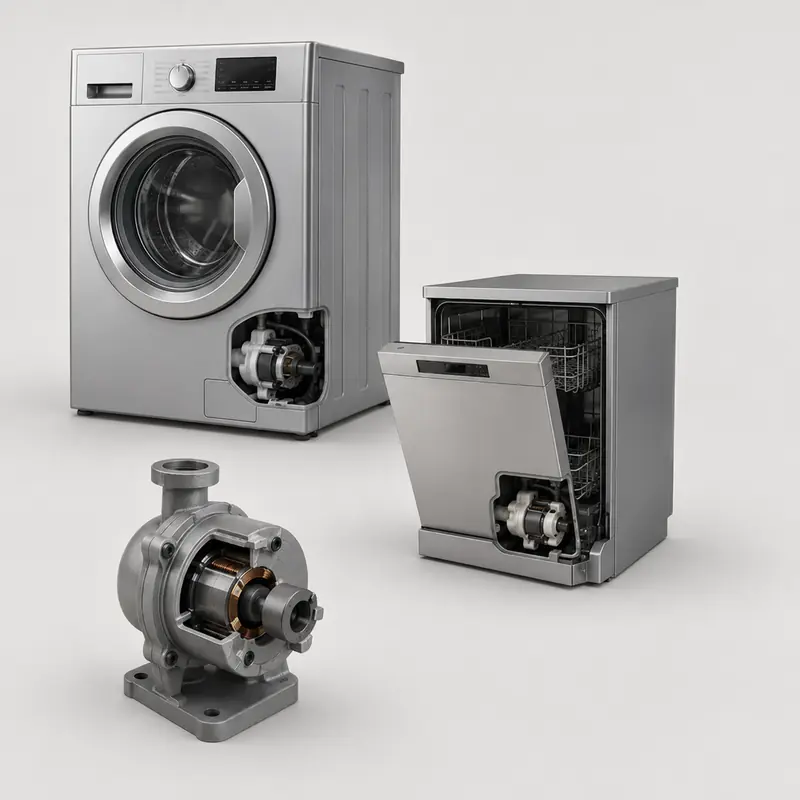
Hard ferrite magnets for dishwasher and washing machine pump motors

Dishwasher and Washing Machine Pumps

For multipole pump rings, provide the OD, ID, length, bore interface, pole count and working air gap. Sample approval checks dimensions, concentricity, polarity and flux or waveform. Hot/cold-water programs must also define cycle conditions and post-test limits.

Hard ferrite magnets for automotive auxiliary motor applications

Automotive Auxiliary Motors

For ferrite arcs, define the stator bore, arc angle, thickness, bonding gap, air gap and operating temperature. Approval checks critical dimensions, polarity and magnetic output at the specified measurement position, together with the agreed temperature or durability tests.

Hard ferrite magnets for HVAC motor applications

HVAC and Fan Motors

Select rings, arcs or blocks according to the motor structure and mounting method. Define the installation envelope, air gap, pole count, magnetization direction and magnetic target. Validate fit, pole position and magnetic output using the agreed fixture and air gap.

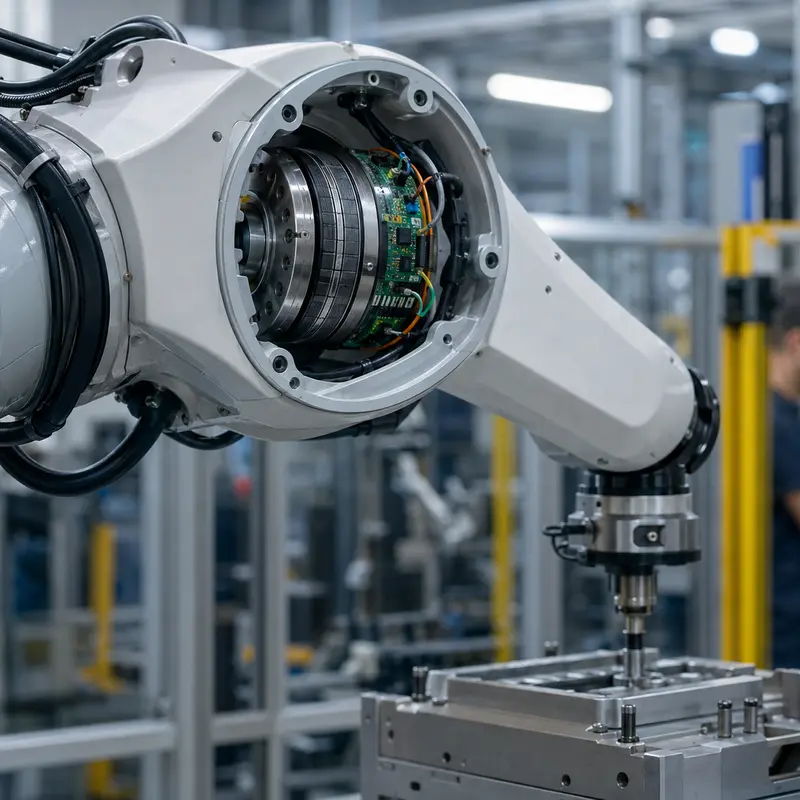
Hard ferrite magnets for industrial motors and speaker projects

Industrial Motors and Speaker Assemblies

Motor magnets require the stator bore, magnet dimensions, air gap and operating temperature. Speaker rings require the OD, ID, thickness, magnetic-circuit interfaces and target gap flux density. Each application needs its own measurement position and acceptance limits.

Verified project evidence

Ferrite Ring Magnet Validation for a Dishwasher Pump Program

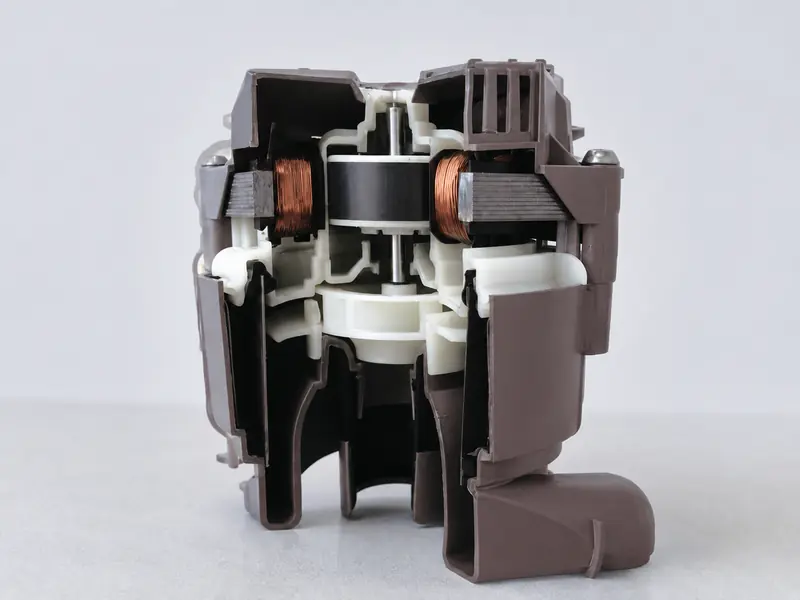
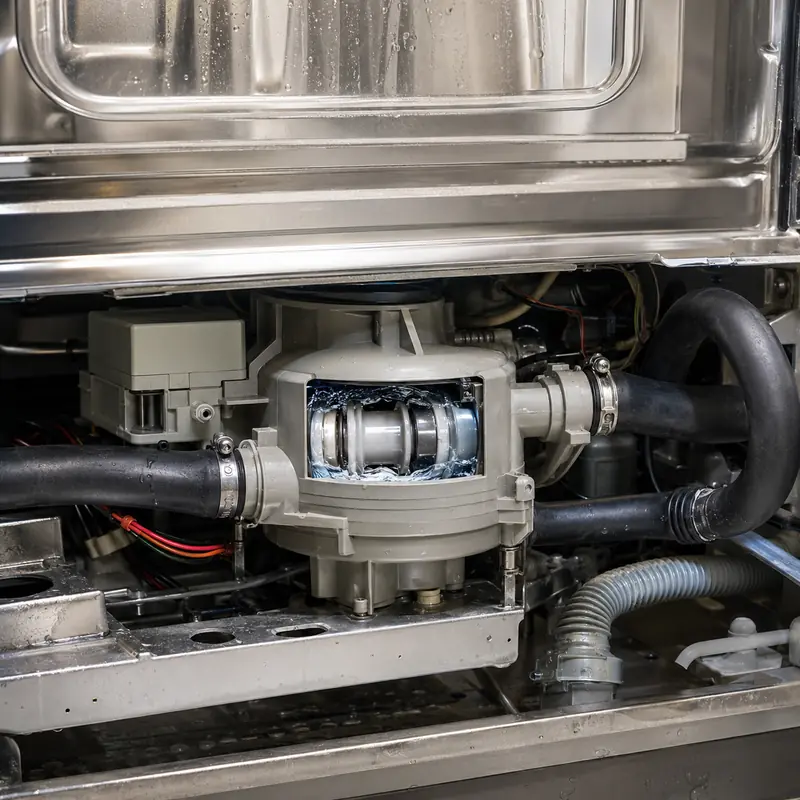
A related dishwasher ferrite ring program required the magnetic component to remain suitable through repeated hot- and cold-water operating conditions.

Dishwasher pump motor application using ferrite magnet components
Project constraintRing geometry, magnetic output and material integrity had to be considered together for a wet appliance pump environment.
GX responseThe material, ring structure and validation route were aligned with the pump application and customer approval requirements.
Verified resultThe related six-pole ring completed 30,000 cycles: 80 °C water for 3 minutes, then 16 °C water for 3 minutes, over approximately four months.

Documented evidence

Quality System and Ferrite Sample Compliance

Certificate and test-report scopes are identified by the certified activity, submitted sample, screening scope and recorded result. For production programs, drawing-defined inspection and agreed lot-release records provide the applicable acceptance basis.

IATF 16949:2016

Zhenjiang GX Magnet Co., Ltd. is certified under IATF 16949 for the manufacture of permanent ferrite components. Certificate T-16254/0 identifies manufacturing as the approved quality-management scope.

SGS 2026 Ferrite RoHS

SGS report SHAEC26018965201 records a Pass result for the submitted Fe₂O₃ magnet sample within the stated EU RoHS screening scope.

SGS 2026 Ferrite REACH SVHC

SGS report SHAEC26018965202 records a Pass result for the submitted ferrite magnet sample within the specified screening scope covering 253 SVHC and one potential SVHC.

Engineering FAQ

Hard Ferrite Magnet Sourcing Questions

These questions address material comparison, ferrite type, magnetic orientation, temperature exposure, surface condition, quotation inputs and the approval records needed before recurring OEM production.

What is the difference between hard ferrite magnets and soft ferrite cores?

Hard ferrite magnets retain a permanent magnetic field, while soft ferrite cores are designed to carry changing magnetic flux in electronic components.

This page covers sintered permanent ferrite magnets for motors, pumps, sensors and related assemblies. It does not cover soft ferrite cores.

How do hard ferrite magnets compare with neodymium magnets?

Ferrite generally provides lower magnetic output per unit volume but offers good corrosion resistance, temperature stability and cost control.

Neodymium may reduce magnet volume where higher energy density is required. Selection should be based on the magnetic circuit, available space, air gap, demagnetization risk, operating environment and total assembly cost.

When should an OEM specify strontium rather than barium ferrite?

GX normally develops new hard-ferrite programs around strontium ferrite; barium ferrite should be treated as a legacy or drawing-specific requirement.

Do not substitute between the two without reviewing the released material specification, regulatory requirements, magnetic targets and validation plan.

How do isotropic and anisotropic ferrite magnets differ?

Anisotropic ferrite is oriented during manufacture for higher performance in a preferred direction; isotropic ferrite allows more magnetization flexibility at lower magnetic output.

The choice affects tooling, magnetization direction and achievable circuit performance, so it should be fixed before sample manufacture.

How should operating temperature be specified for a ferrite magnet?

State the minimum and maximum temperatures, exposure duration and whether the condition is continuous, intermittent or cyclic.

The acceptable range depends on grade, geometry, magnetic circuit, load line and demagnetization margin. Final limits should be confirmed through the released specification and application validation rather than a universal catalogue value.

Do hard ferrite magnets require a protective coating?

Ferrite magnets usually do not need a corrosion-protection coating, but surface treatment may still be required for cleanliness, appearance, bonding or media-contact conditions.

Specify the fluid, humidity, dust, adhesive and handling requirements so the surface condition can be included in the drawing and acceptance plan.

What information does GX need to quote a custom hard ferrite magnet?

Dimensions alone are not sufficient for an OEM quotation.

Provide the controlled drawing and revision, material or magnetic targets, magnetization direction, critical tolerances, assembly interface, operating temperature and media, forecast quantity and proposed acceptance method.

How are hard ferrite magnets approved before recurring production?

Approval normally links the released drawing to an agreed inspection and sample-validation plan.

Define dimensional, material and magnetic acceptance criteria, the measurement method and fixture, first-article or sample quantity, application tests and the records required for recurring lots.

Industry presence

Verify GX’s Magnetic Materials Exhibition Activity

2026 Shenzhen International Small Motor, Magnetic Materials & Bearing Exhibition

GX exhibited magnetic materials and motor-related components at booth A671, Hall 8, from May 27–29, 2026.

Zhenjiang GX Magnet booth A671 at the 2026 Shenzhen magnetic materials exhibition

Project inquiry

Send Your Hard Ferrite Magnet Drawing

Attach the drawing and project requirements. GX reviews material, orientation, process and inspection before sample approval; the approved specification then controls production release.

  • 2D / 3D drawing
  • Material grade or Br / Hcb / Hcj / (BH)max
  • Magnetization and pole count
  • Application and annual demand
No file selected